





Pontoon bridge

|
| The Evergreen Point Floating Bridge in Washington State, carrying State Route 520 over Lake Washington, seen from the north side bicycle and pedestrian trail from the west high rise. It is the world's longest pontoon bridge. |
Contents |
[edit] Introduction
Bridges are a common feature of the built environment and one of the key elements of civil engineering. Movable bridges are designed in a way that allows them to accommodate different situations and the flow of different types of traffic. One kind of movable bridge is a pontoon (or ponton) bridge. These are also referred to as floating bridges.
[edit] How do pontoon bridges work?
Pontoon bridges are constructed on large, water-tight concrete floats, boats, barges or other buoyant structures that are rigidly connected end-to-end, upon which the road deck is constructed. Individual bridge pontoons are built on the land before being floated and towed to the bridge site. Once there, they are connected at each end to grounded approach structures, starting at the edge of the floating structure and then pieced together towards the bridge’s centre. Cables hold the pontoons in place, connected to buried anchors.
The use of floating bridges is typically limited by the wind and wave forces that are likely to be experienced. The ‘fetch’ is the unobstructed clear distance over the water that wind can travel to the bridge. The longer the fetch, the higher the wind and wave forces will generally be. Pontoons bend, heave and twist as a result of wind and wave (and sometimes tidal) forces, creating large stresses in the pontoons and anchor system. However, even in the event of a ‘100-year storm’ (a storm that statistically has 1% chance of occurring in any given year), the pontoons are designed to survive.
Due to the movement associated with a pontoon bridge, they often require more maintenance than traditional structures, even under normal operating conditions.
[edit] Strategic pontoon bridges
The earliest recorded use of a pontoon bridge goes back to Ancient China. While texts indicate use by the Zhou Dynasty in the 11th century BC, it is believed that temporary pontoon bridges were used several centuries earlier and permanent pontoon bridges came about in the 2nd century BC during the Qin Dynasty.
Temporary pontoon bridges were frequently used in Ancient Greek and Roman times. This continued in the middle ages, when they were frequently used in military applications.
As tactical structures, they were used during emergency situations, such as natural disasters or wartime conflicts. They were put in place either when conventional bridge construction was thought to be cost prohibitive or when additional flexibility (such as elevation or removal for the passing of waterway traffic) was necessary.
Temporary pontoon bridges could be built quickly and then either destroyed or removed and carried along with troops. Their flexibility prevented enemy forces from using the structures.
[edit] Permanent pontoon bridges
There are some permanent pontoon bridges in use around the world in places such as Australia, India, Canada and so on. As permanent structures, pontoon bridges generally require deep water and are practical in places where the softness of the ground beneath the bridge makes it unsuitable for safe pier construction.
In March 2016, Washington State in northwest America opened the world’s longest floating bridge. The ‘State Route 520 Bridge’ (SR520), as it is known, is a six-lane pontoon structure 2.4 km in length. There are three additional pontoon bridges in Washington State.
[edit] Related articles on Designing Buildings
- Amphibious Construction.
- Bascule bridge.
- Bridge construction.
- Bridges of the world.
- Bridge structures.
- Dredging.
- General Hugh Debbieg military engineer and surveyor.
- Maunsell forts.
- Movable bridge.
- Navigable aqueduct.
- Retractable bridge.
- River engineering.
- State Route 520 Floating Bridge.
- Submersible bridge.
- Swing bridge.
- Three pieces of infrastructure that have saved lives.
- Underwater foundations.
Featured articles
Check out some of the best features and news from Designing Buildings as well as key stories from around the web.
Construction Management, 10 June

24 months to 14: CITB launches accelerated apprenticeships.
Bridging the gap between clients and contractors
Concerns remain around contractor quality, capability, and delivery.
Construction Management, 10 June.
Heat pumps beat boilers in new home tests.
Building Safety Act implementation in Wales

CIAT to host industry panel on 26 June.
New and updated CLC building safety guidance.
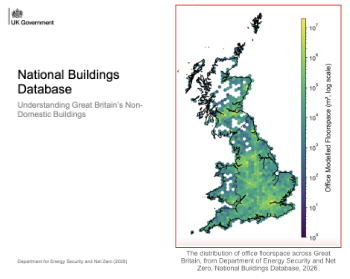
New UK National Buildings Database.
Building Safety Wiki Interviews

Chief executive of the British Woodworking Federation.
Planning condition discharge in England and Wales

A brief explanation from a building compliance expert, with further links.
Overheating guidance and tools for building designers

Guidance for dealing with element of building fabric control that have increasing importance.
Shading for housing, a design guide

From the Good Homes Alliance and British Blind and Shutter Association.
UK Standard Skills Classification (SSC)

A shared framework for describing skills needs.