





Planning legislation
[edit] Introduction
Planning legislation supports UK planning policy and takes the form of Acts of Parliament and Statutory Instruments (SIs).
Acts of Parliament create a new law or change an existing law. An Act starts life as a Bill that is approved by both Houses of Parliament and is then given Royal Assent. The following are Acts of Parliament that constitute policy legislation:
SIs, also known as delegated, secondary or subordinate legislation, allow the UK government to alter or bring the provisions of an Act into force without needing Parliament to pass a new Act. For more information, see Statutory instruments.
[edit] Town and Country Planning Act 1947
Served as the foundation of the modern town and country planning system, establishing that planning permission was required for development, reorganising the planning authorities, and requiring the preparation of local development plans.
For more information, see Town and Country Planning Act 1947.
[edit] Caravan Sites and Control of Development Act 1960
This Act related to the licensing and control of caravan sites.
For more information, see Caravan Sites and Control of Development Act 1960.
[edit] Civic Amenities Act 1967
The Civic Amenities Act was ‘An Act to make further provision for the protection and improvement of buildings of architectural or historic interest and of the character of areas of such interest; for the preservation and planting of trees; and for the orderly disposal of disused vehicles and equipment and other rubbish.’
For more information, see Civic Amenities Act
[edit] Town and Country Planning Act 1968.
Brought effective protection to listed buildings for the first time and was the key to the conservation revolution.
For more information see: Town and Country Planning Act 1968.
[edit] Town and Country Planning Act 1990
This Act superseded the 1947 Act and made several changes, principally dividing planning into forward planning and development control, i.e. setting out the future strategy of the local authority and controlling the current development.
For more information, see Town and Country Planning Act 1990.
[edit] Planning (Listed Buildings and Conservation Areas) Act 1990
This Act consolidated certain enactments relating to special controls applicable in respect of areas and buildings of special architectural or historic significance.
For more information, see Planning (Listed Buildings and Conservation Areas) Act.
[edit] Planning (Hazardous Substances) Act 1990
This Act consolidated certain enactments relating to special controls applicable in respect of hazardous substances.
For more information, see Planning (Hazardous Substances) Act 1990.
[edit] Environmental Protection Act 1990
This Act aimed to make provision for improved pollution and hazardous substances control.
[edit] Planning and Compensation Act 1991
This Act amended the Town and Country Planning Act 1990 by introducing the plan-led system. It also extended powers to acquire land that may be affected by carrying out public works and also, where applicable, to provide compensation.
For more information, see Planning and Compensation Act 1991.
[edit] Environment Act 1995
This Act established the Environment Agency, transferring to it powers over pollution control and the conservation and enhancement of natural resources and the environment.
For more information, see Environment Agency.
[edit] Housing Act 1996
This Act aimed to make provision for housing, the rented sector, the administration of housing benefit, houses in multiple occupation, the allocation of housing accommodation, and so on.
For more information, see Housing Act 1996.
[edit] Countryside and Rights of Way Act 2000
This Act was intended to improve public access to the countryside and registered common land. It aimed to do this while also recognising the legitimate interests of owners/ and managers of the land concerned.
For more information, see Countryside and Rights of Way Act 2000.
[edit] Planning and Compulsory Purchase Act 2004
This Act was an important part of the government’s planning policy reforms intended to speed up the planning process and ensure that applications were dealt with more efficiently. It makes provisions relating to spatial development, planning and compulsory purchase and establishes sustainable development as a key objective of the planning system.
For more information, see Planning and Compulsory Purchase Act.
[edit] Housing Act 2004
This Act replaced the housing fitness standard with the Housing Health and Safety Rating System.
For more information, see Housing Act 2004.
[edit] Planning Act 2008
This Act was introduced to reduce the amount of time taken for approving major infrastructure projects.
For more information, see Planning Act 2008.
[edit] Local Democracy, Economic Development and Construction Act 2009
This Act aimed to bring communities and individuals closer to local decision-making, as well as providing for the greater involvement of local authorities in local and regional economic development.
For more information, see Local Democracy, Economic Development and Construction Act 2009.
[edit] Localism Act 2011
This Act set out a series of measures intended to transfer power from central government to local authorities and local communities. It intended ‘…to help people and their locally elected representatives to achieve their own ambitions.’
For more information, see Localism Act.
[edit] Enterprise and Regulatory Reform Act 2013
This Act aimed to cut the costs of undertaking business in Britain, which it was hoped would enhance consumer and business confidence and assist with job creation in the private sector. It was believed that small, medium and micro businesses would benefit in particular from the Act.
For more information, see Enterprise and Regulatory Reform Act 2013.
[edit] Growth and Infrastructure Act 2013
This Act set out a series of reforms intended to reduce the red tape the government considered hampers business investment, new infrastructure and job creation. It was hoped that this would help the UK recover from recession and allow it to compete more effectively on the global stage.
For more information, see Growth and Infrastructure Act 2013.
[edit] Infrastructure Act 2015
This Act introduced new measures intended '...to make it easier, quicker and simpler to get Britain building’.
For more information, see Infrastructure Act 2015.
[edit] Housing and Planning Act 2016
This Act was introduced as part of what the then-Prime Minister David Cameron described as a “national crusade to get homes built”. It included new powers to overrule councils considered reluctant to build homes, and to enable Whitehall to engage with local communities directly to allocate land for new building and force housing schemes through the planning system.
For more information, see Housing and Planning Act 2016
[edit] Key Building Regulations
- Construction (Design and management) regulations 2015
- Health and Safety work act 1974
- Public buildings:
- The equality Act 2010
- Regulatory reform (fire safety) order 2005
- Private Buildings:
- Approved Document B
- Fire engineer strategy to comply with British standards 9999
[edit] Additional Planning Legislation
- Town and Country Planning act 1990
- Planning (listed building and conservation areas) act 1990
- Section 106 of the Town and country planning act 1990
- Community Infrastructure Levy regulations 2013
- TPO - Forestry Act 1967
- Conservation of Habitat and Species regulations 2010
- Party wall act 1996
[edit] Related articles on Designing Buildings Wiki
Featured articles
Check out some of the best features and news from Designing Buildings as well as key stories from around the web.
Building Safety Act implementation in Wales

CIAT to host industry panel on 26 June.

New and updated CLC building safety guidance.
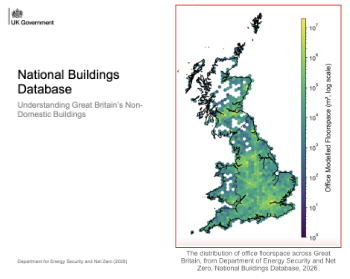
New UK National Buildings Database.
Building Safety Wiki Interviews

Chief executive of the British Woodworking Federation.
Planning condition discharge in England and Wales

A brief explanation from a building compliance expert, with further links.
Overheating guidance and tools for building designers

Guidance for dealing with element of building fabric control that have increasing importance.
Shading for housing, a design guide

From the Good Homes Alliance and British Blind and Shutter Association.
UK Standard Skills Classification (SSC)

A shared framework for describing skills needs.
Social media ban consultation comes to close

CIOB urges UK Government to consider social media’s role in careers guidance in ban debate.
The latest of eight Skills England apprenticeship units

The addition of battery manufacturing welcomed by ECA with a warning about the risks of fast-tracked apprenticeship units.
Building Control Independent Panel final report
A precis of a key report led by Dame Hackitt with full recommendations and link to the government response.