






Pipework defects, ventilation and airflow rates
The article originally appeared as Technical answers: Pipework defects, ventilation and airflow rates published in April 2016, written by Jayne Sunley, Information Manager at BSRIA.
Contents |
[edit] Foam insulation
Could foam insulation be the reason we are experiencing problems with pitting on copper pipework leading to leaks? The copper pipework in question is a chilled water service covered in phenolic foam which is only 4-5 years old. Could the vapour seal on the insulation be damaged leading to condensation forming on the pipe causing pitting and pin-holes?
In order to prove that insulation is the problem you need to establish with certainty that the perforations are from outside to inside and could not have been influenced by other sources of leakage such as weeping joints of previous pinholes. It would also be worth looking at the insulation manufacturer’s guidance to see whether it is the correct grade and has been applied properly.
Sometimes there is a protective paper on the inside of the insulation that should not be removed, other manufacturers use an invisible coating or, for steel pipes, may recommend that a protective coating is applied to the pipe prior to installation.
Insulation on copper pipework is not a new issue but the European Phenolic Foam Manufacturers Association issued a statement in 2000 after an initial rash of problems.
[edit] Stress fractures
Can stress fractures cause failure with ABS (Acrylonitrile Butadiene Styrene) and PVC pressure pipes?
Stress fractures are the most common defect and are caused by excessive application of adhesive and/or the application of mechanical stress to the joint prior to the adhesive fully curing. This often happens because the pipes and fittings to be connected are slightly misaligned but can be pushed together.
A typical stress fracture is a longitudinal crack in the pipe, starting from inside the fitting, or at least near to the fitting. Longitudinal cracks in the middle of a length of pipe are more likely a consequence of impact damage or the pipe being dropped prior to installation.
Cracks may be not readily visible until water starts to appear. Once a crack is suspected then the methods applied by ANS using crack detection fluid can be useful to observe the extent of the crack. More detailed investigation requires the affected section is cut out and sectioned for microscopic examination of both the inside and outside surfaces. Further sections can then be cut to separate the material either side of the crack and examine the fracture surfaces.
[edit] Ventilation air speed in ducting
Are there any recommendations or regulations in the UK about the ventilation air speed in ducting?
There are no regulations in the UK about air velocities in ductwork, however there are recommendations. The BSRIA publication Rules of Thumb gives recommendations for different applications, for example in offices, 6.0 m/s in main ducts, and 5.5 m/s in branch ducts.
[edit] Airflow rate of LED downlights
Clients are increasingly asking about the airflow rate of LED downlights but the airflow rating seems to be of a room/dwelling rather than the particular light fitting in the room. Is this correct?
While airtightness is certainly a requirement of a dwelling or room, to the best of our knowledge there are no specific requirements or limits on individual light fittings. However, each penetration in the ceiling will provide a potential air leakage path and will add to the total leakage. As such, contractors may wish to be sure that if they install a significant number of light fittings they will not exceed the total permitted for the space.
Also, the better the light fitting the more leeway there may be for other items to leak while remaining within the overall total allowance. In practice, leakage through fittings will be very dependent on the ceiling material as well as the care of the fitter but leakage rates do give at least an initial baseline.
--BSRIA
[edit] Related articles on Designing Buildings Wiki:
- Air handling unit.
- BSRIA.
- BSRIA articles on Designing Buildings Wiki.
- Chilled water.
- Corrosion in heating and cooling systems.
- Domestic ventilation systems performance.
- Flange.
- Gasket.
- Indoor air quality.
- Leaks in buildings.
- Plastic-coated steel pipes.
- Refrigerant selection.
- Ultrasonic pipe testing.
- Valves.
Featured articles and news
Costs and insolvencies mount for SMEs, despite growth

Construction sector under insolvency and wage bill pressure in part linked to National Insurance, says report.
The place for vitrified clay pipes in modern infrastructure
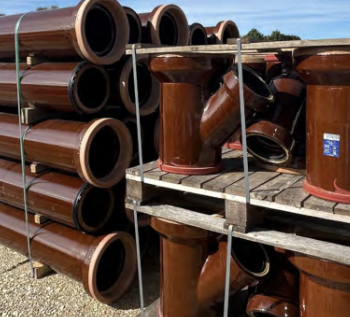
Why vitrified clay pipes are reclaiming their role in built projects.

Research by construction PR consultancy LMC published.
Roles and responsibilities of domestic clients

ACA Safety in Construction guide for domestic clients.
Fire door compliance in UK commercial buildings

Architect and manufacturer gives their low down.
Plumbing and heating for sustainability in new properties
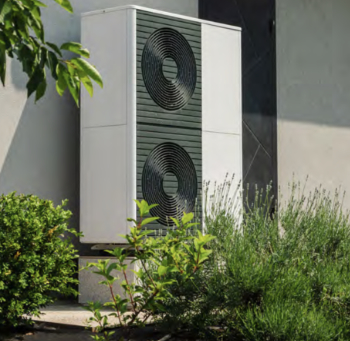
Technical Engineer runs through changes in regulations, innovations in materials, and product systems.
Awareness of the Carbon Border Adjustment Mechanism
What CBAM is and what to do about it.
The new towns and strategic environmental assessments
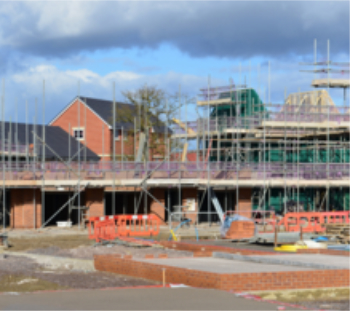
12 locations of the New Towns Taskforce reduced to 7 within the new towns draft programme and open consultation.

Buildings that changed the future of architecture. Book review.
The Sustainability Pathfinder© Handbook
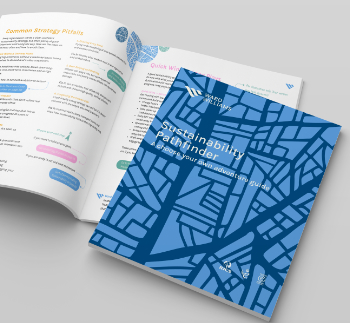
Built environment agency launches free Pathfinder© tool to help businesses progress sustainability strategies.

Government outcome to the late payment consultation, ECA reacts.
IHBC 2025 Gus Astley Student Award winners

Work on the role of hewing in UK historic conservation a win for Jack Parker of Oxford Brookes University.
Future Homes Building Standards and plug-in solar
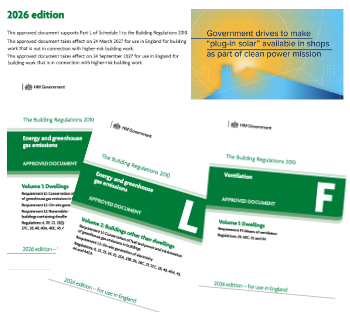
Parts F and L amendments, the availability of solar panels and industry responses.
How later living housing can help solve the housing crisis

Unlocking homes, unlocking lives.
Preparing safety case reports for HRBs under the BSA
A new practical guide to preparing structural inputs for safety cases and safety case reports published by IStructE.
Male construction workers and prostate cancer

CIOB and Prostate Cancer UK encourage awareness of prostate cancer risks, and what to do about it.