





Ministry of Transportation Building, Georgia

The former Ministry of Transportation Building in Tbilisi, Georgia, is a striking example of Communist design.
Architects George Chakhava and Zurab Jalaghania designed the building for the Ministry of Highway Construction of the Georgian Soviet Socialist Republic (SSR). Construction was completed in 1975.
The 18-storey building is notable for its unusual design which gives the impression of giant concrete blocks having been piled on top of one another at random. Built on a steep slope, three of the interlocking blocks are oriented on an east-west axis, while two are oriented on a north-south axis. The vertical circulation elements – stairs and lifts – are contained within three cores from which the rest of the structure hangs.

The harsh concrete façade and geometric form was inspired by the theories of the Russian constructivists, as well as the Brutalism movement and the Japanese Metabolists. Following an architectural concept known as the Space City method, parts of the building are raised above the ground, allowing the landscape to grow around and below it.
In 2007, the building was acquired by the Bank of Georgia who converted it into their headquarters, undertaking a major renovation, and installing a new glass cube entrance. In 2007, it was given Immovable Monument status under the National Monuments Act.
[edit] Related articles on Designing Buildings Wiki
- Abandoned movie theatres in Russia.
- Building of the week series.
- CCTV Headquarters.
- Constructivist architecture.
- Fuji TV Building, Tokyo.
- Habitat 67.
- La Grande Arche.
- Manchester Civil Justice Centre.
- Megastructure.
- Metabolism.
- Nakagin Capsule Tower.
- Owen Hatherley - Landscapes of Communism.
- Palace of Culture and Science.
- Robot Building, Bangkok.
- Scottish Parliament Building.
- Spomeniks.
- The Bierpinsel, Berlin.
- Unusual building design of the week.
[edit] External references
Featured articles and news
Costs and insolvencies mount for SMEs, despite growth

Construction sector under insolvency and wage bill pressure in part linked to National Insurance, says report.
The place for vitrified clay pipes in modern infrastructure
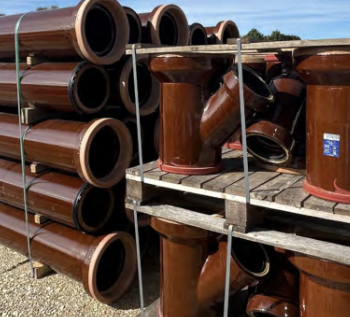
Why vitrified clay pipes are reclaiming their role in built projects.

Research by construction PR consultancy LMC published.
Roles and responsibilities of domestic clients
ACA Safety in Construction guide for domestic clients.
Fire door compliance in UK commercial buildings

Architect and manufacturer gives their low down.
Plumbing and heating for sustainability in new properties

Technical Engineer runs through changes in regulations, innovations in materials, and product systems.
Awareness of the Carbon Border Adjustment Mechanism
What CBAM is and what to do about it.
The new towns and strategic environmental assessments
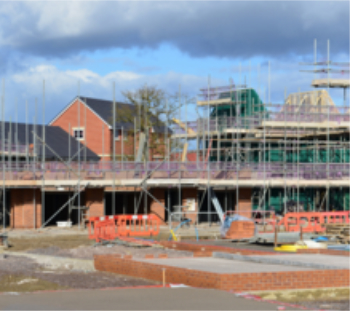
12 locations of the New Towns Taskforce reduced to 7 within the new towns draft programme and open consultation.
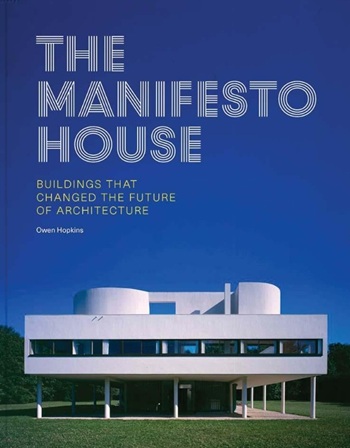
Buildings that changed the future of architecture. Book review.
The Sustainability Pathfinder© Handbook
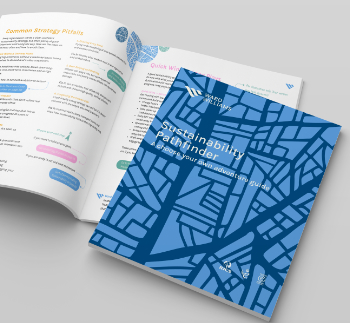
Built environment agency launches free Pathfinder© tool to help businesses progress sustainability strategies.
Government outcome to the late payment consultation, ECA reacts.
IHBC 2025 Gus Astley Student Award winners
Work on the role of hewing in UK historic conservation a win for Jack Parker of Oxford Brookes University.
Future Homes Building Standards and plug-in solar
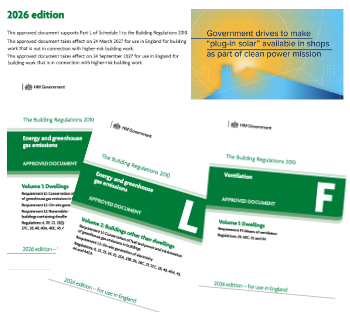
Parts F and L amendments, the availability of solar panels and industry responses.
How later living housing can help solve the housing crisis
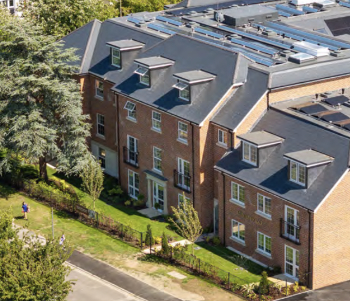
Unlocking homes, unlocking lives.
Preparing safety case reports for HRBs under the BSA
A new practical guide to preparing structural inputs for safety cases and safety case reports published by IStructE.
Male construction workers and prostate cancer

CIOB and Prostate Cancer UK encourage awareness of prostate cancer risks, and what to do about it.