





Identifying lime and cement mortar

Contents |
[edit] Differences in identifying lime vs cement mortars
Identifying the distinction between lime and cement mortars is essential for anyone involved in historic restoration or renovation projects. While visual examination provides initial clues, identifying the sometimes-subtle differences often requires an experienced eye and, in some cases, professional analysis.
Here are some key indicators to help differentiate between lime and cement mortars:
- Texture and Colour: Lime mortars tend to display a range of pastel hues, influenced primarily by the sand used, while cement mortars are predominantly grey, with variations introduced by additives or pigments. Lime mortars are lower in air content and generally more powdery and crumbly than cement mortars.
- Inclusions: Lime mortars may contain soft, white, powdery lime inclusions, especially in mixes utilising quicklime or hydrated lime. These inclusions are less common in cement mortars but can still occur in certain blends.
- Historical Context: Consider the historical period and regional building practices. Lime mortars have been used for centuries and are prevalent in older structures, particularly those constructed before the widespread adoption of cement-based materials in the 20th century. When considering the age of a building we often find the thicker the wall, the older the building. Here in Cornwall, where thick solid walls were helpful in exposed coastal areas, we've seen walls nearly 2m thick.
- Laboratory Analysis: For definitive identification, consider conducting a mortar analysis, which can provide detailed insights into the composition and characteristics of the mortar. This is particularly important for heritage conservation projects or when dealing with unconventional mortars.
When planning a restoration or conservation project, it’s a great first step to first identify the mortars originally used in your building in order to make informed decisions about appropriate materials or methods.
[edit] How to identify lime mortars
Identifying lime mortars involves recognising certain distinct characteristics:
- Quicklime mortars often contain soft, white, powdery lumps known as lime inclusions, formed during the process of slaking of quicklime. These inclusions are easily identifiable upon inspection with a hand lens.
- Additionally, lime mortars may contain remnants of coal or charcoal, leftover from the original limestone calcination process. In regions with early railway infrastructure or industrial coal mining, such as Bristol or Cardiff where it was common to have leftover ash from burning fuels, a lime mortar known as an ash mortar is common.
These mortars often have a charcoal grey hue and may lack aggregate, relying solely on lime, coal and ash for composition.
[edit] How to identify cement mortars
Similar to their lime mortar counterparts, identifying cement mortars should begin with visual indicators before progressing to laboratory analysis. It’s worth noting here there is a distinct difference between a historic cement mortar and a contemporary cement mortar.
- For historic forms of cement, a range of colours may present themselves, but early cements were often Portland stone to Bathstone in hue.
- Modern Portland cements exhibit a predominant grey hue and smooth surface texture.
- White cement variations, often blended with hydrated lime for decoration, mimic lime mortars to the untrained eye but display distinct differences in strength, texture and water absorption.
- Under microscopic examination, Portland cement exhibits a glasslike appearance, contrasting with the powdery, fluffy texture of lime binders.
[edit] What is a mortar analysis and what information can it uncover?
Following a preliminary visual inspection, mortar analysis can be both a practical and insightful first step in determining the composition of a lime mortar, render, or plaster. Although not mandatory for most residential buildings, these insights can help inform a project's next steps, appropriate products or application methodologies. Learn more about Cornish Limes Mortar Analysis Service.
Mortar analysis is particularly vital in heritage or listed building conservation efforts. Knowing more about the mortar can aid in securing legal approvals for property renovations or repairs, and inform or justify the selection of materials.
While conventional wet bench analysis methods suffice for listed building consent applications, more in depth and accurate methodologies, such as thin section, soluble silica testing, and XRD analysis, offer deeper insights into mortar compositions.
[edit] Related articles on Designing Buildings
- Binding agent.
- Cement mortar.
- Defects in brickwork.
- Defects in stonework.
- Dry hydrate lime mortar.
- Grout.
- Gypsum.
- Harl.
- Hot-mixed lime mortar.
- Hemp lime construction: A guide to building with hemp lime composites.
- High alumina cement.
- Hydraulic lime.
- Hot-mixed mortars: the new lime revival.
- Lime plaster.
- Lime putty mortar.
- Lime run-off.
- Mortar.
- Mortar analysis for specifiers.
- Pointing.
- Portland cement.
- Rendering.
- Stucco.
- Types of mortar.
Featured articles
Check out some of the best features and news from Designing Buildings as well as key stories from around the web.
New and updated CLC building safety guidance.
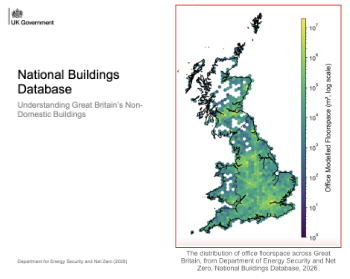
New UK National Buildings Database.
Building Safety Wiki Interviews

Chief executive of the British Woodworking Federation.
Planning condition discharge in England and Wales

A brief explanation from a building compliance expert, with further links.
Overheating guidance and tools for building designers

Guidance for dealing with element of building fabric control that have increasing importance.
Shading for housing, a design guide

From the Good Homes Alliance and British Blind and Shutter Association.
UK Standard Skills Classification (SSC)

A shared framework for describing skills needs.
Social media ban consultation comes to close

CIOB urges UK Government to consider social media’s role in careers guidance in ban debate.
The latest of eight Skills England apprenticeship units

The addition of battery manufacturing welcomed by ECA with a warning about the risks of fast-tracked apprenticeship units.
Building Control Independent Panel final report
A precis of a key report led by Dame Hackitt with full recommendations and link to the government response.
Building Safety recap April, 2026
A short and longer run-through of the month, with links to further information and sources.