





Evolving opportunities for providing thermal comfort
This article summarises a research paper, ‘Evolving opportunities for providing thermal comfort’ by Gail Brager, Hui Zhang & Edward Arens published in 2015 in --Building Research & Information, 43:3, 274-287, DOI: 10.1080/09613218.2015.993536.
The paper proposes new ways of thinking about the design and operation of buildings to provide enhanced thermal experiences and reduce energy consumption. The strategies that are suggested are supported by research, development and monitoring of new practices carried out by the Center for the Built Environment (CBE) at the University of California, Berkeley.
It is estimated that buildings in the USA contribute 39% of total greenhouse gas emissions, with 80% of this resulting from energy use for heating, cooling, ventilation and lighting. A significant proportion of this energy use is a consequence of controlling the internal environment of buildings within a narrow range of temperatures, even though this leaves 20% of occupants dissatisfied.
The current tendency is to create uniform conditions in buildings with a temperature range of between 22 and 24°C, delivered through fully-controlled heating, ventilation and air conditioning (HVAC) systems. However, this is energy intensive and can result in thermal monotony, or thermal boredom. In addition, cooling systems frequently over-cool, delivering temperatures in the summer that are below those in the winter.
Studies have suggested that for every 1°C of expansion in either direction of the narrowly-controlled thermal ‘dead zone’, annual central HVAC energy consumption can be reduced by 10%. In addition, it is proposed that greater comfort, and even thermal pleasure, can be achieved by a more dynamic, non-uniform environment, and that a temperature range of 21 to 27°C can achieve optimal operative performance.
The paper suggests that performance is more strongly related to thermal comfort, rather than temperature per se, with influences such as; humidity, air movement, operative control and personal comfort systems, and it cites an emerging understanding of ‘alliesthesia’ which proposes that more variable indoor environments can enhance satisfaction and well-being.
The paper sets out five changes that could help deliver a richer thermal environment and reduce energy consumption:
- Moving from centralised to personal control.
- From still to breezy air movement.
- From thermal neutrality to delight.
- From active to passive design.
- From disengagement to improved feedback.
To remove barriers to adopting these changes, practitioners and researchers must work together to influence building standards, design guidelines and green building rating systems.
Gail Brager, Hui Zhang & Edward Arens (2015) Evolving opportunities for providing thermal comfort, Building Research & Information, 43:3, 274-287, DOI: 10.1080/09613218.2015.993536.
Read the full paper at Taylor & Francis Online.
See also:
- Richard de Dear (2011) Revisiting an old hypothesis of human thermal perception: alliesthesia. Building Research & Information, 39:2, 108-117. DOI: 10.1080/09613218.2011.552269.
- Thomas Parkinson & Richard de Dear (2015) Thermal pleasure in built environments: the physiology of alliesthesia. Building Research & Information, 43:3, 288-301. DOI: 10.1080/09613218.2015.989662.
[edit] Find out more
[edit] Related articles on Designing Buildings Wiki
- BREEAM Thermal comfort.
- Cold stress.
- Comfort in low energy buildings.
- Dry-bulb temperature.
- Globe temperature.
- Healthy excursions outside the thermal comfort zone.
- Heat stress.
- Mean radiant temperature.
- Operative temperature.
- Overheating.
- Predicted mean vote.
- Psychometric charts.
- Sling psychrometer.
- Temperature.
- Thermal comfort.
- Thermal indices.
- Thermal pleasure in built environments: physiology of alliesthesia.
- Wet-bulb temperature.
- Wet-bulb globe temperature.
Featured articles and news
Costs and insolvencies mount for SMEs, despite growth

Construction sector under insolvency and wage bill pressure in part linked to National Insurance, says report.
The place for vitrified clay pipes in modern infrastructure
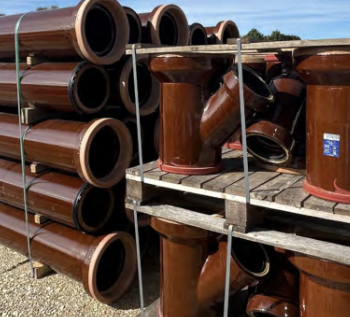
Why vitrified clay pipes are reclaiming their role in built projects.

Research by construction PR consultancy LMC published.
Roles and responsibilities of domestic clients

ACA Safety in Construction guide for domestic clients.
Fire door compliance in UK commercial buildings

Architect and manufacturer gives their low down.
Plumbing and heating for sustainability in new properties
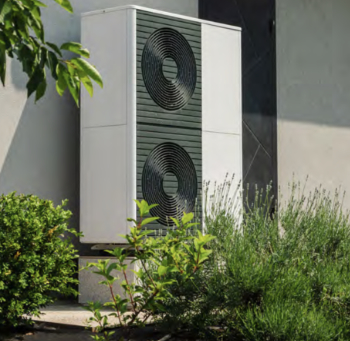
Technical Engineer runs through changes in regulations, innovations in materials, and product systems.
Awareness of the Carbon Border Adjustment Mechanism
What CBAM is and what to do about it.
The new towns and strategic environmental assessments
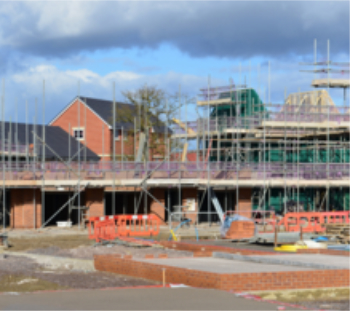
12 locations of the New Towns Taskforce reduced to 7 within the new towns draft programme and open consultation.
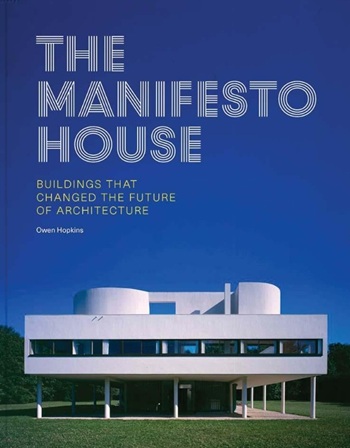
Buildings that changed the future of architecture. Book review.
The Sustainability Pathfinder© Handbook
Built environment agency launches free Pathfinder© tool to help businesses progress sustainability strategies.
Government outcome to the late payment consultation, ECA reacts.
IHBC 2025 Gus Astley Student Award winners

Work on the role of hewing in UK historic conservation a win for Jack Parker of Oxford Brookes University.
Future Homes Building Standards and plug-in solar
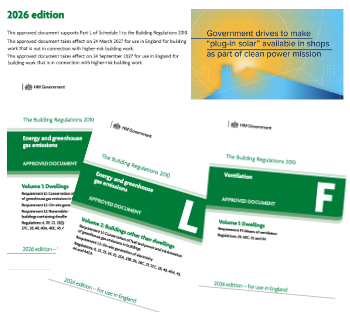
Parts F and L amendments, the availability of solar panels and industry responses.
How later living housing can help solve the housing crisis
Unlocking homes, unlocking lives.
Preparing safety case reports for HRBs under the BSA
A new practical guide to preparing structural inputs for safety cases and safety case reports published by IStructE.
Male construction workers and prostate cancer

CIOB and Prostate Cancer UK encourage awareness of prostate cancer risks, and what to do about it.