





Draft London Housing Strategy

Rebekah Paczek from Snapdragon Consulting takes a look at Boris Johnson's draft housing strategy for London.
On 25 November 2013, Boris Johnson's Draft London Housing Strategy was published for consultation. The plan is touchingly ambitious with an aim of delivering 42,000 homes per year for the next 20 years. Apparently we are no longer going to live in "serried ranks of stultifying rabbit hutches". I can only assume that Boris has clubbed together with the Conservative ranks to provide a fund to subsidise rents across London.
Boris is making a steady play for more cash and power with a bid for London to retain Stamp Duty Land Tax (SDLT) as part of a new financial settlement. I can just imagine how well that will go down with George Osborne who is currently revelling in the stamp duty bonanza that a reviving market is bringing. Obviously in the run up to an election and with Boris champing at the bit to be leader, Osborne is going to be inclined to hand it all over to him…
The consultation focuses on four areas:
Obviously there is expressed support for institutional investment in purpose-built private rented stock and shared ownership (as well as the push to keep property taxes). The consultation also looks to oversee an expansion of First Steps Homes enabling more people to buy their own home. Apparently under this programme you can buy a home in Southwark for as little as £6,000. However, it doesn't specify where in Southwark, which may be a key point.
The Greater London Authority (GLA) is committed to promoting the Opportunity Areas, designating new Housing Zones which build on the approach of Enterprise Zones. Like a fairground carousel which will always come back round if you stay in the same place for long enough, Boris wants to promote garden suburbs on publicly owned land. Apparently a new garden suburb will be delivered at Barking Riverside, creating a new community larger than Windsor – which is an interesting comparison and you have to love the enthusiasm of anyone who would compare Barking to Windsor…
[edit] Who Lives Here
Apparently overseas investors account for around 10-15% of purchases of new build homes in London as a whole. The secondary market, which has less overseas investors, tends to set benchmarks. However, overseas investment remains a critical part of the London housing market triggering development and providing upfront funding by buying off-plan. Just in case we were all in danger of falling into the trap of assuming overseas house buyers were bad…
There is a need for much greater investment in low cost housing, not just social rented affordable housing. There is also a critical need for more and better housing to support the expansion of jobs. The GLA want to ensure that at least 5,000 long-term private rented homes a year will be built with a minimum period of ten-years as private-rented.
It seems the Mayor is intent on using his full range of powers to get more homes built in all sectors across the capital, removing barriers to delivery, revisiting historical planning agreements and working with developers and boroughs to consider interventions to unlock sites. There will be several boroughs which are delighted at this thought…
The plan aims to delver 15,000 affordable homes each year:
- 40% for flexible low cost home ownership.
- 60% for affordable rent with half capped at affordable rents and half at discounted rents.
All new homes will be built to the London Housing Design Guide Standards and at Lifetime Homes standards with at least 10% wheelchair accessible. The GLA will also plan to retrofit every poorly insulated home in London by 2030 with all affordable homes retrofitted by 2020. The London Rental Standard will also be implemented to accredit landlords and agents.
[edit] The Housing Covenant
Obviously the question of who deserves to live in a house like this is still very important. Governments seem currently to prefer to make sure that the Dickensian epitaph of the deserving poor is applied in every possible situation so it is mainly those who will be helped. There is also a drive to push home ownership with the ability to port equity loans and an expansion of the eligibility for First Steps homes.
The Mayor is keen to look at expanding Help to Buy to cover development finance, guaranteeing loans which can then be repaid as the homes are sold. He also wants to encourage the stability of interest rates over the longer term – perhaps he should have that conversation with Mark Carney (Governor of the Bank of England), who may have other aspects to take into account as well as London housing.
[edit] The Boris Bank
As well as devolving property taxes and working towards a longer term housing settlement, the Plan looks to promote the use of prudential borrowing to support the development pipeline and lifting the cap on borrowing for local authorities.
Boris is also looking at the possibility of a London Housing Bank for large-scale developments with a pilot of £160m. Added to this, the Mayor is going to act as the conduit for all public sector land in London. Boris will have his fiefdom at last…
Featured articles and news
Costs and insolvencies mount for SMEs, despite growth

Construction sector under insolvency and wage bill pressure in part linked to National Insurance, says report.
The place for vitrified clay pipes in modern infrastructure

Why vitrified clay pipes are reclaiming their role in built projects.

Research by construction PR consultancy LMC published.
Roles and responsibilities of domestic clients

ACA Safety in Construction guide for domestic clients.
Fire door compliance in UK commercial buildings

Architect and manufacturer gives their low down.
Plumbing and heating for sustainability in new properties

Technical Engineer runs through changes in regulations, innovations in materials, and product systems.
Awareness of the Carbon Border Adjustment Mechanism
What CBAM is and what to do about it.
The new towns and strategic environmental assessments
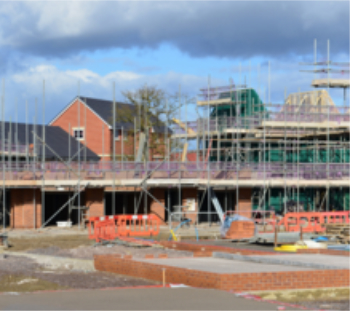
12 locations of the New Towns Taskforce reduced to 7 within the new towns draft programme and open consultation.
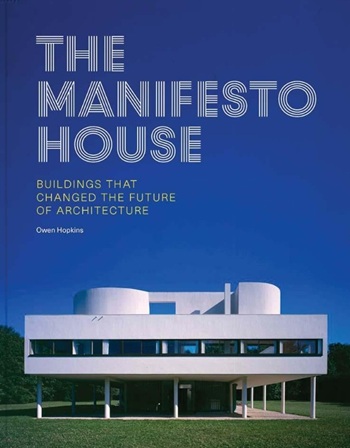
Buildings that changed the future of architecture. Book review.
The Sustainability Pathfinder© Handbook
Built environment agency launches free Pathfinder© tool to help businesses progress sustainability strategies.

Government outcome to the late payment consultation, ECA reacts.
IHBC 2025 Gus Astley Student Award winners

Work on the role of hewing in UK historic conservation a win for Jack Parker of Oxford Brookes University.
Future Homes Building Standards and plug-in solar
Parts F and L amendments, the availability of solar panels and industry responses.
How later living housing can help solve the housing crisis

Unlocking homes, unlocking lives.
Preparing safety case reports for HRBs under the BSA

A new practical guide to preparing structural inputs for safety cases and safety case reports published by IStructE.
Male construction workers and prostate cancer

CIOB and Prostate Cancer UK encourage awareness of prostate cancer risks, and what to do about it.