






Defining hazardous areas

Contents |
[edit] How do we define a hazardous area?
In terms of explosive risk, a hazardous area is an environment in which an explosive atmosphere is present (or may be expected to be present) in quantities that require special precautions for the construction, installation and use of equipment. In this article we explore the challenges faced in the workplace, the risk control measures, and the required competencies to work safely.
[edit] Defining and mitigating risks
Fire and explosion are, without doubt, a major hazard and one that electrical contractors may face in a range of projects and working environments.
It is a consequence of modern life that we manufacture, store or handle a range of gases or liquids that are deemed flammable, and a range of dusts that are deemed combustible. These substances can, in certain conditions, form explosive atmospheres and these can have major and tragic consequences.
Most of us are familiar with the fire triangle – remove any one of the three elements and the fire cannot occur, but what does this mean in the context of hazardous areas? When breaking this down into its simplest terms it is essentially
- a combination of a certain amount of release or leak of a particular substance or material
- mixing with ambient oxygen and
- the presence of a source of ignition.
While we can introduce various measures to prevent an unintended release of a flammable or combustible material, we cannot completely rule this out. In most instances, we can do little about the levels of oxygen in the air, but we can have significant influence on sources of ignition, for example electrical equipment.
Hazardous areas are documented on the hazardous area classification drawing and are identified on site by the triangular “EX” sign. Here, amongst other key information, zones are split into three types depending on the hazard, the likelihood and duration that an explosive atmosphere will exist; Zone 0 or 20 is deemed the most hazardous and Zone 2 or 22 is deemed the least.
It is in these areas that we find specific requirements for the types of electrical equipment and installations that are designed not to present a source of ignition. The methods by which this is achieved can vary so it is critical that the special features of this electrical equipment and installation is not compromised.
Have you heard of terms such as “flameproof”, “increased safety” or “intrinsic safety”? Identified by special markings, these are just a few examples of the types of protection (or protection concept) employed by the electrical equipment and installation. To preserve these special features requires a combination of the correct design, equipment selection and installation techniques. This is then verified through inspection and testing and is preserved throughout the life of the installation by employing the correct maintenance techniques, supplemented by periodic inspection.
When all these measures are taken, they should also be documented. The verification dossier includes information such as the hazardous area classification drawing, manufacturers’ documentation, equipment certification, design drawings and calculations, inspection records, and records of a person’s competency and continual professional development (CPD), such as via ECA’s eCOMS software*.
[edit] Creating a skilled and competent workforce
Given the potential consequences of an explosion and the specialist nature of these activities, it is vital that those undertaking this work are competent to do so. CompEx is the international scheme for competency validation and certification of those who work in explosive atmospheres, offering a range of qualifications to develop and verify a person’s knowledge and skills through a combination of training and assessment.
The scheme has qualifications for a variety of employees working in all industries at varying levels. Non-technical staff may attend a Foundation Course (ExF) to gain an overall appreciation of the hazards and control measures, whilst technicians may undertake a more specialised qualification. This addresses the requirements associated with equipment selection, installation, maintenance and inspection. CompEx also offers qualifications aimed at those who are responsible for the design and management of installations and the persons employed at hazardous installations.
The subject of hazardous areas is a very serious one, with some unique challenges. CompEx provides a methodology that can offer verifiable core competency validation against a range of activities and hazardous areas. For more information and to see the courses offered please visit:
- ECA provides Members with free access to eCOMS, a tool which allows them to record contractor training, supervision and CPD. Visit www.eca.co.uk for more.
This article originally appeared on the ECA website as "How do we define a hazardous area?" dated November 17 and was written by Gary Parker, ECA Senior Technical Manager.
--ECA
[edit] Related articles on Designing Buildings
- As Low As Reasonably Practicable (ALARP).
- Causes of sinkholes.
- Competent person.
- Construction hazards.
- Hazard pay.
- Hazardous substances.
- Health and safety.
- Health and safety file.
- Major hazard for planning purposes.
- Major hazard sites, installations and pipelines.
- Near miss.
- Project risk.
- Risk assessment.
- Risk in building design and construction.
- Risk management.
- Risk register.
- Safety.
- Safety management.
Featured articles and news

We're expanding our collaborative mission by launching DB Intelligence, an exclusive market research advisory panel. Built environment professionals can now get paid to share their expertise on industry trends, products and services.
Panel members receive direct financial incentives for participating in research projects like short surveys, 1-2-1 interviews and focus groups. Register today to shape the future of the construction sector.
Planning condition discharge in England and Wales

A brief exoplanation from a building compliance expert, with further links.
Overheating guidance and tools for building designers

Guidance for dealing with element of building fabric control that have increasing importance.
Shading for housing, a design guide

From the Good Homes Alliance and British Blind and Shutter Association.
UK Standard Skills Classification (SSC)

A shared framework for describing skills needs.
Social media ban consultation comes to close

CIOB urges UK Government to consider social media’s role in careers guidance in ban debate.
The latest of eight Skills England apprenticeship units

The addition of battery manufacturing welcomed by ECA with a warning about the risks of fast-tracked apprenticeship units.
Building Control Independent Panel final report
A precis of a key report led by Dame Hackitt with full recommendations and link to the government response.
Building Safety recap April, 2026
A short and longer run-through of the month, with links to further information and sources.
CIAT May 2026 briefing.
From medieval scribes to modern word art.
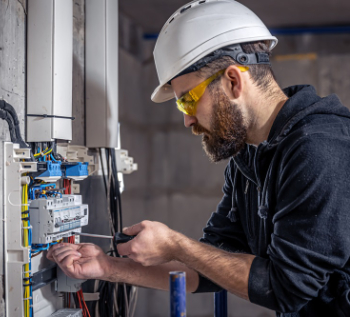
ECA welcomes crackdown on late payment and push for clean energy, whilst CIOB seek fixed cladding removal timeframes.
Cyber Security in the Built Environment
Protecting projects, data, and digital assets: A CIOB Academy TIS.
Managing competence in the built environment
ITFG publishes new industry guide on how to meet the ICC principles.
The UK's campaign to reduce noise pollution: Mythbusting, articles and topic guides.
Comments
[edit] To make a comment about this article, click 'Add a comment' above. Separate your comments from any existing comments by inserting a horizontal line.