





Conflict avoidance
Projects are usually long-term transactions with high uncertainty and complexity, and it is impossible to resolve every detail and foresee every eventuality at the outset. As a result, situations often arise that are not clearly addressed by the contract. The basic factors that drive the development of conflict are:
- Uncertainty,
- Contractual problems
- Behaviour.
Conflict can lead to the deterioration of relationships, a breakdown of trust, delays, additional costs and ultimately to breaches of contract and claims for damages.
For more information see: Construction disputes.
Conflict avoidance strategies can be used to manage these factors. Some of the most common conflict avoidance approaches include:
- Effective management. Potential problems can be analysed and managed by proactively planning future work and raising issues of concern early.
- Ensuring clear contract documents. Conflicts can arise from ambiguities in contract documents.
- Partnering and alliancing. Closer co-operation between project stakeholders can improve teamwork.
- Client management. A proper and full understanding of the client’s objectives can help avoid conflict, as can liaising with the client and managing expectations regularly.
- Progress assessment. Regularly assessing project progress, costs, and other key performance indicators and liaising with the main contractor to deal with any problems.
- Design team management. Ensuring timely provision of comprehensive and coordinated information both within the design team and from them to the contractor.
- Maintaining records. Conflict can often be avoided by keeping proper and detailed records of agreements, instructions, variations, labour, plant, materials, and so on.
- Payment practices. Establishing and adhering to proper payment practices.
- Stakeholder consultation and stakeholder management. Keeping all stakeholders up to date with regular reports on objectives risks, cost, progress and quality.
- Third party dependencies. Identifying and assessing third party dependencies and putting in place strategies to mitigate, transfer, avoid or accept risks.
See also: Conflict avoidance pledge.
[edit] Related articles on Designing Buildings
- Adversarial behaviour in the UK construction industry.
- Alternative dispute resolution.
- Chinese wall.
- CLC document on claims and disputes in construction.
- Compulsory Alternative Dispute Resolution.
- Conflict avoidance pledge.
- Conflict of interest.
- Construction disputes.
- Contract claims.
- Delays on construction projects.
- Dispute avoidance.
- Dispute resolution.
- Game theory.
- Negotiation techniques.
- Pressing pause to avoid errors.
- Risk assessment.
Featured articles and news

We're expanding our collaborative mission by launching DB Intelligence, an exclusive market research advisory panel. Built environment professionals can now get paid to share their expertise on industry trends, products and services.
Panel members receive direct financial incentives for participating in research projects like short surveys, 1-2-1 interviews and focus groups. Register today to shape the future of the construction sector.
Building Control Independent Panel final report
A precis of a key report led by Dame Hackitt with full recommendations and link to the government response.
Guide to ISO 19650 for Architecture Firms (2026)
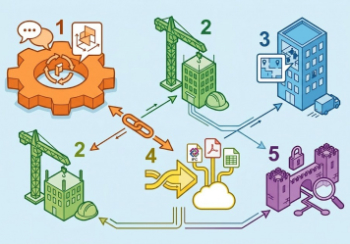
A user gives their low down.

A UK training and membership provider for mould remediation professionals.
Building Safety recap April, 2026
A short and longer run-through of the month, with links to further information and sources.

CIAT May 2026 briefing.

Independent NSI and BAFE study exploring how organisations are changing the way they buy fire safety services.

From medieval scribes to modern word art.

ECA welcomes crackdown on late payment and push for clean energy, whilst CIOB seek fixed cladding removal timeframes.
Cyber Security in the Built Environment
Protecting projects, data, and digital assets: A CIOB Academy TIS.
Managing competence in the built environment
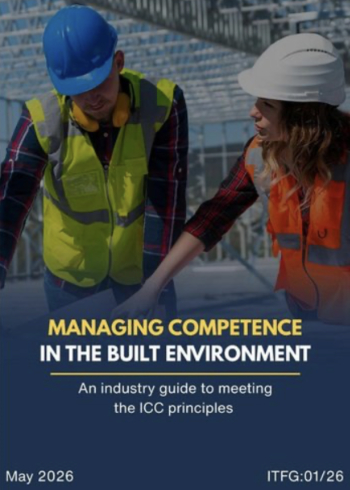
ITFG publishes new industry guide on how to meet the ICC principles.
The UK's campaign to reduce noise pollution: Mythbusting, articles and topic guides.