





Building Services Validation
Contents |
[edit] Introduction
The validation of building services is increasingly becoming an essential component of pre-construction packages and tenancy lease agreements. In this article, I intend to explore this fast-growing service and explain the benefits of validation, who benefits from the service and when is the right time to undertake these surveys and inspections.
Building services validation (also known as 'MEP' Validation) can be generally described with 3 C’s, these being-
- Condition,
- Compliance, and
- Capacity.
A report will vary considerably depending on the client and project requirements, but generally the scope of an inspection will include one, or all three of these categories.
A validation report will often be complied with photographic evidence and supporting drawings, notes and test results in accordance with the clients’ requirements. Conclusions will be drawn as to the condition, compliance or capacity of the system/plant with evidence to support the statements within the body of the report, or within the accompanying documents.
[edit] Condition Report
The condition of building services is a common focus of a validation report with a view to advise the client on the level of remedial work that is required to restore an installation to a maintainable condition. This may include advice on the life expectancy of plant, with recommendations for replacement where necessary to aid designers with specifying equipment for refurbishment projects.
Condition reporting should be carried out by competent specialists who can comprehensively test the services and plant against industry standards such as BSRIA, CIBSE and the various electrical regulations. The results should then be scheduled against industry agreed life expectancy guidelines to provide a clear and robust conclusion.
Condition reports are supported by testing the performance of key items of plant, non-destructive testing, and integrity testing amongst many other options to identify possible points of failure. Taking ownership of an installation with unknown faults will likely result in increased maintenance costs and potentially result in significant loss of revenue should failure occur.
[edit] Compliance Report
Compliance reporting is particularly important for clients looking to occupy a space where existing building services are to be retained or altered to suit a new layout or level of occupation. Identifying any non-compliances enables clients to include remedial works into refurbishment contracts and align existing installations with industry regulations.
Key services such as fire detection, emergency lighting, and electrical installations as well as water treatment monitoring are required to be regularly tested to validate insurances and ultimately reduce liability. Compliance inspections may include the verification that an incumbent service provider is adhering to the current requirements for these periodic inspections and maintaining the appropriate documentation, something that should not be taken for granted.
Aside from statutory compliance, validation reports can be used to ensure compliance with performance specifications and original design criteria. Such intrusive inspections range from the measurement of flow rates against design figures for mechanical systems, to reviewing record drawings for an installation, verifying are an accurate representation of the system. This exercise provides huge benefits to Consultants seeking to modify system designs by informing them of the actual site conditions for which they may otherwise have been ambivalent.
[edit] Capacity Report
For clients seeking to extend an existing system, or increase occupation of a space, a key consideration will be the capacity of the building services. Measuring the demand of a system and comparing against the available capacity can provide essential information for future expansion and support budgets/specifications for upgrading supplies or main items of plant.
For example, an increase in the occupation to a typical commercial space will have an impact on the following services (where they are available):
Failing to determine the available capacity of these services will result in costly ramifications post-completion if not identified and addressed at the design stage for the project.
[edit] Risk Management
To ensure risk is managed as effectively as possible, a validation of the building services should be performed as early into the project as possible so that any problems can be identified and incorporated into the specification. For fit out and construction projects, this will be at pre-contract stage after initial conception; where a tenant is seeking to occupy a space, it is advised to carry out intrusive due-diligence inspections prior to signing any lease agreements.
Due to the complex nature of these inspections, it is advised that an independent specialist contractor is engaged to deliver validation reports to ensure an unbiased view of the services, that is compliant with the clients brief. In some cases, incumbent service providers or contractors with an interest in the project are instructed to carry out the inspections and deliver a report, as it would appear to be a cheaper and simpler alternative to an independent specialist. Caution should be applied in such cases as these parties have an interest in the project and may seek to conceal maintenance issues, or condemn otherwise satisfactory systems to inflate the project budget.
[edit] Beneficiaries
The benefits of validation have been recognised by industry experts at all stages of the building services life cycle. Typical industry professionals who save time and money through an increased awareness of building services using validation reports include:
- Design consultancies,
- Project managers,
- Contractors,
- Architects,
- Commercial and retail end users,
- Property consultants,
- Facilities managers,
- High end residential mangers
Jonathan Woodard MIET
[edit] Related articles on Designing Buildings Wiki
Featured articles and news
Guide to ISO 19650 for Architecture Firms (2026)
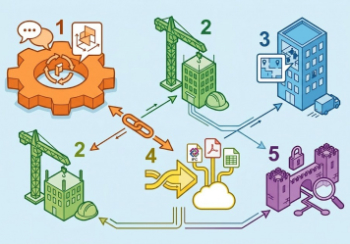
A user gives their low down.

A UK training and membership provider for mould remediation professionals.
Building Safety recap April, 2026
A short and longer run-through of the month, with links to further information and sources.

CIAT May 2026 briefing.

Independent NSI and BAFE study exploring how organisations are changing the way they buy fire safety services.

From medieval scribes to modern word art.

ECA welcomes crackdown on late payment and push for clean energy, whilst CIOB seek fixed cladding removal timeframes.
Cyber Security in the Built Environment
Protecting projects, data, and digital assets: A CIOB Academy TIS.
Managing competence in the built environment
ITFG publishes new industry guide on how to meet the ICC principles.
The UK's campaign to reduce noise pollution: Mythbusting, articles and topic guides.
Setting Expectations on Competence Management
Industry Competence Committee.
New Scottish and Welsh governments

CIOB stresses importance of construction after new parliament elections.
The sad story of Derby Hippodrome
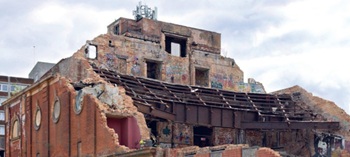
An historic building left to decay.

ECA, JIB and JTL back Fabian Society call to invest in skills for a stronger built environment workforce.

Women's Contributions to the Built Environment.
Calls for the delayed Circular Economy Strategy

Over 50 leading businesses, trade associations and professional bodies, including CIAT, and UKGBC sign open letter.
The future workforce: culture change and skill

Under the spotlight at UK Construction Week London.
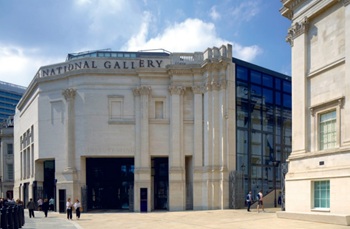
A landmark moment for postmodern heritage.