





Unexploded ordnance
Glossary of common terms used in the management of land contamination, published on the Planning Portal, defines an unexploded ordnance (UXO) as an: ‘…explosive ordnance that has been either primed, fused, armed or prepared for use and has been subsequently fired, dropped, launched, projected or placed in such a manner as to present a hazard to operations, persons or objects and remains unexploded either by malfunction or design.’
Unexploded ordnances are a significant concern for construction projects in the UK, especially in areas with historical ties to military activities, such as those bombed during World War II. Many areas in the UK, especially cities like London, Manchester, and Coventry, were heavily bombed during WWII and unexploded bombs and munitions are frequently found in these regions. Historical military training sites and ordnance manufacturing facilities are also potential hotspots for UXOs.
Addressing UXOs is critical for safety, regulatory compliance, project efficiency, and cost management. UXOs pose a direct threat to life and property. If disturbed during excavation or piling, these devices can detonate, causing injury, fatalities, or substantial property damage. Construction workers and the surrounding public are at risk, making UXO identification and mitigation a significant safety priority.
UXO risk assessments are often part of pre-construction surveys in high-risk areas. Conducting these surveys helps to avoid surprises and integrate risk mitigation measures into project planning. The possible presence of UXOs may influence decisions on excavation methods, site layout, and even project timelines.
Discovering a UXO mid-project can halt construction, causing significant delays. Specialist UXO surveys and removal services are required, which can add unplanned costs. However, If not addressed proactively, the costs of dealing with a UXO incident far exceed those of preventative measures. Health and safety regulations in the UK, such as the Health and Safety at Work Act 1974, require employers to identify and mitigate risks, including UXOs. Ignoring UXO risks can lead to legal penalties and liabilities if an incident occurs.
An unintended detonation can have wider consequences, including damage to nearby properties and disruption to local communities. Environmental considerations also come into play, as the chemicals from UXOs could contaminate soil and water.
[edit] To manage UXO risks, it may be necessary to undertake:
- Historical risk assessments, reviewing bombing records, military maps, and historical data to assess the likelihood of UXOs on a site.
- Geophysical surveys using magnetometers and other technologies to detect metal anomalies underground.
- Engaging UXO experts to identify, assess, and safely remove or neutralise ordnances.
[edit] Related articles on Designing Buildings
Featured articles
Check out some of the best features and news from Designing Buildings as well as key stories from around the web.
Building Safety Act implementation in Wales

CIAT to host industry panel on 26 June.

New and updated CLC building safety guidance.
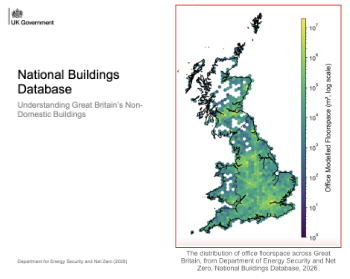
New UK National Buildings Database.
Building Safety Wiki Interviews

Chief executive of the British Woodworking Federation.
Planning condition discharge in England and Wales

A brief explanation from a building compliance expert, with further links.
Overheating guidance and tools for building designers

Guidance for dealing with element of building fabric control that have increasing importance.
Shading for housing, a design guide

From the Good Homes Alliance and British Blind and Shutter Association.
UK Standard Skills Classification (SSC)

A shared framework for describing skills needs.
Social media ban consultation comes to close

CIOB urges UK Government to consider social media’s role in careers guidance in ban debate.
The latest of eight Skills England apprenticeship units

The addition of battery manufacturing welcomed by ECA with a warning about the risks of fast-tracked apprenticeship units.
Building Control Independent Panel final report
A precis of a key report led by Dame Hackitt with full recommendations and link to the government response.