






The UK Net Zero Carbon Buildings Standard: creating a true pathway to the future

The pilot version of the UK Net Zero Carbon Buildings Standard (UKNZCBS) –designed to offer a clear and consistent methodology for defining and achieving net zero carbon in the built environment – is set to have a substantial impact on the construction industry in the coming months. Let’s take a look at what the UKNZCBS is, why it is being piloted, and how it could positively impact the construction industry moving forward.
Sustainability has become a major focus for the construction industry in recent years, especially with the UK Government’s 2050 net zero target getting ever closer. But a lack of a unified approach has led to confusion and inconsistency around the definition of “net zero carbon” in buildings.
To counter that, the UKNZCBS – developed by some of the built environment’s leading organisations and decision-makers – was introduced. While it is seen as a hugely influential set of targets and rules, there are many inside and outside the construction industry that aren’t aware of what it is or how it could substantially impact the built environment.
So, what exactly is the UKNZCBS? It is a standard that provides strict but transparent guidelines to help industry professionals prove compliance and demonstrate how their assets align with the UK’s carbon and energy targets.
In fact, it sets out clear metrics and limits for operational energy use, on-site renewable electricity, and embodied carbon. Consequently, these new standards will exacerbate the need for property developers, facility managers, and building owners to take advantage of the latest advancements in technology, such as smart buildings.
In recent years, there have been many crucial inconsistencies in how people have approached looking at net zero and a general ambiguity around what exactly net zero means. For instance, does it include all energy use, or should people only focus on heating?
The new UKNZCBS will heighten the focus on carbon emissions – both in embodied carbon and operationally – and encourage a more cohesive and holistic approach when it comes to decarbonisation. Given the UK’s built environment accounted for 25% of the total greenhouse gas emissions in 2024, this is absolutely imperative.
By providing consistent definitions for net zero carbon across existing and new buildings, the UKNZCBS will set clear performance targets for whole-life carbon, embodied carbon, and operational energy.
In fact, these standards will set out a fundamental pass/fail requirement for buildings to be fossil fuel free, with the vital exceptions of essential emergency and life safety and crucial back-up systems that service critical functions. Additionally, they will mandate operational energy limits based on energy consumption during building use at 80% occupation.
This means architects, developers, and designers will be able to align on expectations and ensure more efficient and effective results for the building owners and occupants.
With the UKNZCBS shining a spotlight on operational carbon and embodied carbon, innovative and environmentally friendly solutions, such as circular economy practices and low-carbon materials, will soon become much more commonplace.
Consequently, there will be a stronger drive across the construction industry towards early sustainable design decisions, with designers and architects taking time to consider a building’s full lifecycle to encourage adaptability and reuse.

Records suggest there are around 29 million homes currently in need of retrofitting. In addition to illustrating just how much of a task is ahead of the construction industry, it also highlights just how much scope there is to improve energy performance and reduce operational carbon in the existing building stock across the UK.
As a result of the UKNZCBS’ clear methodologies and targets, architects, along with asset managers, facility managers, and landlords, will have all the information required to make informed decisions when it comes to the benefits of refurbishment versus redevelopment.
With a robust and stringent methodology for verifying and quantifying a building’s carbon footprint, the UKNZCBS will also enable architects and building designers to ensure their buildings align with the UK’s carbon reduction goals. Following the standard’s recommendations and targets will give architects the opportunity to confidently claim and demonstrate net zero carbon status, enabling them to attract clients who prioritise environmental responsibility and sustainability.
The UKNZCBS has been developed for anyone associated with the funding, procurement, design, or specification of a net zero carbon building. But it’s also vitally important that architects understand and acknowledge the key metrics that will come to underpin these standards.
With the collection, maintenance, and management of data likely to be a critical factor when it comes to illustrating conformity to the UKNZCBS, it will be crucial for architects to establish rigorous and trusted data collection systems. These will allow the accurate tracking and logging of upfront and embodied carbon data, in both retrofit projects and new builds.
Offering specific targets and detailed information regarding the quantification and verification of a´building’s carbon footprint, the UKNZCBS will serve as an incredibly insightful and invaluable tool for professional development. Indeed, architects will be equipped with the crucial knowledge and skills needed to design and implement net zero carbon buildings, proving crucial in a built environment becoming increasingly conscious of its impact on the environment.
While the UKNZCBS is only currently in its pilot stage, it has the potential to align the construction industry in the right way and provide a sharper focus on sustainability and energy efficiency. In fact, encouraging a more cohesive and holistic sustainability approach is going to be vital in the coming years, especially with the UK government’s 2050 net zero target rapidly approaching.
This article appears in the AT Journal issue 154 summer 2025 as "The UK Net Zero Carbon Buildings Standard: creating a true pathway to the future" and was written by Ellen Huelin, Sustainability Director, Whitecode Consulting.
--CIAT
[edit] Related articles on Designing Buildings
- Aaron Gillich, Professor of Building Decarbonisation and Director of the BSRIA LSBU Net Zero Building Centre.
- Achieving net zero in social housing.
- Aligning net zero with the levelling-up agenda.
- A zero-carbon UK by 2050?
- Construction skills crisis threatens UK net zero goals.
- CO2nstruct Zero programme grows to over 70 businesses.
- Heat pumps and heat waves: How overheating complicates ending gas in the UK.
- Industry responds to Prime Ministers Net Zero policy announcement..
- Infrastructure carbon reduction misses net-zero target.
- Low or zero carbon technologies.
- Making Mission Possible: report on achieving a zero-carbon economy by 2030.
- Nearly zero-energy building.
- Net Zero All Party Parliamentary Group NZ APPG.
- Net zero building centre with BSRIA and LSBU.
- Net zero by 2050.
- Net zero carbon building.
- Net zero carbon emissions.
- Net Zero: Practical Pathway Programme.
- Net zero (whole life) carbon.
- Net zero strategy: build back greener.
- Planning the infrastructure transition to net-zero.
- Scotland publishes plans to reach net zero targets with Heat in Buildings Strategy.
- Skilled workforce unable to meet net zero ambitions.
- Smoothing the path to net zero.
- The Global Context for Net Zero NZG 3/2023.
- The LSBU and BSRIA Net zero building centre, topic guide Net Zero Carbon Buildings.
- Thermal imaging of the building fabric in the net zero world.
- Transform to Net Zero.
- UK net zero carbon buildings standard launch.
Featured articles
Check out some of the best features and news from Designing Buildings as well as key stories from around the web.

A quick introduction.
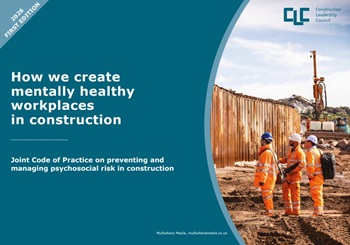
CLC publishes Mental Health Joint Code of Practice.
A quick introduction to its uses and risks.
Construction Management, 17 June

Government rolls out digital planning tool to all local authorities.
Your views needed - a strategy for the professions, trades and occupations.

Confronting competency, codes, capacity and costs.

The hidden risk in modern construction supply chains.
Construction Management, 10 June

24 months to 14: CITB launches accelerated apprenticeships.
Bridging the gap between clients and contractors

Concerns remain around contractor quality, capability, and delivery.
Construction Management, 10 June.
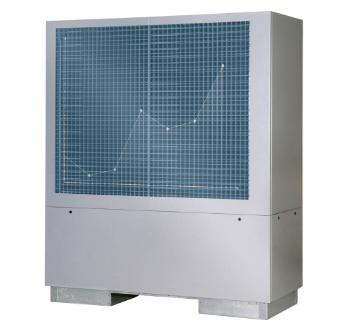
Heat pumps beat boilers in new home tests.
Building Safety Act implementation in Wales

CIAT to host industry panel on 26 June.