





Techniques for drawing buildings
To help develop this article, click 'Edit this article' above.
See also: Manual drafting techniques.
While new technologies such as 3D software, computer aided design (CAD) and building information modelling (BIM) can allow buildings to be drawn virtually on computers, traditional hand-drawing skills are still valuable.
Hand drawing can be a highly technical, measured exercise, involving the use of technical pens, scale rules, T-squares, parallel motion and so on, or it can be an expressive form of communication involving the freehand use of pens or pencils.
In some instances, hand drawing may be faster, or it may be able to convey information in a way that would be more difficult using digital methods. For example, sketches may convey an idea quickly, or historic buildings may have complex characters that are difficult to capture by measurement. Hand drawn drawings can also be more evocative than digital drawings.
- Line weights can be used to help convey depth to a sketch, with the use of different pen weights helping the user to understand the intended order implied within the drawing. See Technical drawing pen sizes for more information.
- Varying line weights along the length of a single line can give a sense of expression.
- Shading or hatching can be added to give a sense of material surface, or shadows which can increase the three-dimensional information in a drawing.
- Contrast can be varied, with the foreground at higher contrast and the background lower to give a sense of depth.
- Parts of a drawing can be more detailed and higher contrast than others to draw the eye of the viewer to the most important area.
- Tracing paper can be used to lay sketch upon sketch and build up through different iterations to the finished drawing. This allows the sketcher to take advantage of the previous drawings while exploring new ideas and concepts, or to layer information.
- There are a number of standard projections that can be used to represent three-dimensional objects in two-dimensions. See Drawing projections for more information
- There are many different types of drawing that can be used for different purposes in building design and construction. See Types of drawing for more information.
- Products such as transfers and stencils can be used to add standard items such as lettering, people, colour and tone.
- Ink can be removed from tracing paper with a razor blade, and transparent tapes can be used that do not appear on reproductions.
Hand drawing can be less expensive, as there is very little equipment needed. However, it can require a lot of skill, space and time, it is more difficult to correct, add text to, create 3D projections or to colour than digital drawing and it cannot be linked to digital information. In addition, a scale has to be selected for manual drawings, whereas digital drawings can be prepared at 1:1, then printed at the required scale. As a result of this, it is becoming something of a lost art.
[edit] Related articles on Designing Buildings
- Architectural reprography.
- Building drawing software.
- Common mistakes on building drawings.
- Computer aided design.
- Concept drawing.
- Drawing board.
- Elevations.
- Geometric form.
- How to draw a floor plan.
- Manual drafting techniques.
- Perspective.
- Rotring.
- Scale drawing.
- Scale rule.
- Standard hatching styles for drawings.
- Symbols on architectural drawings.
- Types of drawings.
- Working drawing.
Featured articles
Check out some of the best features and news from Designing Buildings as well as key stories from around the web.
Bridging the gap between clients and contractors

Concerns remain around contractor quality, capability, and delivery.
Construction Management, 10 June.
Heat pumps beat boilers in new home tests.
Building Safety Act implementation in Wales

CIAT to host industry panel on 26 June.
New and updated CLC building safety guidance.
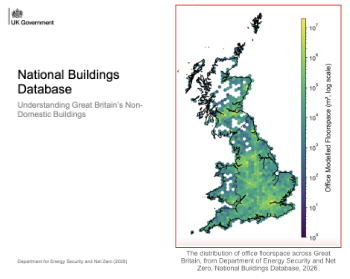
New UK National Buildings Database.
Building Safety Wiki Interviews

Chief executive of the British Woodworking Federation.
Planning condition discharge in England and Wales

A brief explanation from a building compliance expert, with further links.
Overheating guidance and tools for building designers

Guidance for dealing with element of building fabric control that have increasing importance.
Shading for housing, a design guide

From the Good Homes Alliance and British Blind and Shutter Association.
UK Standard Skills Classification (SSC)

A shared framework for describing skills needs.
Social media ban consultation comes to close

CIOB urges UK Government to consider social media’s role in careers guidance in ban debate.