





RICS code of measuring practice
Contents |
[edit] Introduction
The Code of Measuring Practice is a UK guidance note published by the Royal Institution of Chartered Surveyors (RICS).
The RICS suggest that, ‘The purpose of the Code is to provide succinct, precise definitions to permit the accurate measurement of buildings and land, the calculation of the sizes (areas and volumes) and the description or specification of land and buildings on a common and consistent basis.’
It was first published in 1979 and is now in its sixth edition, published in 2007.
[edit] Purpose
It is important that parties agree in advance the basis on which a building or land is to be measured. The Code of Measuring Practice provides guidelines for measuring buildings and land to avoid any disputes arising.
Accurate measuring is required for a variety of purposes:
- Estate agency and valuation.
- Conveyancing.
- Management.
- Planning.
- Sale.
- Acquisition.
- Rating and council tax.
For those within the property profession, it is a criminal offence to give false or misleading information about certain aspects of land or buildings that are for sale.
[edit] Core definitions
The main definitions used within the code are:
- Gross External Area (GEA). The area of building measured externally at each floor level.
- Gross Internal Area (GIA). The area of a building measured to the internal face of the perimeter walls at each floor level.
- Net Internal Area (NIA). The useable area within a building measured to the internal face of the perimeter walls at each floor level.
The publication also incorporates the recent judicial guidance in the case of markup.cgi?doc=/ew/cases/EWHC/Ch/2006/60.html Kilmartin SCI (Hulton House) Ltd v Safeway Stores plc [2006], for the meaning of useable area: ’an area is useable if it can be used for any sensible purpose in connection with the purposes for which the premises are to be used’.
[edit] Key points
- The code is a guide, rather than a set of hard and fast rules that must be followed.
- The code is for measurement purposes and does not deal with valuation.
- The code is distinct from the Standard Method of Measurement of Building Works (SMM now replaced by the New Rules of Measurement NRM2).
- It should be used alongside other guidance notes, for example the measurement of specialist property should also refer to the RICS Valuation Standard (The Red Book).
- The code is for use in the UK only.
[edit] 2015 IPMS update
In 2015, the sixth edition of the Code was updated by publication of RICS Property Measurement to incorporate the International Property Measurement Standard (IPMS), a global standard developed to make property measurement internationally consistent.
RICS Property Measurement has three elements:
- Professional Statement: Office Measurement (applies to office measurements only)
- IPMS: Office Buildings (applies to office measurements only)
- Code of Measuring Practice, 6th edition (currently applies to all building classes except offices).
From January 2018, RICS professionals are expected to adopt the Property Measurement Professional Statement in place of the Code for offices and Residential unless local laws, or a client require an alternative. Professional Statements for other property classes including industrial and retail will be added over time as the IPMS is expanded.
See RICS Property Measurement for more information.
[edit] Related articles on Designing Buildings
- Building People.
- Gross external area.
- Gross internal area.
- Measurement.
- Net internal area.
- Quantity.
- RICS Property Measurement.
- RICS publishes Land Measurement for Planning and Development Purposes.
- Royal Institution of Chartered Surveyors.
- Standard Method of Measurement.
- New Rules of Measurement.
[edit] External references
Featured articles and news
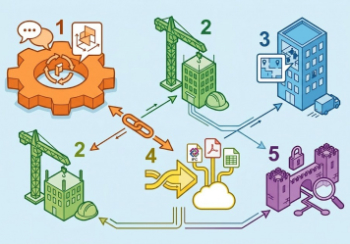
Guide to ISO 19650 for Architecture Firms (2026)
A user gives their low down.

A UK training and membership provider for mould remediation professionals.
Building Safety recap April, 2026
A short and longer run-through of the month, with links to further information and sources.

CIAT May 2026 briefing.

Independent NSI and BAFE study exploring how organisations are changing the way they buy fire safety services.

From medieval scribes to modern word art.

ECA welcomes crackdown on late payment and push for clean energy, whilst CIOB seek fixed cladding removal timeframes.
Cyber Security in the Built Environment
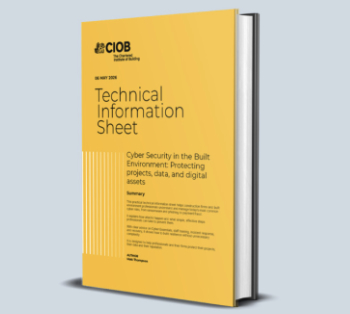
Protecting projects, data, and digital assets: A CIOB Academy TIS.
Managing competence in the built environment
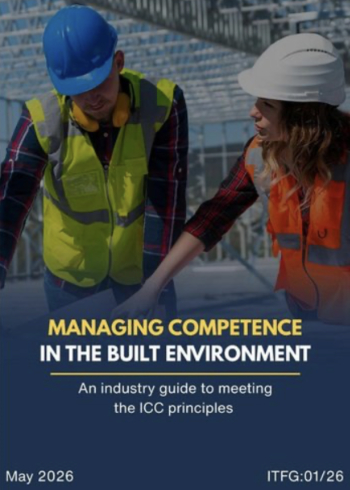
ITFG publishes new industry guide on how to meet the ICC principles.
The UK's campaign to reduce noise pollution: Mythbusting, articles and topic guides.
Setting Expectations on Competence Management
Industry Competence Committee.
New Scottish and Welsh governments

CIOB stresses importance of construction after new parliament elections.
The sad story of Derby Hippodrome

An historic building left to decay.

ECA, JIB and JTL back Fabian Society call to invest in skills for a stronger built environment workforce.

Women's Contributions to the Built Environment.
Calls for the delayed Circular Economy Strategy

Over 50 leading businesses, trade associations and professional bodies, including CIAT, and UKGBC sign open letter.
The future workforce: culture change and skill

Under the spotlight at UK Construction Week London.
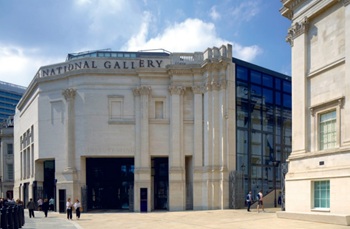
A landmark moment for postmodern heritage.