





Proprietary information
Black’s Law Dictionary defines ‘proprietary’ as meaning:
- Of, or relating to, a proprietor.
- Of, relating to, or holding as property.
Proprietary information is information such as financial data, test results or trade secrets that is viewed as the holder’s property and that they wish to keep from becoming public knowledge.
For information to be considered proprietary, it should not be readily available in public sources, it should provide some sort of competitive advantage, and the company should take every reasonable step to maintain its confidentiality. This may include developing security systems to protect proprietary information from the increasing threat of cyber-hacking. More companies are now appointing information managers to assume responsibility for keeping such information safe and secure.
This can be an issue on construction projects, where members of the project team, or the client, may learn information that one party wishes to stay confidential. Submitting tender proposals for example may require the provision of detailed cost information, and descriptions of technologies and methodologies. This may include information that suppliers would not wish to be shared with their competitors.
As a result, organisations or employees with access to such information may be required to non-disclosure agreements or confidentiality agreements that can limit the use of ideas and information for a specific purpose for a certain period of time. They may protect information recorded in a certain form, perhaps marked as ‘confidential’, or they may protect information shared under certain circumstances, such as in presentations or meetings, or during the course of employment or consultancy. They can be used to prevent commercially sensitive information from being shared, or to prevent parties from communicating certain information to the press or other third parties.
Non-disclosure agreements can cover information such as:
- Intellectual property.
- Commercial or trading information.
- Technical drawings or designs.
- Business plans.
- Customer and potential customer lists.
- Mathematical and chemical formulae.
- Trade secrets which could include a formulae, programmes or processes.
- Personal information about individuals involved in a project
- Non-patentable know-how.
See Non-disclosure agreement for more information.
Some information may also be subject intellectual property rights such as; copyright, trademarks, patents, and other design rights.
Forms of appointment generally give the client a licence to use information such as a design for the purposes it was intended. This may include use of the design by other team members. The situation with Level 2 building information modelling is similar, but the position in relation to Level 3, where the entire team work on a single model is less clear.
See Intellectual property and Copyright for more information.
[edit] Related articles on Designing Buildings
- Appointing consultants.
- Assignment.
- Back-to-back provisions in construction contracts.
- Breach of contract.
- Confidentiality clause.
- Contract conditions.
- Construction contract.
- Copyright.
- Design protection.
- Intellectual property.
- Non-disclosure agreement for building design and construction.
- Prejudice to commercial interests.
- Royalties.
- Trade secrets.
- Types of construction organisation.
[edit] External references
- Inc.com - Proprietary information
Featured articles
Check out some of the best features and news from Designing Buildings as well as key stories from around the web.

A quick introduction to its uses and risks.
Construction Management, 17 June

Government rolls out digital planning tool to all local authorities.

Your views needed - a strategy for the professions, trades and occupations.

Confronting competency, codes, capacity and costs.

The hidden risk in modern construction supply chains.
Construction Management, 10 June
24 months to 14: CITB launches accelerated apprenticeships.
Bridging the gap between clients and contractors

Concerns remain around contractor quality, capability, and delivery.
Construction Management, 10 June.

Heat pumps beat boilers in new home tests.
Building Safety Act implementation in Wales

CIAT to host industry panel on 26 June.

New and updated CLC building safety guidance.
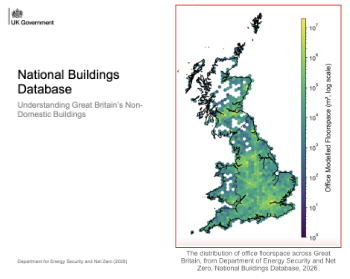
New UK National Buildings Database.