






Isometric Drawings: Visualizing and Validating Piping Systems
Isometric drawings, a specialised form of technical drawing, play a crucial role in the design, construction, and maintenance of piping systems. These drawings provide a three-dimensional representation of a piping system, aiding in understanding its layout, components, and connections. In this blog post, we will explore the significance of isometric drawings in the context of piping systems and delve into the key benefits they offer.
[edit] Understanding Isometric Drawings
An isometric drawing is a type of axonometric projection where the three axes (x, y, and z) are equally inclined to the viewing plane. This results in a perspective that is both realistic and easy to interpret. In piping systems, isometric drawings are particularly valuable because they allow engineers and technicians to:
- Visualise the Piping Layout: Isometric drawings provide a clear and comprehensive view of the piping system's layout, including the arrangement of pipes, fittings, valves, and other components. This helps in understanding the flow path and identifying potential conflicts or obstructions.
- Validate Design Accuracy: By comparing isometric drawings with actual site conditions or construction plans, engineers can verify the accuracy of the design. This helps to prevent errors and costly rework during the construction phase.
- Communicate Effectively: Isometric drawings serve as a common language for all stakeholders involved in a piping project. They provide a visual representation that can be easily understood by engineers, technicians, contractors, and inspectors.
- Identify Piping Components: Isometric drawings clearly label the various components of the piping system, such as pipes, valves, fittings, and supports. This helps in ordering the correct materials and ensuring proper installation.
- Plan Installation and Maintenance: Isometric drawings can be used to plan the installation sequence and identify potential challenges. They also aid in developing maintenance schedules and procedures.
[edit] Key Benefits of Isometric Drawings
The use of isometric drawings in piping systems offers several significant benefits, including:
- Improved Efficiency: Isometric drawings streamline the design, construction, and maintenance processes by providing a clear and concise representation of the piping system. This reduces the likelihood of errors and delays.
- Cost Reduction: By identifying potential issues early in the design phase, isometric drawings can help to avoid costly mistakes during construction. They also facilitate efficient installation and maintenance, reducing downtime and operational expenses.
- Enhanced Safety: Isometric drawings contribute to a safer working environment by providing a clear understanding of the piping system's layout and potential hazards. This helps to prevent accidents and injuries.
- Improved Quality: The use of isometric drawings ensures that the piping system is constructed according to the design specifications, leading to a higher quality product.
In conclusion, isometric drawings are an essential tool for visualising and validating piping systems. They provide a valuable resource for engineers, technicians, and contractors, facilitating effective communication, design accuracy, and efficient project execution. By leveraging the power of isometric drawings, organisations can improve the quality, safety, and cost-effectiveness of their piping projects.
[edit] Related articles on Designing Buildings
- Asset information requirements AIR.
- Blockchain in the built environment.
- BIM articles.
- BIM dimensions.
- BIM execution plan.
- BIM glossary of terms.
- BIM level 2.
- BIM maturity levels.
- BIM resources.
- Building drawing software.
- Construction Operations Building Information Exchange (COBie).
- Common data environment.
- Data drops..
- Digital information.
- Digital model.
- Geographic information system GIS.
- Geographic Information Systems: QGIS.
- Geospatial.
- Global positioning systems and global navigation satellite systems.
- Government Soft Landings.
- Information manager.
- Level of detail.
- MEP BIM and the building lifecycle.
- Revit.
- Soft landings.
- Types of drawings.
- Value engineering in building design and construction.
Featured articles and news

We're expanding our collaborative mission by launching DB Intelligence, an exclusive market research advisory panel. Built environment professionals can now get paid to share their expertise on industry trends, products and services.
Panel members receive direct financial incentives for participating in research projects like short surveys, 1-2-1 interviews and focus groups. Register today to shape the future of the construction sector.
Building Safety Wiki Interviews

Chief executive of the British Woodworking Federation.
Planning condition discharge in England and Wales

A brief exoplanation from a building compliance expert, with further links.
Overheating guidance and tools for building designers

Guidance for dealing with element of building fabric control that have increasing importance.
Shading for housing, a design guide

From the Good Homes Alliance and British Blind and Shutter Association.
UK Standard Skills Classification (SSC)

A shared framework for describing skills needs.
Social media ban consultation comes to close

CIOB urges UK Government to consider social media’s role in careers guidance in ban debate.
The latest of eight Skills England apprenticeship units

The addition of battery manufacturing welcomed by ECA with a warning about the risks of fast-tracked apprenticeship units.
Building Control Independent Panel final report
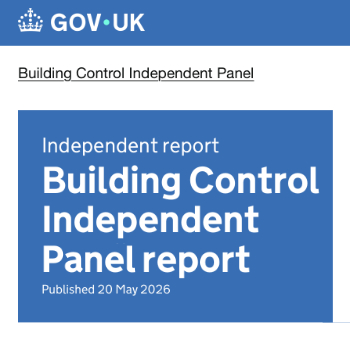
A precis of a key report led by Dame Hackitt with full recommendations and link to the government response.
Building Safety recap April, 2026
A short and longer run-through of the month, with links to further information and sources.

CIAT May 2026 briefing.

From medieval scribes to modern word art.

ECA welcomes crackdown on late payment and push for clean energy, whilst CIOB seek fixed cladding removal timeframes.
Cyber Security in the Built Environment
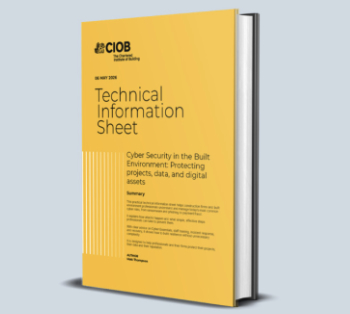
Protecting projects, data, and digital assets: A CIOB Academy TIS.
Managing competence in the built environment
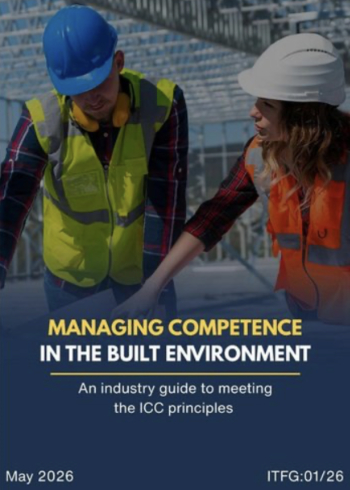
ITFG publishes new industry guide on how to meet the ICC principles.