





Intellectual property rights, copyright, patents, and trademarks
Contents |
[edit] Introduction
Intellectual Property (IP) serves as the primary mechanism for protecting innovation, branding, and creative output, it is in effect an umbrella term for all creations of the mind, protections for original creative, artistic, and literary works which can include patents, trademarks, and copyrights. Though these are specific examples of intellectual property rights which in the UK are governed primarily by the Copyright, Designs and Patents Act 1988, the Trade Marks Act 1994, and the Patents Act 1977. Essentially Copyright can protect expression, Patents can protect inventions or design and Trademarks protecting a brand 8which in turn may relate to certain patents or quality of product) .
[edit] Copyright
Copyright is perhaps the most relevant IP issue in the design and construction industry. It protects original works including architectural drawings, blueprints, 3D models (BIM), and even the completed building itself as a work of architecture. It arises automatically upon creation;, and there is no need for registration in the UK. So if an architect draws a floor plan, they own the copyright. A client generally receives a license to use those plans to build that specific project, but they do not own the underlying IP unless a written assignment is signed.
[edit] Patents
Patents protect how things work, the technical innovations or processes, so these to are also generally quite relevant to the design and construction of buildings. These types oif IP need to be granted, an invention must be new, involve an inventive step, and be capable of industrial application. In construction, this might include a new construction product or a specific type of new technology. Unlike copyright, patents must be registered through the Intellectual Property Office (IPO), which can be costly and lengthy, but provides 20-year controls.
[edit] Trademarks
Whilst less significant Trademarks are also relevant to construction, particularly in terms of products, and performance specifications, but also in terms of companies carrying out the design of construction works. This protection is a sign that distinguishes the goods or services of one enterprise from that of another. This includes logos, names, and even specific colour schemes. This might be the names of a construction firm, registered Architect or a design company as well as a specific product brand, even though there may be variations on the same actual product in the market, one from a particular company is protected by a trademark. This helps to prevent competitors implying their product is someone else’s or original to help ensure the integrity and trust of a specific brand. This can be important when assessing the performance of a product or its ability to meet certain standards and particularly regarding safety critical elements of a building,; see A Guide to Managing Safety Critical Elements in Building Construction produced by CIOB and the RIBA
[edit] Design Rights
There is also potential a fourth category known as Design Rights, which can automatically protect a design for certain lengths of time depending on the type of design. Such rights are automatic and do not have to be applied or paid for, although for a longer period of protection registration is required, and on the proviso that it meets certain eligibility criteria.
Design rights relating to the shape and configuration of an unregistered design lasts either 10 years after and item was first sold or 15 years after it was created, whichever ends first. However within the last 5 years of protection if a ‘licence of right’ is requested one must let others use the design. A registration for longer protection can however be applied for providing the design meets certain eligibility criteria. Design rights relating to the appearance of a product is protected in the UK for 3 years from the date the design is made public. Known as ‘supplementary unregistered design right’ (or ‘continuing unregistered community design’ if made public in the UK or the EU before 1 January 2021). The rights relating to appearance can refer to 2-dimensional or 3-dimensional designs including; shape, colours, texture, materials or ornamentation.
If a design is made public in the EU, it’s protected in the EU for 3 years from the date it was made public and is known as ‘unregistered community design right’, but it does not protect the design outside the EU. If made public before 1 January 2021, it remained protected in the EU until the end of the 3 year period and protected whether made public in the EU the UK. Proof of when a design was created is needed in order to prove the right that a design is protected. This could mean getting signed and dated copies of the design drawings or photos certified and kept by a solicitor or intellectual property attorney. There are other ways to prove your right. You’ll usually need to get professional legal advice. Others can use a design if the original proven designer sells or gives a licence of right. Disputes over a design and use thereof should be directed to the Intellectual Property Office (IPO), intellectual property professionals may charge for their assistance.
[edit] Licence of right
Under design rights above one must allow other people to use a design if they ask so during the final 5 years of protection. This is known as a ‘licence of right’.
There are many legal nuances in relation to UK Construction: The distinction between ownership and licencing is a common point of dispute in UK construction law. Under standard forms of contract (like JCT or NEC4), the consultant (architect/engineer) usually retains ownership of the IP, while the client is granted an irrevocable, royalty-free license to use the designs for the intended purpose of the site. Problems might arise when a project is stalled and a new contractor is brought in. If the original consultant hasn't been paid, they may attempt to revoke the license, effectively locking the IP and halting construction.
One might say in simple terms for construction that Copyright protects the art, Patents protect the science, and Trademarks protect the reputation, this this is a vast simplification. The growth of Artifical Intelligence (AI) and the used of machine learning tools (ML) have raised the issues of IP to the limelight again because, whilst AI might copy any available information it finds it can also design originally but in the style of something, but effectively any learning that AI does is based on work that has gone before, work carried out by humans and often with IP.
[edit] Related articles on Designing Buildings
- Appointing consultants.
- Assignment.
- Building component.
- Concept design.
- Concept..
- Confidentiality clause.
- Copyright.
- Design coordination.
- Design management.
- Design methodology.
- Design principles.
- Detailed design..
- Design protection.
- Manual drafting techniques.
- Mood board.
- Non-disclosure agreement.
- patents.
- Prejudice to commercial interests.
- Proprietary information.
- Royalties.
- Trade secrets.
- Trade mark.
- Truth to materials.
- UK consults on proposals to give creative industries and AI developers clarity over copyright laws
- What is design?
[edit] External links
Featured articles and news
Costs and insolvencies mount for SMEs, despite growth
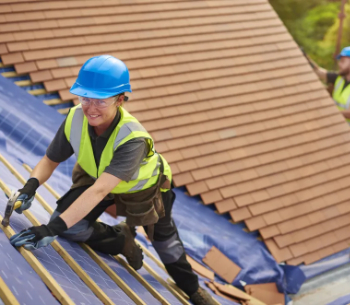
Construction sector under insolvency and wage bill pressure in part linked to National Insurance, says report.
The place for vitrified clay pipes in modern infrastructure
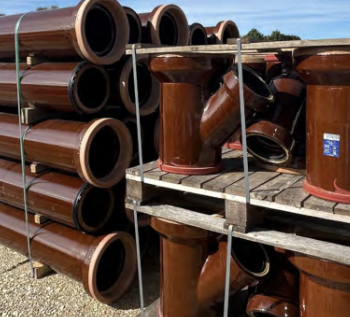
Why vitrified clay pipes are reclaiming their role in built projects.
Research by construction PR consultancy LMC published.
Roles and responsibilities of domestic clients
ACA Safety in Construction guide for domestic clients.
Fire door compliance in UK commercial buildings

Architect and manufacturer gives their low down.
Plumbing and heating for sustainability in new properties
Technical Engineer runs through changes in regulations, innovations in materials, and product systems.
Awareness of the Carbon Border Adjustment Mechanism
What CBAM is and what to do about it.
The new towns and strategic environmental assessments
12 locations of the New Towns Taskforce reduced to 7 within the new towns draft programme and open consultation.
Buildings that changed the future of architecture. Book review.
The Sustainability Pathfinder© Handbook
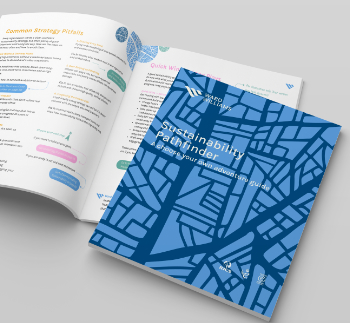
Built environment agency launches free Pathfinder© tool to help businesses progress sustainability strategies.
Government outcome to the late payment consultation, ECA reacts.
IHBC 2025 Gus Astley Student Award winners
Work on the role of hewing in UK historic conservation a win for Jack Parker of Oxford Brookes University.
Future Homes Building Standards and plug-in solar
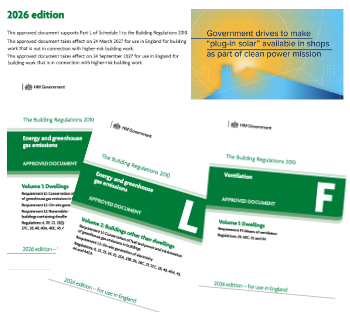
Parts F and L amendments, the availability of solar panels and industry responses.
How later living housing can help solve the housing crisis
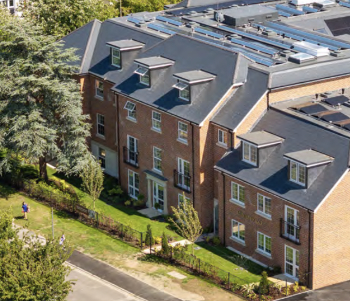
Unlocking homes, unlocking lives.
Preparing safety case reports for HRBs under the BSA
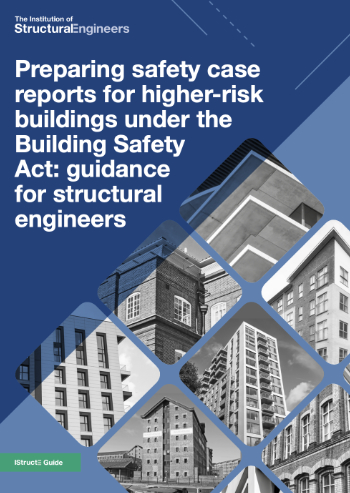
A new practical guide to preparing structural inputs for safety cases and safety case reports published by IStructE.
Male construction workers and prostate cancer
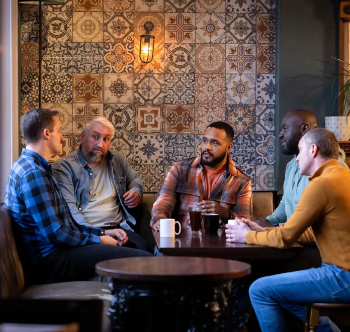
CIOB and Prostate Cancer UK encourage awareness of prostate cancer risks, and what to do about it.