





ISO 9001 México: Applying Quality Management Principles in Healthcare
Healthcare organizations manage complex service processes where quality depends on people, information, facilities, equipment, and communication working together. A structured quality management approach can help healthcare providers make these processes more consistent, identify failures, respond to complaints, and use performance information for improvement. The emphasis should remain on reliable service delivery and patient-focused outcomes. For healthcare, iso 9001 mexico can provide a structured framework for managing healthcare quality, patient-focused processes, service consistency, complaints, documentation, performance measurement, improvement. The strongest results come when requirements are translated into simple responsibilities, practical controls, and evidence that employees can maintain. This article explains the main considerations, from planning and implementation to auditing, people, records, and improvement, so readers can approach the subject with a clear and realistic plan.
Contents |
[edit] Why Does This Matter?
A quality system in healthcare can cover patient-facing processes, administrative activities, support services, documentation, competence, supplier controls, complaints, and performance evaluation. The exact scope depends on the organization. The important point is to map how services are delivered and identify where unclear responsibilities or weak controls could affect quality.
Understanding what iso 9001 mexico means in day-to-day operations is the first step toward a useful implementation. The right approach gives managers a clearer view of how work is performed and where failures can occur. It also creates a common language between departments.
Instead of relying on individual habits, teams can work from defined processes and agreed responsibilities. That consistency is particularly useful when staff change, production increases, customers introduce new expectations, or the organization expands into new activities.
[edit] How Should an Organization Prepare?
Start by understanding patient and other stakeholder requirements. Map key processes and handoffs, such as registration, scheduling, communication, service delivery, records, billing, and follow-up where relevant. Identify risks to service consistency and define measurable objectives.
Staff who perform the work should be involved because they can highlight practical barriers. A practical iso 9001 mexico journey should begin with a clear review of current processes. Preparation should be realistic.
Management should identify the people who own key processes, establish priorities, and decide how progress will be monitored. It is better to implement a smaller number of meaningful controls well than to create a large collection of documents that employees do not use. Early communication also reduces resistance because staff understand why changes are being introduced and how the changes affect their work.
[edit] Practical Priorities for the First Stage
- Map the processes that have the greatest effect on the intended outcome.
- Assign clear ownership for controls, records, and corrective actions.
- Train employees using examples that reflect their actual responsibilities.
- Set realistic review dates so gaps are addressed before they become recurring issues.
[edit] Turning Requirements into Daily Controls
Operational controls should help staff deliver services consistently. Clear procedures, appropriate resources, controlled information, competence, and communication are essential. When processes change, the organization should consider how the change affects staff, records, equipment, and service continuity.
During implementation, iso 9001 mexico should be connected to the activities employees perform every day. The most useful controls are easy to understand and easy to verify. Employees should know what is expected, when a check must happen, what evidence is required, and whom to contact when a result is not acceptable.
Supervisors can reinforce this by observing work, reviewing records, and discussing deviations during routine meetings. When controls fit naturally into the workflow, they are more likely to remain effective over time.
[edit] What Should Be Checked Before Work Begins?
Healthcare organizations often rely on external providers for equipment, supplies, maintenance, laboratory services, software, cleaning, or other support. Supplier controls should reflect the effect of those services on quality. Performance should be reviewed and problems should be addressed systematically.
Before critical activities begin, teams should confirm that required inputs, information, equipment, materials, and competent personnel are available. Where external parties are involved, expectations should be clear and performance should be monitored. Internal review is another important part of maintaining iso 9001 mexico effectively.
A controlled approach to incoming information and resources prevents avoidable problems from moving further into the process. It also makes accountability clearer when an issue originates outside the immediate work area.
[edit] What Does Effective Internal Auditing Look Like?
Internal audits can examine whether processes are followed and whether performance evidence supports the organization's objectives. Auditors can interview staff, review records, observe workflows, and examine complaints or corrective actions. A process-based audit can reveal problems at handoffs between departments.
Training and competence also influence how successfully iso 9001 mexico is maintained. An audit should be an evidence-gathering exercise, not a search for mistakes. Auditors can ask how a process works, observe the activity, and then check records or other objective evidence.
When an issue is found, the wording should describe the evidence clearly enough for the process owner to understand the gap. Follow-up is equally important because a corrective action should be checked for implementation and effectiveness.
[edit] Questions Managers Should Ask
- Are employees following the process as it is documented?
- Can the organization produce objective evidence when a control is questioned?
- Are recurring problems being investigated for root causes?
- Do performance results show that corrective actions are working?
[edit] Building Competent and Involved Teams
Competence and communication are essential. Staff should understand their responsibilities and receive appropriate training when processes, technology, or roles change. Employees should have a practical route for reporting problems and suggesting improvements.
Managers can reinforce quality by discussing performance data with teams. Reliable records give teams evidence that iso 9001 mexico controls are being followed. Competence is more than attending a training session.
Organizations should consider whether employees can perform the relevant task correctly and consistently. Refresher training may be useful after process changes, recurring errors, equipment changes, or audit findings. Managers should also create a culture where employees can raise concerns early.
Early reporting gives the organization a chance to correct a problem before it becomes more costly.
[edit] What Records Provide Useful Evidence?
Reliable records support continuity, accountability, and improvement. Organizations should control relevant documents and ensure that records are accurate, accessible to authorized users, and protected appropriately. Reviewing record trends can reveal recurring service issues that might otherwise remain hidden.
Continual improvement helps an organization gain lasting value from iso 9001 mexico. A good record should answer basic questions: what happened, when did it happen, who performed or checked the activity, and what happened when the expected result was not achieved? Records should be protected from unintended changes and retained according to organizational needs.
Digital systems can make retrieval easier, but they still require clear ownership and disciplined data entry.
[edit] Signs of a Healthy Management System
- Responsibilities are understood across departments.
- Records are complete, timely, and easy to retrieve.
- Employees report deviations instead of hiding them.
- Audit findings lead to meaningful corrective and preventive improvements.
[edit] Where Do Organizations Commonly Improve?
Improvement can use complaints, feedback, audit findings, service metrics, errors, delays, and staff suggestions. Recurring problems should be investigated for underlying causes. Improvements should then be checked to see whether they produced the intended result rather than assuming that implementation alone equals success.
Management should look at trends rather than isolated events. Complaints, deviations, audit findings, rework, incidents, supplier problems, service metrics, and employee suggestions can all provide useful signals depending on the subject. Ultimately, iso 9001 mexico is most valuable when it strengthens everyday management rather than becoming a one-time project.
When the same issue returns, investigate the underlying cause instead of repeatedly correcting the visible symptom. Improvement is strongest when changes are measured afterward to confirm that the intended result was achieved.
[edit] A Practical Way to Sustain Results
Sustaining a management system requires routine ownership rather than occasional attention. With the right ownership and follow-up, iso 9001 mexico can support more consistent performance. Review responsibilities periodically, communicate changes early, and use performance information to decide where attention is needed.
When the system becomes part of normal planning and supervision, employees are less likely to see it as separate administrative work. That is when the framework begins to produce lasting operational value.
[edit] Conclusion
Quality management in healthcare works best when it supports real service processes and staff needs. Clear responsibilities, controlled information, customer-focused processes, measurement, and continual improvement can help healthcare organizations deliver more consistent services and respond effectively when problems occur. Ultimately, iso 9001 mexico is most valuable when it strengthens everyday management rather than becoming a one-time project.
The most effective approach is practical: understand the requirements, translate them into workable controls, involve the people who perform the work, maintain reliable evidence, and review results regularly. Organizations that follow this cycle are better positioned to maintain consistency and respond to change without losing control.
Featured articles
Check out some of the best features and news from Designing Buildings as well as key stories from around the web.
Mayors are to be given planning call in powers

Mayors across England will be able to make the most important planning decisions.

The Master Builder: William Butterfield and his times. Book review.

Why construction can't afford to ignore the skills gap.
Building Safety Regulator, 19 August

Gill Kernick appointed Independent Chair of Residents’ Panel.
Connecting knowledge, technology and conservation
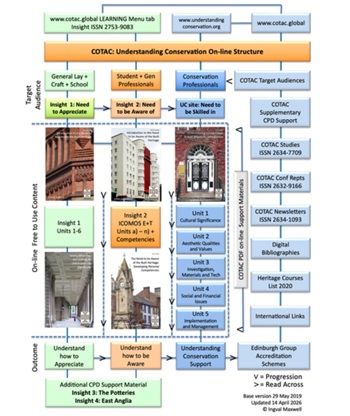
Building competence for the future of built heritage.
Building Regulations and Building Safety Act

CIOB publishes free advice for non-domestic clients.

Building Safety Newsletter from MHCLG.

An extraordinary record of steel engineering worldwide.

Households living near new pylons to save on bills.

ECA warns growth must not outpace grid capacity or skills.
The role of the client and decision making

CIOB response to built environment professions call for evidence.
Construction's sustainability reporting revolution
Tracking upfront embodied carbon with digital tools.