





How Do Shotcreting Contractors Strengthen Damaged Concrete Structures?
[edit] Step-by-Step Method Used by Experts to Restore Strength in Damaged RCC Structures Using Guniting and Shotcrete
Concrete structures deteriorate over time due to corrosion, weathering, chemical exposure, and load stress. To restore strength and durability, professional shotcreting contractors use advanced spraying techniques.
Shotcreting is now one of the most trusted methods for structural rehabilitation and strengthening of RCC structures.
This article explains how shotcreting contractors strengthen damaged concrete structures, including materials, process, and engineering benefits.
[edit] What Causes Concrete Damage?
Before repair, it is important to understand the root causes:
- Steel reinforcement corrosion
- Cracks due to load stress
- Water seepage and leakage
- Chemical attack (industrial structures)
- Poor construction quality
[edit] Step-by-Step Shotcreting Process
[edit] 1. Surface Preparation
This step ensures strong bonding of shotcrete material.
[edit] 2. Reinforcement Treatment
- Rust removal from steel bars
- Application of anti-corrosion coating
- Fixing additional reinforcement (if required)
[edit] 3. Application of Bonding Agent
- Epoxy or polymer bonding coat applied
- Improves adhesion between old and new concrete
[edit] 4. Shotcrete Application
- Wet or dry mix sprayed using high-pressure air
- Applied in layers to achieve required thickness
- Skilled nozzle technique ensures compaction
[edit] 5. Finishing and Curing
- Surface leveling and finishing
- Proper curing to prevent cracks
- Strength development over time
[edit] How Shotcreting Strengthens Structures?
[edit] 1. Improves Structural Integrity
Shotcrete forms a dense, compact layer that enhances load-bearing capacity.
[edit] 2. Restores Concrete Cover
Protects reinforcement from environmental exposure.
[edit] 3. Increases Durability
Resistant to water, chemicals, and weathering.
[edit] 4. Enhances Bond Strength
Creates a monolithic structure with old concrete.
[edit] 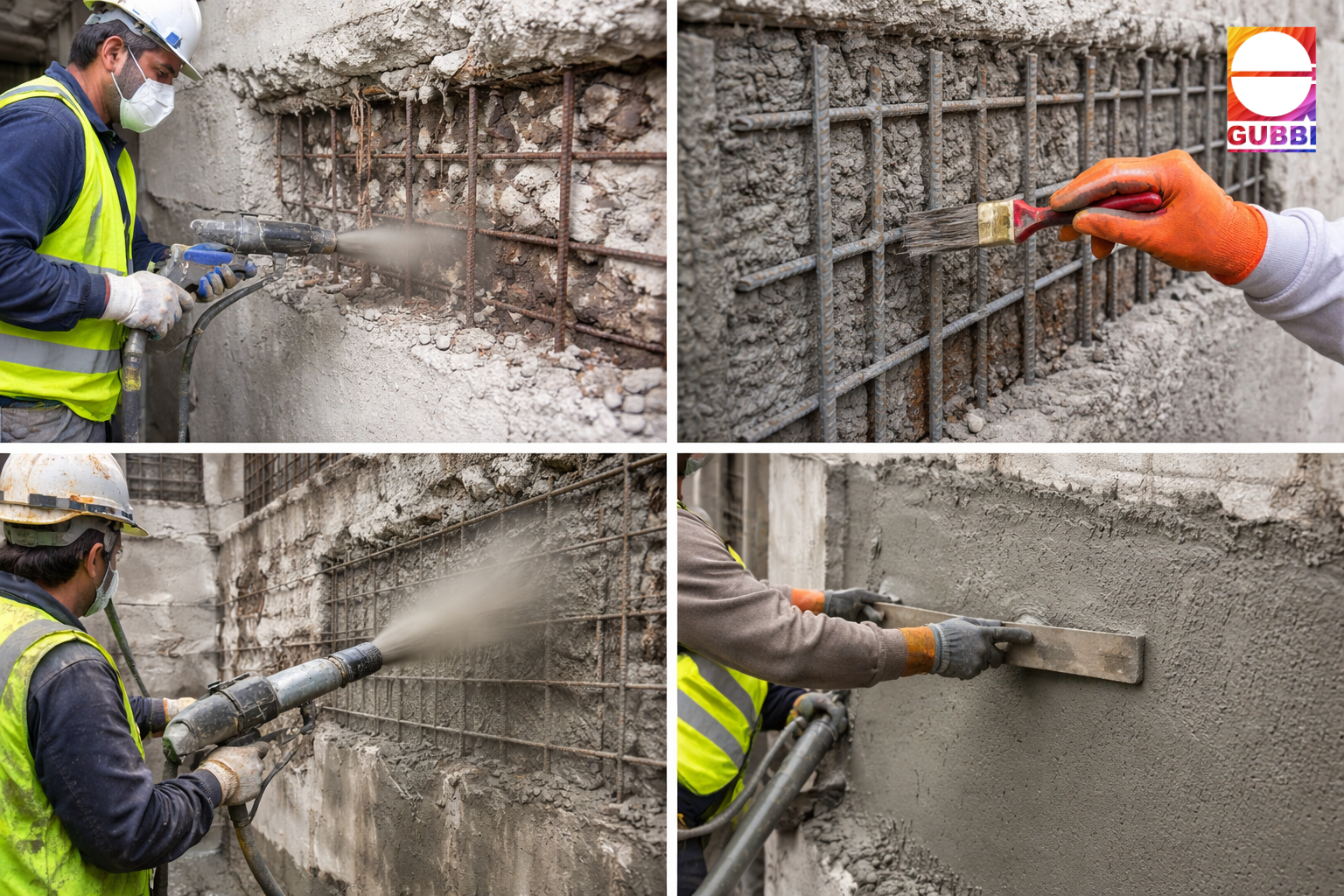
[edit] Applications of Shotcreting in Repair
- Cooling towers
- Bridges and flyovers
- Industrial chimneys
- RCC beams and columns
- Retaining walls
- Underground tunnels
[edit] Why Hire Professional Shotcreting Contractors?
Experienced contractors ensure:
- Correct mix design
- Proper equipment usage
- Skilled nozzle application
- Quality control and testing
This directly impacts project durability and safety.
[edit] Pro Tips for Better Results
- Always conduct structural assessment before repair
- Use high-quality cement and admixtures
- Ensure proper curing practices
- Hire certified and experienced contractors
[edit] Conclusion
Shotcreting contractors play a crucial role in restoring and strengthening damaged concrete structures. With the right process, materials, and expertise, shotcrete ensures long-lasting, durable, and cost-effective repair solutions.
Need reliable shotcreting and guniting services for your project?
Contact Gubbi Civil Engineers experts today for a FREE inspection and customized structural repair solution.
Featured articles
Check out some of the best features and news from Designing Buildings as well as key stories from around the web.
ECA's reflections on Party Conference season

Burnham wants to be confident of winning before asking for a fresh mandate.
New Chief Construction and Scientific Adviser

Sergio Cavalaro, Professor of Infrastructure Systems at Loughborough University.
Building safety levy for England

CIAT publish estimator tool for members.

Water sector faces a growing crisis that could slow the delivery of vital infrastructure.
Undervaluing our industrial past

Heritage value changes as taste for building styles changes.
Changing expectations around competence and compliance

New information sheet from CIAT.
Grenfell investigation files passed to CPS

Angela Rayner apologises on behalf of the British state.

Electrical contractors need to understand the practical implications.

The real barrier to getting more value from digital technology.

Your guide to The Construction Reset at UKCW Birmingham.

Accommodating the Victorian and Edwardian working woman. Book review.
Rethinking passive fire protection in design

PFP demands the same level of design rigour as structure or services.