





How to use a ladder

Ladders are commonly-used low-risk and short-duration tasks at height. Safety requirements related to ladders are set out in Schedule 6 of the Work at height regulations 2005, and stipulate that ladders can be used when a risk assessment has shown that other equipment is not necessary because of the low risk (eg the ladder will be level and stable), and short duration (generally, less than 30 minutes).
Ladders should be checked for any defects before use. The stiles should not be damaged, the feet should not be missing or worn (as this can cause the ladder to slip), rungs should not be loose, worn or missing; and locking mechanisms should be functioning correctly.
Ladders should not be used on moveable, wet, icy, unstable or snow-covered surfaces, or within 6 m of an overhead power line. The pictogram or label on the ladder should be checked to ascertain the maximum weight that it can hold.
General safety precautions for using a ladder include:
- Positioning the ladder at 75° - the ‘1 in 4 rule’ (i.e. if the ladder is 4 m tall, the base should be 1 m from the building).
- The feet of the ladder should be sat firmly on the ground with timber blocks stacked beneath if the ground is not level.
- It should not be rested against upper surfaces that are weak or likely to break, such as glazing or guttering.
- Users should face the ladder when ascending and descending.
- Both hands should be used to hold the rungs.
- Three points of contact should be maintained when climbing (1 hand and 2 feet, or 2 hands and 1 foot).
- The ladder should not be ascended higher than the fourth rung from the top.
- A tool belt or holster should be used to carry tools and other equipment.
- The hips of the user should be within the vertical side rails without leaning to one or other side.
- The ladder should not be moved or extended while standing on the rungs.
- If necessary, or if used to access another level, ladders should be secured using ties.
- If the surrounding area is busy or in a public space (such as on a pavement), a suitable barrier or cones may be necessary as protection.
- A self-closing gate may be used at ladder access points.
[edit] Related articles on Designing Buildings Wiki
- Crane regulations.
- Hoists.
- Ladder.
- Lifting platform.
- Mobile elevating work platforms (MEWPs).
- Scaffold register.
- Scaffolding.
- Types of scaffolding.
- Work at height checklist for managers.
- Work at height.
- Working at height - our duty to prevent harm and protect each other.
- Work at height regulations.
- Working at height training.
- Working platform.
[edit] External references
Featured articles and news
The roofscape of Hampstead Garden Suburb

Residents, architects and roofers need to understand detailing.
Homes, landlords. tenants and the new housing standards

What will it all mean?
The Architectural Technology podcast: Where it's AT

Catch-up on the latest episodes.
Edmundson Apprentice of the Year award 2026

Entries now open for this Electrical Contractors' Association award.

Traditional blue-grey slate from one of the oldest and largest UK slate quarries down in Cornwall.

There are plenty of sources with the potential to be redeveloped.
Change of use legislation breaths new life into buildings

A run down on Class MA of the General Permitted Development Order.
Solar generation in the historic environment

Success requires understanding each site in detail.
Level 6 Design, Construction and Management BSc

CIOB launches first-ever degree programme to develop the next generation of construction leaders.

Open for business as of April, with its 2026 prospectus and new pipeline of housing schemes.
The operational value of workforce health

Keeping projects moving. Incorporating unplanned absence and the importance of health, in operations.
A carbon case for indigenous slate
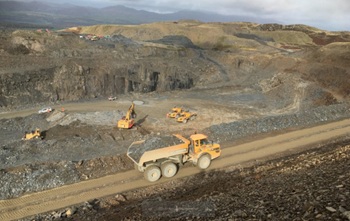
UK slate can offer clear embodied carbon advantages.
Costs and insolvencies mount for SMEs, despite growth

Construction sector under insolvency and wage bill pressure in part linked to National Insurance, says report.
The place for vitrified clay pipes in modern infrastructure
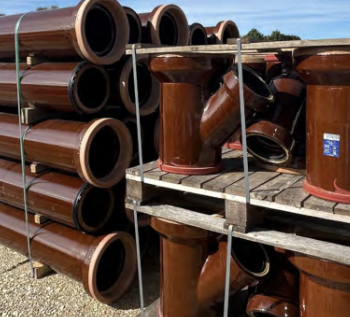
Why vitrified clay pipes are reclaiming their role in built projects.

Research by construction PR consultancy LMC published.
Roles and responsibilities of domestic clients

ACA Safety in Construction guide for domestic clients.