






Highway engineers and drainage
The specific challenges for highway engineers may vary from country to country, but some similarities are emerging, as seen from projects in the UK, the Netherlands and China. Jeroen Rijsdijk, Arcadis Netherlands, discusses how engineers can adapt to these complex interdependencies.

Contents |
[edit] Introduction
In order to provide the infrastructure we already have, civil engineers have had to become increasingly specialised over the past 200 years. Wherever we are in the world, engineers need to change. This global change is not rocket science but it is necessary. The following three examples of highways engineering– from the UK, the Netherlands, and China – show why.
[edit] UK highways and SuDS
For trunk roads, the engineering ‘bible’ has been the 'Highways England Design Manual for Roads and Bridges' (DMRB) which has developed to ensure engineering excellence and consistency. Quite rightly, the emphasis is on safety and so drainage is designed to get surface water off the pavement and away as quickly as possible.
Where sustainable drainage is required it has to sit outside the highway. For smaller roads, the responsibility falls under the local Highway Authority who tend to follow the DMRB. If the road is to be adopted, this sets up a potential conflict between the highway requirement for drainage and the surface water management approach taken for the site as a whole.
The use of local roads as exceedance routes requires detailed discussion between all the stakeholders at an early stage. Examples of where this can be circumvented are largely in urban retrofit schemes where the surface water management is the reason for the introduction of sustainable drainage (SuDS) features and the highways engineers are involved from the start.
There is evidence from a case study of a scheme in Llanelli, Wales, that the barriers to cross functional design in SuDS can be overcome with the right motivation. There was an innovative agreement between the County Council and the water authority (Dwr Cymru Welsh Water) to carry out the work and then hand the elements that were part of the highways drainage back to the highways authority.
This process is being translated across other surface water management schemes in Wales.
The expertise of Dutch engineering in including floodwater and storm water factors throughout infrastructure design is admired globally. However, even engineering teams in Holland are still learning about the need to include water specialists right from the start of road and spatial design.
For example, Amsterdam ring road west was widened by adding an additional underground tunnel to it and doubling the motorway in capacity and also in asphalt surface. The project appeared to be progressing well, the design team convinced that they had enough understanding of the drainage and water management based on the road design guidelines, which also give direction on drainage and water management.
A water expert had already detected that the official guidelines were not able to deal with such a complex environment as the centre of a big city, but the road engineers were not convinced that they also needed a water expert team in the design group.
It took two months of insistent persuading on the part of the water expert before their recommendations were accepted by everyone. The practical ramifications were considerable – the alignment of the motorway expansion was completely changed as a result – but easily addressed by including a team of hydrologists and hydraulic engineers in the design team right from the start.
However, this was only possible once the lead highways engineer understood that this need was not the result of a lack of professionalism on their part, but realising that the engineering standard for motorways is not sufficient for drainage and water management design in a complex urban environment.
[edit] Collaboration between specialists in China
Similar challenges are often experienced in China. For instance, many high density urban developments in China include extensive underground structures (multi-storey underground car parks and shopping malls) underneath 40 floors of flats.
The unintended consequence of this is that there is little soil left for infiltration and storage. This makes it hard to deal with the objectives of the Chinese climate adaptation program ‘Sponge City’ in which these areas should become more climate resilient.
As rainfall patterns change, and intense precipitation becomes a lot more frequent the developments and infrastructure are at risk by not being able to deal with these more extreme conditions when working with old ‘traditional’ design solutions. The awareness that water expertise should be more integrated with road and spatial design is just beginning to sink in.
[edit] Using systems thinking
These examples show how three different industrialised countries are facing similar challenges in highways and drainage design. At heart, these issues are not about highways engineering per se, but about complex interdependencies and professional learning.
These are two of the five axioms of systems thinking: Axiom 3 ‘seeing complex interdependencies’ and Axiom 5 ‘the importance of evolutionary learning’.
More detail about all systems thinking axioms can be found here. Although systems thinking can sometimes sound very complicated, practical examples can illustrate the key principles for practitioners. It would be great to see highways engineers – or any others – sharing learning about similar challenges they experience, and to explore how systems thinking could help there too.
This article was originally published here on 20 August 2018 by ICE. It was written by Jeroen Rijsdijk, Arcadis Netherlands.
--The Institution of Civil Engineers
[edit] Related articles on Designing Buildings Wiki
Featured articles and news
Costs and insolvencies mount for SMEs, despite growth

Construction sector under insolvency and wage bill pressure in part linked to National Insurance, says report.
The place for vitrified clay pipes in modern infrastructure
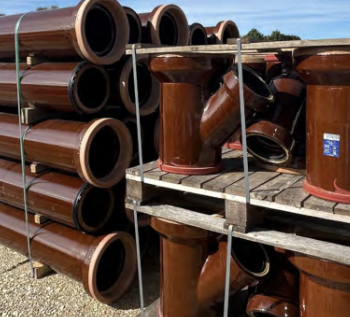
Why vitrified clay pipes are reclaiming their role in built projects.

Research by construction PR consultancy LMC published.
Roles and responsibilities of domestic clients

ACA Safety in Construction guide for domestic clients.
Fire door compliance in UK commercial buildings

Architect and manufacturer gives their low down.
Plumbing and heating for sustainability in new properties

Technical Engineer runs through changes in regulations, innovations in materials, and product systems.
Awareness of the Carbon Border Adjustment Mechanism
What CBAM is and what to do about it.
The new towns and strategic environmental assessments
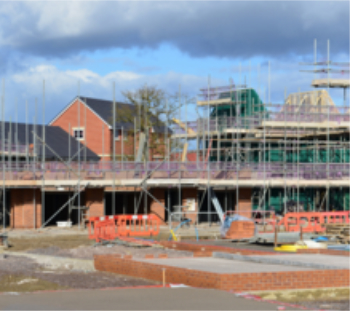
12 locations of the New Towns Taskforce reduced to 7 within the new towns draft programme and open consultation.
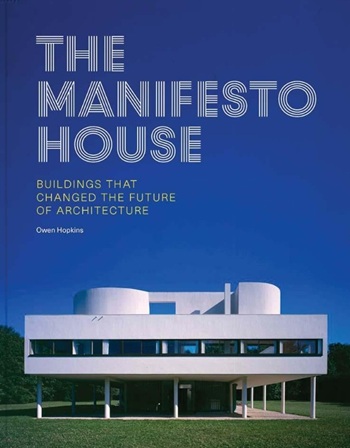
Buildings that changed the future of architecture. Book review.
The Sustainability Pathfinder© Handbook
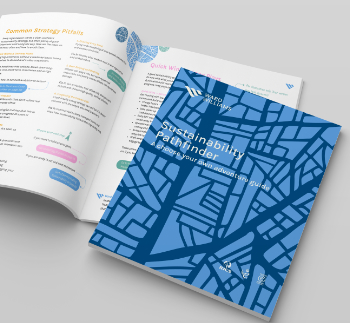
Built environment agency launches free Pathfinder© tool to help businesses progress sustainability strategies.
Government outcome to the late payment consultation, ECA reacts.
IHBC 2025 Gus Astley Student Award winners

Work on the role of hewing in UK historic conservation a win for Jack Parker of Oxford Brookes University.
Future Homes Building Standards and plug-in solar
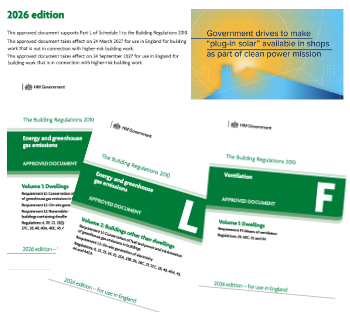
Parts F and L amendments, the availability of solar panels and industry responses.
How later living housing can help solve the housing crisis

Unlocking homes, unlocking lives.
Preparing safety case reports for HRBs under the BSA
A new practical guide to preparing structural inputs for safety cases and safety case reports published by IStructE.
Male construction workers and prostate cancer

CIOB and Prostate Cancer UK encourage awareness of prostate cancer risks, and what to do about it.