






Gantt chart
The timeline bar chart, Gantt diagram or Gantt chart was conceived by the American engineer Henry L. Gantt between 1903 and 1917. The basic technique is quite simple, consisting of a graphic representation based around two axes: the vertical axis features tasks and the horizontal axis shows time.
Gantt attempted to solve the activity scheduling problem so that the duration of a basic task was seen on a horizontal bar,showing its start and completion date, and in the same way the total time required in executing an activity. It is the most widespread scheduling method as it adapts well to both small and large projects of all types, assuming they are not overly complex. It is the most commonly used method of scheduling works in the construction industry and can be easily understood, even by those less familiar with scheduling tools.
The preparation of the chart may include a range of basic data spread over columns:
- Activities, according to the order in which they are carried out.
- Budget or cost.
- Quantity in its corresponding units.
- Predicted performance for working equipment.
- Duration of the activity.
The time unit used may be days (short projects), weeks (medium term projects) or months (long-term projects). The beginning and end of each horizontal bar represents the start and completion date for the corresponding task and so the length of the bar is therefore proportional to the duration. The last two rows of the chart may detail the cost or budget per unit of time in addition to that accumulated since the project began.
The figure below shows a simplified Gantt diagram, indicating the tasks and their monthly distribution for the first break-down level as well as the tasks which comprise the critical path and the float.

Gantt charts can be very effective in the initial planning stages, but the graphics can become confusing when changes are made and they have serious limitations for complex projects. It was these difficulties which gave rise to the development of more complex network diagrams.
The text in this article is based on an extract from CONSTRUCTION MANAGEMENT, by Eugenio Pellicer, Víctor Yepes, José M.C. Teixeira, Helder Moura and Joaquín Catala. Valencia, Porto, 2008. The original manual is part of the Construction Managers’ Library – created within the Leonardo da Vinci (LdV) project No: PL/06/B/F/PP/174014, entitled: “COMMON LEARNING OUTCOME FOR EUROPEAN MANAGERS IN CONSTRUCTION”. It is reproduced here in a modified form with the kind permission of the Chartered Institute of Building
--CIOB
[edit] Related articles on Designing Buildings Wiki
- Acceleration.
- Activity schedule.
- Construction project management software.
- Contract programme.
- Contractor's master programme.
- Critical path method.
- Design web.
- Earned value.
- Information release schedules.
- Key performance indicators.
- Line of balance (LOB).
- Milestones.
- Pareto analysis.
- Precedence diagram method.
- Programme float.
- Programme consultant.
- Project crashing.
- Time-location chart.
- Time management of construction projects.
- Work breakdown structure.
[edit] External references
Featured articles
Check out some of the best features and news from Designing Buildings as well as key stories from around the web.
Bridging the gap between clients and contractors

Concerns remain around contractor quality, capability, and delivery.
Construction Management, 10 June.

Heat pumps beat boilers in new home tests.
Building Safety Act implementation in Wales

CIAT to host industry panel on 26 June.

New and updated CLC building safety guidance.
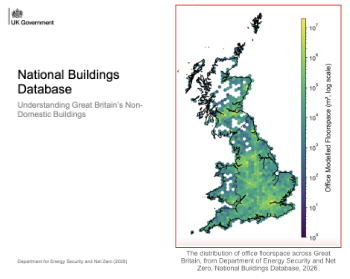
New UK National Buildings Database.
Building Safety Wiki Interviews

Chief executive of the British Woodworking Federation.
Planning condition discharge in England and Wales

A brief explanation from a building compliance expert, with further links.
Overheating guidance and tools for building designers

Guidance for dealing with element of building fabric control that have increasing importance.
Shading for housing, a design guide

From the Good Homes Alliance and British Blind and Shutter Association.
UK Standard Skills Classification (SSC)

A shared framework for describing skills needs.
Social media ban consultation comes to close

CIOB urges UK Government to consider social media’s role in careers guidance in ban debate.