





Environmental standards
[edit] Introduction
Environmental standards are laws, codes, regulations, specifications or guidance that impact either directly or indirectly on the treatment, maintenance or preservation of the local, regional, national or global environment.
The type or requirements of an environmental standard differ depending on the activity regulated and its environmental impact but these can vary from specifying certain aspects of an activity (such as permitted carbon dioxide emission levels or levels of insulation), to mandating the frequency and methods of monitoring (such as car emission testing with catalytic converters), to requiring the employment of alternatives (such as electric vehicle use), regulating certain individual activities (such as fishing) to banning some activities completely by law (such as rainforest tree felling).
The specific interpretation of environmental impacts and thus the standards developed is much debated both at local, national, international and global levels but in general cover impacts not only on the natural environment (natural elements of air, water and soil, wildlife, marine life etc) but also extend to the human environment. Environmental standards extend not only to land and water use but also to legislation covering such things as noise or light pollution and air quality.
[edit] History
Some of the earliest examples of environmental standards (or laws) include for example AD80 when the senate of Rome passed legislation to protect the city’s supply of clean water for drinking and bathing, and in the 14th century when England prohibited the burning of coal in London and the disposal of waste into waterways. In the1600's the Quaker leader of Pennsylvania, William Penn, required one acre of forest be preserved for every five acres that were being cleared. By the mid to late 1800's environmental standards became established more formally in the UK with the Public Health Act (1848) and US Yellowstone Act (1872) establishing the park and its protection as well as the Rivers and Harbors Act (1899).
In the 1900's a variety of national laws became established and perhaps more significantly agreements between countries leading to environmental standards covered issues such as the protection of birds useful to agriculture (1902) or of migratory birds (1916) extending to, with somewhat less success, flaura and fauna in around the 1920's. Theories around a resource economy started to appear in the 1930s with Hotellings' rule of the price or yield at which the owner of a nonrenewable resource will extract it and sell it, rather than leave it and wait.
By the 50's and 60s some discussion around peak oil had began when the Hubbert peak theory was published in 1956 which concluded that the rate of petroleum production for a given area and globally was a bell-shaped curve. In 1962 Silent Spring exposed the hazards of the pesticide DDT, questioning humanity's faith in technological progress, which helped set the stage for what became an environmental movement. This in someways prompted further discussions on environmental impacts and the long-term future of humanity and the planet, in what the the Club of Rome set up at this time termed the modern ‘predicament of mankind’. Possibly the worlds first overarching law, the Basic Law for Environmental Pollution Control was set-up by the Japanese government in 1967.
In 1971 thirty-four countries adopted the convention on Wetlands of International Importance, known as the Ramsar Convention after the city in Iran in which it was signed. 1972 saw the seminal book Limits to Growth by D.Meadows & J.R.William published under the Club of Rome which further prompted questions around environmentalism, questioning the paradigm of material growth and economic expansion. In that same year the Declaration of the United Nations Conference on the Human Environment in Stockholm formally and internationally recognised some of the issues too be discussed. The outcomes of that event were:
- A global environmental assessment programme.
- Environmental management activities.
- International measures to support assessment and management of national and international activities.
Along with 109 recommendations these might well be considered as having been the first set of internationally recognised environmental standards, with many following on from this basis.
Later came the Kyoto Protocol, Montreal Protocol, Paris agreement and so on.
The most recent at the same international scale possibly being the IPCC report: Climate change 2022: impacts, adaptation and vulnerability, whilst Nationally perhaps the changes to the Building Regulations Approved Documents in the same year.
[edit] Related articles on Designing Buildings
- 15 June 2022 changes to Approved Documents
- Climate change science.
- Climate change 2022: impacts, adaptation and vulnerability IPCC report
- Chlorofluorocarbons CFCs.
- COP21 Paris 2015.
- CRC Energy Efficiency Scheme.
- Earth overshoot day.
- Energy Act.
- Energy Related Products Regulations.
- Environmental legislation.
- Kyoto Protocol.
- Montreal Protocol.
- Paris agreement.
- Sustainable development.
- Sustainability.
Featured articles
Check out some of the best features and news from Designing Buildings as well as key stories from around the web.
Bridging the gap between clients and contractors

Concerns remain around contractor quality, capability, and delivery.
Construction Management, 10 June.
Heat pumps beat boilers in new home tests.
Building Safety Act implementation in Wales

CIAT to host industry panel on 26 June.
New and updated CLC building safety guidance.
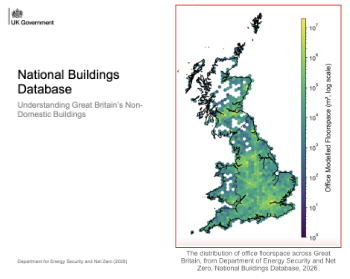
New UK National Buildings Database.
Building Safety Wiki Interviews

Chief executive of the British Woodworking Federation.
Planning condition discharge in England and Wales

A brief explanation from a building compliance expert, with further links.
Overheating guidance and tools for building designers

Guidance for dealing with element of building fabric control that have increasing importance.
Shading for housing, a design guide

From the Good Homes Alliance and British Blind and Shutter Association.
UK Standard Skills Classification (SSC)

A shared framework for describing skills needs.
Social media ban consultation comes to close

CIOB urges UK Government to consider social media’s role in careers guidance in ban debate.