





Design team meeting

Contents |
[edit] Introduction
Design is a process of creating a solution to a brief and then preparing instructions allowing that solution to be constructed. Design is an iterative process, where, at each iteration, there are inputs, there is a design process and then there are outputs.
Building design is typically multi-disciplinary, involving a number of different designers, such as architects, engineers and so on, working together to create a single, holistic solution. Design teams typically start as a relatively small group, but as the design progresses, there is an ever-greater need for specialist input, and so design teams can develop to become large and complex. This is increasingly the case given the complexity of the supply chain in the modern construction industry.
It is important therefore that design teams are properly organised and coordinated so it is possible to integrate designs prepared by different members of the team to create a single set of unified information. This process of organisation and co-ordination will generally include the need for regular design team meetings.
[edit] Organisation
Design team meetings are typically coordinated by the lead designer, if one has been appointed, and may include all, or part of the design team. Sub meetings may also be organised to deal with specific aspects of the design, such as the structure, building services and so on.
Design team meetings will generally be restricted to those issues specifically to do with the developing design, and will only be attended by members of the design team. Other issues are better dealt with at wider, project team or progress meetings which might also involve project managers, the client or their representatives and so on.
Depending on the stage of the project, the number of attendees and the issues that need to be considered, design team meetings can be very structured, or they can be more creative. In either case, it is important that they are properly organised, with an agenda sent out well in advance so that participants know what will be expected from them, and that they are minuted so that any actions or decisions are captured and can be followed up. They should be scheduled so that appropriate decisions can be made and work coordinated to meet the project programme.
There may be outputs from design team meetings, such as reports to the lead consultant, project manager or client, requests for information, requests for approvals, instructions to contractors and so on. Other parties may also have to be consulted regarding the progress of the design, such as users of the building, neighbours, the local planning authority, the building control body and so on.
[edit] Agenda
Very broadly, depending on the stage of development of a project and the issues that need to be considered, an agenda for a design team meeting might include:
Agreement of the minutes of previous meetings.
Organisation:
- Appointments and personnel.
- Roles and responsibilities.
- Communications and reporting procedures.
- Standard methods and procedures for drawings, computer aided design or building information modelling.
- Programme and progress.
Design development:
- Client's requirements.
- Development of the brief.
- Site information, surveys and constraints.
- Feedback from consultations.
- Reports from designers.
- Design options and issues.
- Specific technical issues.
- Outstanding issues.
- The need for additional information or studies.
- Coordination issues.
- Reporting.
- Next steps.
Approvals:
- Planning permission.
- Building Regulations.
- Funders, insurers and so on.
- Legal issues.
Any other business.
Date of next meeting.
[edit] Related articles on Designing Buildings Wiki
- Appointing consultants.
- Collaborative practices.
- Consultant team start-up meeting.
- Design co-ordination.
- Design management plan.
- Design management.
- Design manager.
- Design methodology.
- Design responsibility matrix.
- Design review.
- Design team.
- Information manager.
- Lead designer.
- Specialist contractors start-up meeting.
- Team behavioural roles.
- Team management.
Featured articles and news
We're expanding our collaborative mission by launching DB Intelligence, an exclusive market research advisory panel. Built environment professionals can now get paid to share their expertise on industry trends, products and services.
Panel members receive direct financial incentives for participating in research projects like short surveys, 1-2-1 interviews and focus groups. Register today to shape the future of the construction sector.
Planning condition discharge in England and Wales

A brief exoplanation from a building compliance expert, with further links.
Overheating guidance and tools for building designers

Guidance for dealing with element of building fabric control that have increasing importance.
Shading for housing, a design guide

From the Good Homes Alliance and British Blind and Shutter Association.
UK Standard Skills Classification (SSC)
A shared framework for describing skills needs.
Social media ban consultation comes to close

CIOB urges UK Government to consider social media’s role in careers guidance in ban debate.
The latest of eight Skills England apprenticeship units

The addition of battery manufacturing welcomed by ECA with a warning about the risks of fast-tracked apprenticeship units.
Building Control Independent Panel final report
A precis of a key report led by Dame Hackitt with full recommendations and link to the government response.
Building Safety recap April, 2026
A short and longer run-through of the month, with links to further information and sources.
CIAT May 2026 briefing.

From medieval scribes to modern word art.
ECA welcomes crackdown on late payment and push for clean energy, whilst CIOB seek fixed cladding removal timeframes.
Cyber Security in the Built Environment
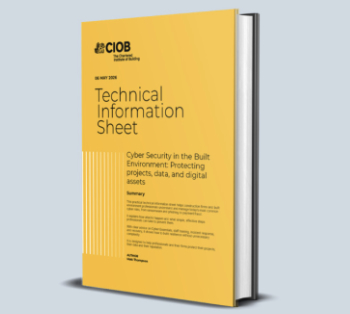
Protecting projects, data, and digital assets: A CIOB Academy TIS.
Managing competence in the built environment
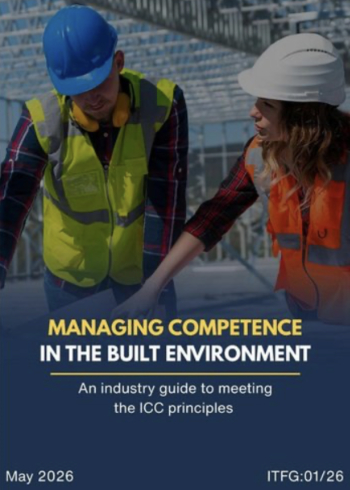
ITFG publishes new industry guide on how to meet the ICC principles.
The UK's campaign to reduce noise pollution: Mythbusting, articles and topic guides.