





Cost-benefit analysis in construction

|
A cost-benefit analysis (CBA) is a systematic process in which decisions relating to proposals are analysed to determine whether the benefits outweigh the costs, and by what margin. A CBA serves as a basis for comparing alternatives proposals and making informed decisions about whether to proceed.
In terms of proposed developments, by evaluating all the potential costs, and comparing these with possible revenues and other benefits that might derive from a new building, a developer is able to assess whether the proposal is financially worthwhile or whether an alternative is needed.
The first step typically involves listing, in as much detail as possible, all the costs and benefits that are associated with the project. Costs could include direct and indirect costs, hard and soft costs, opportunity costs and the cost of potential risks. Benefits could include direct and indirect benefits, and intangible benefits (e.g. increased productivity and cost savings). It is better to be conservative with the benefits as an over-estimation (or under-estimation of the costs) will result in an inaccurate CBA.
Once the list has been made, a common unit of monetary measurement should be applied to all the items before quantitatively comparing them to ascertain whether the benefits outweigh the costs. If they do not, then a review should be undertaken to determine how the benefits might be increased and/or the costs decreased to try and make the project financially viable.
If, once this is done, the benefits are still outweighed by the costs, it may be necessary to reassess whether the project should proceed as planned. If the benefits outweigh the costs then the project can be taken forward to the next stage of planning.
As an assessment tool, CBA is of more value for smaller construction projects with a length of time to completion that is short to intermediate. This is because greater accuracy in the cost estimating can be achieved. Larger projects with a long programme may be exposed to more cost uncertainties (e.g. interest rates, inflation, availability of labour, price of materials, etc.). For these larger and more uncertain projects, analysis models that may be more suitable include net present value (NPV) and internal rate of return (IRR).
For more information see:
NB Glossary of Capital Budgeting and Infrastructure Governance, published by the Organisation for Economic Co-operation and Development (OECD) in 2018, states: ‘Cost-benefit analysis is a systematic process for calculating and comparing benefits and costs of a government policy. It has two purposes: a) to determine if it is a sound investment/decision (justification/feasibility); b) to provide a basis for comparing different government policies. It involves comparing the total expected cost of each option against the total expected benefits, to see whether the benefits outweigh the costs, and by how much. Cost-benefit analysis is related to, but distinct from cost-effectiveness analysis. In cost-benefit analysis, benefits and costs are expressed in monetary terms, and are adjusted for the time value of money, so that all flows of benefits and costs over time are expressed on a common basis in terms of their "net present value."’
[edit] Related articles on Designing Buildings
Featured articles
Check out some of the best features and news from Designing Buildings as well as key stories from around the web.

Your views needed - a strategy for the professions, trades and occupations.

Confronting competency, codes, capacity and costs.

The hidden risk in modern construction supply chains.
Construction Management, 10 June

24 months to 14: CITB launches accelerated apprenticeships.
Bridging the gap between clients and contractors

Concerns remain around contractor quality, capability, and delivery.
Construction Management, 10 June.

Heat pumps beat boilers in new home tests.
Building Safety Act implementation in Wales

CIAT to host industry panel on 26 June.

New and updated CLC building safety guidance.
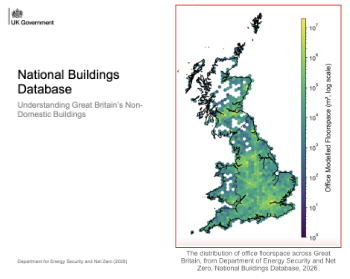
New UK National Buildings Database.
Building Safety Wiki Interviews

Chief executive of the British Woodworking Federation.
Planning condition discharge in England and Wales

A brief explanation from a building compliance expert, with further links.