





Built Environment - Smarter Transformation (BE-ST)

Built Environment – Smarter Transformation (BE-ST) is Scotland’s national innovation centre for construction and the built environment.
Its mission is to accelerate the built environment’s just transition to net zero carbon and does this through a wide range of collaborative projects, programmes, platforms and partnerships focused on delivering tangible impact at pace. Collaboration partners can access Scotland’s innovation ecosystem and benefit from a range of flexible tools and support services including an extensive network of academic expertise and the Innovation Campus; the UK’s first built environment-focused manufacturing centre, prototyping, and future skills centre of excellence.
BE-ST is supercharging change that will help achieve the vision of a better built environment that delivers inclusive and sustainable economic, social, and environmental impact for Scotland and the planet.
We deliver impact across three interlinked programme areas: Housing & Manufacturing, Retrofit & Energy Efficiency and Skills & Training.
BE-ST has vast experience in programme delivery including the management of funding. We have delivered multiple Scottish Government and other public sector grant funded projects including the Workplace Equality Fund, United Kingdom Research and Innovation funding and projects with the Scottish Government’s Just Transition team.
As part of Edinburgh Napier University, BE-ST is regulated by the university's financial framework and HR policies. Edinburgh Napier University are committed to creating an environment where everyone feels proud, confident, challenged, and supported and are holders of Disability Confident, Carer Positive and Stonewall Diversity Champion status. All staff are paid in accordance with national living wage.
Visit: www.be-st.build
--RM-BE-ST
[edit] Related articles on Designing Buildings
- Biogenic carbon
- Biomass
- Biomaterial
- Built environment.
- Carbon footprint.
- Composites.
- Green Claims Code.
- Green Guide to Specification.
- Green Seal.
- Is local sourcing always the most sustainable choice?
- Life cycle assessment.
- Material procurement.
- Natural environment.
- Natural materials
- Natural resource.
- Place.
- Placemaking.
- Recyclable construction materials.
- Responsible sourcing of construction products.
- Smart cities.
- Society.
- Sustainable development.
- Sustainable materials for construction.
- Sustainable timber.
- Sustainable Wood.
- Sustainability.
- Thatch roofing
- The use of timber in construction
- The use of wood in construction
- Thermal environment.
- Types of biobased materials.
- Types of building.
- Types of land.
- Types of materials.
- Types of rapidly renewable content
- Types of timber
- UK sustainable building products strategic partnership announced
- Urban.
- Urban design.
- Urban fabric.
- Use of ceramics in construction.
- Whole life costs.
- Wood around the world.
Featured articles and news

We're expanding our collaborative mission by launching DB Intelligence, an exclusive market research advisory panel. Built environment professionals can now get paid to share their expertise on industry trends, products and services.
Panel members receive direct financial incentives for participating in research projects like short surveys, 1-2-1 interviews and focus groups. Register today to shape the future of the construction sector.
Planning condition discharge in England and Wales

A brief exoplanation from a building compliance expert, with further links.
Overheating guidance and tools for building designers

Guidance for dealing with element of building fabric control that have increasing importance.
Shading for housing, a design guide

From the Good Homes Alliance and British Blind and Shutter Association.
UK Standard Skills Classification (SSC)

A shared framework for describing skills needs.
Social media ban consultation comes to close

CIOB urges UK Government to consider social media’s role in careers guidance in ban debate.
The latest of eight Skills England apprenticeship units

The addition of battery manufacturing welcomed by ECA with a warning about the risks of fast-tracked apprenticeship units.
Building Control Independent Panel final report
A precis of a key report led by Dame Hackitt with full recommendations and link to the government response.
Building Safety recap April, 2026
A short and longer run-through of the month, with links to further information and sources.
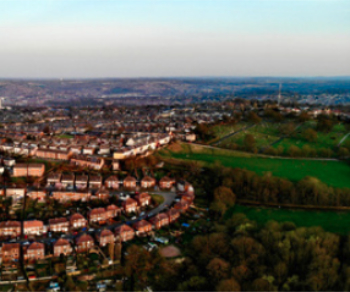
CIAT May 2026 briefing.

From medieval scribes to modern word art.

ECA welcomes crackdown on late payment and push for clean energy, whilst CIOB seek fixed cladding removal timeframes.
Cyber Security in the Built Environment
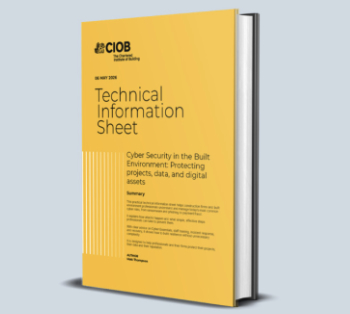
Protecting projects, data, and digital assets: A CIOB Academy TIS.
Managing competence in the built environment
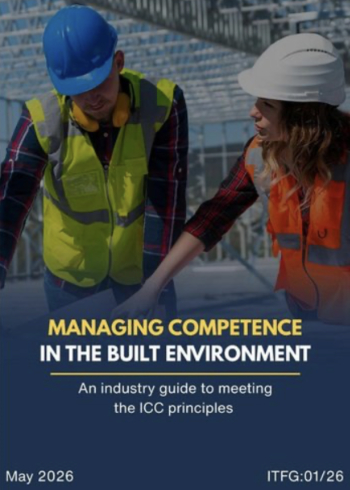
ITFG publishes new industry guide on how to meet the ICC principles.
The UK's campaign to reduce noise pollution: Mythbusting, articles and topic guides.