





10 Construction Site Regulations Every Project Manager Must Know
Construction project managers play a crucial role in ensuring the success of construction projects, which involves the creation of towering structures and intricate designs. Their responsibilities go beyond managing timelines and budgets; they must also ensure strict adherence to construction site regulations. These regulations are essential for maintaining safety, compliance, and project efficiency.
This article explores the ten most crucial construction site regulations that proactive project managers must understand. By examining each regulation, we will uncover its significance, implications, and how a deep understanding of these regulations can transform project managers into guardians of successful projects, workforce safety, and community well-being.
From OSHA safety standards to planning and zoning regulations, this comprehensive guide equips project managers with the knowledge needed to navigate the intricate legal landscape of construction.
[edit] 10 Important Construction Site Regulations for Project Managers
[edit] 1. Embracing OSHA Safety Standards
OSHA is responsible for ensuring workplace safety and is therefore crucial for project managers to understand. OSHA regulations cover important areas such as fall protection, hazard communication, and scaffold usage, which are essential for ensuring worker safety.
These regulations are not just legal requirements but are critical for maintaining a safe working environment. Project managers must implement them consistently to establish a strong foundation for the project.
[edit] 2. Command of CDM Regulations
The Construction (Design and Management) Regulations, or CDM, encompasses the project lifecycle, providing a thorough safety net. To fully comprehend these regulations, one must understand the responsibilities of the different duty holders, including clients, designers, and contractors.
The key aspect of CDM is conducting detailed risk assessments, developing strong health and safety plans, and fostering collaboration. By advocating for CDM and undergoing comprehensive CDM training, project managers take on the role of ensuring comprehensive safety and promoting well-being.
[edit] 3. Adhering to Building Regulations
The regulations for building are not just bureaucratic formalities; they establish the fundamental standards for the strength of the structure, prevention of fire, and accessibility for every construction. Adherence to these regulations is not only required by law but also as a promise to protect the occupants and ensure the long-term functionality of the project.
[edit]
Construction sites are responsible for reducing their environmental impact in today's era of environmental awareness. Regulations for environmental protection cover practices such as sustainable construction, pollution reduction, and proper waste disposal. Project managers who follow these regulations comply with the law and help preserve our planet.
[edit] 5. Safeguarding Lone Workers
Lone working can be a challenging task for any worker. In such moments, one’s emotions can take over, resulting in a mess of work. Employers must ensure the safety and communication of lone workers requiring specialised attention. It is crucial to establish thorough check-in procedures and reliable communication methods to prevent potential risks associated with isolation.
The lone workers must be provided with lone worker training to learn how to manage their tasks and ensure safety while working alone effectively.
[edit] 6. Mastering Planning and Zoning Regulations
There needs to be more than compliance with planning and zoning regulations – it is equally important for these regulations to align with the community's overall character. A deep understanding of land use and zoning laws can prevent conflicts and legal issues, ensuring that projects are seamlessly integrated into the community.
[edit] 7. Elevating Safety Standards with Work-at-Height Regulations
Working at height increases the level of risk significantly. Regulations regarding the use of scaffolding and ladders for such work are not mere guidelines but rather essential for ensuring worker safety. By implementing strict measures for fall protection and maintaining rigorous work practises, project managers foster a safety-conscious culture.
[edit] 8. Tapping into HSE Guidelines
Project managers can access safety knowledge by utilising the Health and Safety Executive (HSE) as a source of guidance for health and safety regulations. This source can assist project managers in gaining insights, navigating complexities, and ensuring compliance. By adopting HSE guidelines, project managers equip themselves with a valuable resource of safety wisdom.
[edit] 9. Controlling Hazardous Substances with COSHH Regulations
The Control of Substances Hazardous to Health (COSHH) regulations form the forefront of managing dangerous substances. These regulations help protect workers from unnecessary risks through meticulous risk assessments, the implementation of strict control measures, and comprehensive training.
[edit] 10. Equipping Workers with PPE Regulations: Shields of Security
The regulations governing personal protective equipment (PPE) are not just a formality but rather serve as the frontline defence for ensuring worker safety. These regulations require the provision and appropriate utilisation of protective gear, effectively shielding workers from a wide range of potential hazards.
[edit] Conclusion
Construction site regulations are not just an add-on to a project but the foundation of its success. For effective project management, it is crucial to comprehend, internalise, and meticulously implement these regulations. This is a duty and a demonstration of commitment to safety, compliance, and excellence. These regulations work together to create a protective shield, safeguarding projects, workers, and communities from harm.
By mastering these regulations, project managers can become leaders who navigate the intricate construction world with expertise and a profound sense of responsibility for every brick, beam, and life entrusted to their care.
Featured articles and news

We're expanding our collaborative mission by launching DB Intelligence, an exclusive market research advisory panel. Built environment professionals can now get paid to share their expertise on industry trends, products and services.
Panel members receive direct financial incentives for participating in research projects like short surveys, 1-2-1 interviews and focus groups. Register today to shape the future of the construction sector.
Planning condition discharge in England and Wales

A brief exoplanation from a building compliance expert, with further links.
Overheating guidance and tools for building designers

Guidance for dealing with element of building fabric control that have increasing importance.
Shading for housing, a design guide

From the Good Homes Alliance and British Blind and Shutter Association.
UK Standard Skills Classification (SSC)

A shared framework for describing skills needs.
Social media ban consultation comes to close

CIOB urges UK Government to consider social media’s role in careers guidance in ban debate.
The latest of eight Skills England apprenticeship units

The addition of battery manufacturing welcomed by ECA with a warning about the risks of fast-tracked apprenticeship units.
Building Control Independent Panel final report
A precis of a key report led by Dame Hackitt with full recommendations and link to the government response.
Guide to ISO 19650 for Architecture Firms (2026)
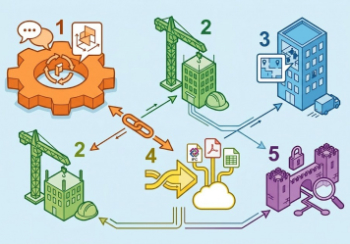
A user gives their low down.

A UK training and membership provider for mould remediation professionals.
Building Safety recap April, 2026
A short and longer run-through of the month, with links to further information and sources.

CIAT May 2026 briefing.

Independent NSI and BAFE study exploring how organisations are changing the way they buy fire safety services.

From medieval scribes to modern word art.

ECA welcomes crackdown on late payment and push for clean energy, whilst CIOB seek fixed cladding removal timeframes.
Cyber Security in the Built Environment
Protecting projects, data, and digital assets: A CIOB Academy TIS.
Managing competence in the built environment
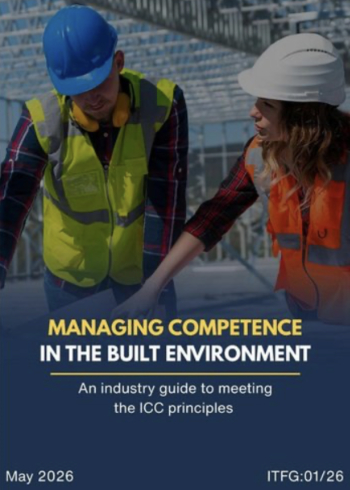
ITFG publishes new industry guide on how to meet the ICC principles.
The UK's campaign to reduce noise pollution: Mythbusting, articles and topic guides.
Comments