






Vulnerable residents at risk from under-qualified workforce

|
| In August 2019, the Electrical Contractors’ Association responded to the government consultation following the Hackitt Report on fire safety in buildings. |
The safety of hospital patients, those in care and residents of high-rise buildings could still be at risk if those who work in higher-risk premises lack the necessary experience-based qualifications and competency – according to the Electrical Contractors Association (ECA).
In its response to the government’s ‘Building A Safer Future’ consultation, leading trade body ECA broadly agreed with the proposal for an ‘overarching competence framework’ for those who work on and in higher-risk buildings.
However, ECA also said the new framework must reinforce and extend experienced-based qualifications. Without doing so, ECA argues that electrical and other installations in higher risk residential buildings could pose an unacceptable risk of electrocution and fire.
In its response, ECA underlined that for a competence-based qualification system to ensure safety and quality in higher risk premises, all workers should undertake a suitable apprenticeship as a minimum. Alternative, comparable qualification routes should also be provided for existing experienced workers.
[edit] ECA Technical Director Mike Smith commented:
“ECA fully supports moves to ensure that those who work in higher-risk premises are suitably competent to do so, notably in the electrical and wider engineering services workforce.
“However, regulated competence-based qualifications, including apprenticeships, are fundamental to ensuring that installation and maintenance work delivers fire and electrical safety. Without this essential foundation, the residents of high-rise buildings and hospitals will remain at risk.”
ECA has also warned against the reliance, notably in the domestic consumer market, on short, classroom-based, courses which are being marketed as offering a fast track into competence.
Mike Smith added: “These short courses seriously undermine the take up of apprenticeships in the industry. Furthermore, their continued existence undermines calls from Dame Judith Hackitt and the government to ensure that the public is properly protected from fire risks in high rise buildings.”
[edit] About this article
This article was written by Omar Khalil, Communications Manager, ECA. It was published in August 2019 on the website of the Electrical Contractors’ Association (ECA) and can be accessed here.
[edit] Related articles on Designing Buildings Wiki
- Articles about electricity.
- Consumer electronics.
- Consumer unit.
- ECA articles.
- Electrical appliance.
- Electrical consumption.
- Electrical energy.
- Electrical equipment.
- Electrical installation.
- Electrical power.
- Electrical safety.
- Electrical system.
- Electrical wiring.
- Electrician.
- Electricity bill.
--ECA
Featured articles
Check out some of the best features and news from Designing Buildings as well as key stories from around the web.

Electrical contractors need to understand the practical implications.

The real barrier to getting more value from digital technology.

Your guide to The Construction Reset at UKCW Birmingham.

Accommodating the Victorian and Edwardian working woman. Book review.
Rethinking passive fire protection in design

PFP demands the same level of design rigour as structure or services.

38% of Gen Zs feel safe when a fire door is wedged open.
Stunning images from around the world

Shortlist for CIOB’s Art of Building photography competition.

Guidance for conversion of traditional pre-1919 stone buildings.
Industrial heritage in the Ruhr

A marked difference to the fate of industrial landscapes in the UK.
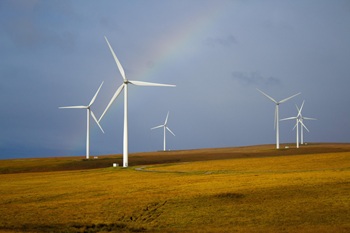
Communities will be able to build their own clean energy.
Why diversity and inclusion matters for SMEs

CIOB’s D&I Charter shows how practical changes can support long-term growth.
Cut electricity bills to power growth

Coalition sends joint letter to the Chancellor.
Comments
110 volts instead of 240 volts would be a good start. As depicted by the photograph.