





National Centre for the Performing Arts, Beijing

Contents |
[edit] Introduction
The National Centre for the Performing Arts (NCPA) is located in the centre of Beijing, China. It is known by its nickname ‘the giant egg’, because of its distinctive flattened-dome shape.
The building is situated like an island in the middle of an artificial lake of 35,500 sq.m. Around the lake a green ring of 39,000 sq.m is intended to isolate the building from the noise of the city.
The NCPA was designed by French architect Paul Andreu, and houses an opera house capable of seating 2,398, a concert hall seating 2,019, a theatre seating 1,035, and a smaller multi-function theatre. Construction work began in 2001, and the inaugural concert was held in December 2007.
Its location provoked some controversy because of its proximity to Tiananmen Square, the Great Hall of the People and the Forbidden City. Andreu argued that, as an important international city, Beijing should include modern as well as ancient traditional Chinese architecture. The inclusion of the lake and the green ring were part of the design solution to complement the ancient architecture and prevent the contrast being too jarring.
[edit] Design and construction
The building is an ellipsoid dome of titanium and glass, designed to resemble an egg floating on water, or a water droplet. Andreu designed the building to be an iconic feature that would be instantly recognisable.
The dome has a maximum span of 213 m (in its east-west direction), a minimum span of 144 m (north-south), and reaches a height of 46 m. The total area of the building is 12,000 sq.m.
It is covered with 18,000 titanium plates, integrated with more than 1,000 sheets of ultra-white glass; a low-iron glass with high light transmission. The titanium shell is divided in two by a curved glass curtain, gradually widening from the top to the bottom where it measures 100 m in width. When illuminated at night this gives the impression of a stage curtain being pulled back, while during the day the glass curtain bathes the interior in light.

Visitors reach the building through the Underwater Corridor, a hallway that stretches beneath the lake from the green ring. The glass ceiling allows light to pass through from the water, producing a shimmering effect.
The large open foyer has a floor made of stone from 10 different regions in China. The interior walls are lined with tens of thousands of panels made of Brazilian rosewood.
[edit] Costs controversy
The building’s initial planned cost was 2.688 bn yuan. However, on completion, this had escalated to more than 3.2 bn yuan. It has been suggested it will be close-to impossible to recuperate the investment. Each individual seat, when averaged out, is worth around 500,000 yuan. On top of this, the huge costs of cleaning the external surface mean that the Chinese government faces subsidising the building for many years. Responding to this though, the Chinese government claimed that the building was never intended to be a for-profit venture.
[edit] Find out more
[edit] Related articles on Designing Buildings Wiki
- Apple Park.
- Beijing Greenland Center.
- Beijing National Stadium.
- Building of the week series.
- CCTV Headquarters.
- China Philharmonic Hall.
- City Hall, London.
- Forbidden City.
- Guggenheim Museum, Bilbao.
- Niteroi Contemporary Art Museum.
- Phoenix International Media Center, Beijing.
- Rose Museum.
- Royal Albert Hall.
- Sage Gateshead.
- Sydney Opera House.
- Types of dome.
- Unusual building design of the week.
- Xili Sports and Cultural Centre.
[edit] External resources
- Arcspace - National Centre for the Performing Arts
Featured articles and news
Cyber Security in the Built Environment
Protecting projects, data, and digital assets: A CIOB Academy TIS.
Managing competence in the built environment

ITFG publishes new industry guide on how to meet the ICC principles.
The UK's campaign to reduce noise pollution: Mythbusting, articles and topic guides.
Setting Expectations on Competence Management
Industry Competence Committee.
New Scottish and Welsh governments
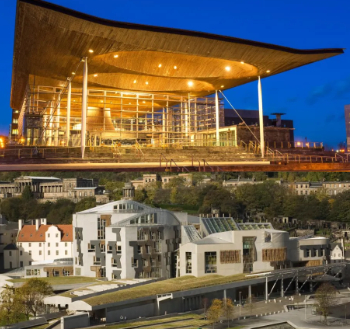
CIOB stresses importance of construction after new parliament elections.
The sad story of Derby Hippodrome
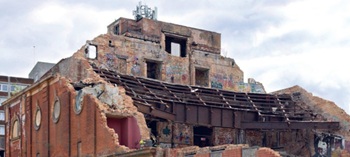
An historic building left to decay.

ECA, JIB and JTL back Fabian Society call to invest in skills for a stronger built environment workforce.
Women's Contributions to the Built Environment.
Calls for the delayed Circular Economy Strategy
Over 50 leading businesses, trade associations and professional bodies, including CIAT, and UKGBC sign open letter.
The future workforce: culture change and skill

Under the spotlight at UK Construction Week London.
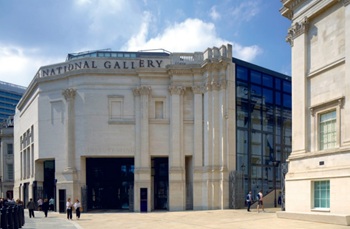
A landmark moment for postmodern heritage.
A safe energy transition – ECA launches a new Charter
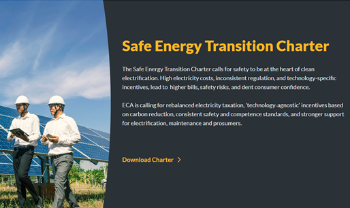
Practical policy actions to speed up low carbon adoption while maintaining installation safety and competency.
Frank Duffy: Researcher and Practitioner
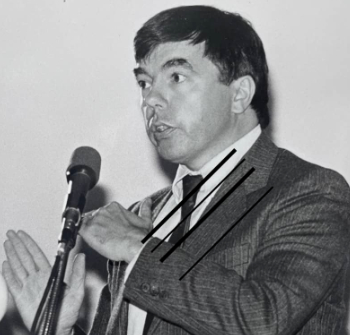
Reflections on achievements and relevance to the wider research and practice communities.
The 2026 Compliance Landscape: Fire doors

Why 'Business as Usual' is a Liability.
Cutting construction carbon footprint by caring for soil
Is construction neglecting one of the planet’s most powerful carbon stores and one of our greatest natural climate allies.