





Lateral loads
Lateral loads are live loads that are applied parallel to the ground; that is, they are horizontal forces acting on a structure. They are different to gravity loads for example which are vertical, downward forces.
The most common types are:
Wind load may not be a significant concern for small, massive, low-level buildings, but becomes more importance with height, the use of lighter materials and the use of shapes that may affect the flow of air, typically roof forms.
Significant seismic loads can be imposed on a structure during an earthquake. They are likely to be relatively instantaneous loads compared to wind loads. Buildings in areas of seismic activity need to be carefully designed to ensure they do not fail if an earthquake should occur.
Water pressure tends to exert a lateral load which increases linearly with depth and is proportional to the liquid density. Similarly, earth pressure (such as settlement) can be applied against below-ground structures such as basement walls, retaining walls, and so on.
Lateral loads such as wind load, water and earth pressure have the potential to become an uplift force (an upward pressure applied to a structure that has the potential to raise it relative to its surroundings). For more information, see Uplift force.
Structures should be designed carefully with likely lateral loads in mind. A structural element that is typically used to resist lateral loads is a shear wall. In simple terms, lateral forces could push over parallel structural panels of a building were it not for perpendicular shear walls keeping them upright. For more information see: Shear wall.

Similarly, bracing can be used to resist lateral loads. The beams and columns of a braced frame structure carry vertical loads, whilst the bracing carries the lateral loads. For more information, see Braced frame structure.

[edit] Related articles on Designing Buildings Wiki
- Bearing capacity.
- Bending moment.
- Biaxial bending.
- Braced frame.
- Dead loads.
- Floor loading.
- Force.
- Ground heave.
- Hurricane design considerations.
- Limit state design.
- Live loads.
- Loadbearing capacity.
- Moment.
- Point of contraflexure.
- Settlement of buildings.
- Shear force.
- Shear wall.
- Structural engineer.
- The design of temporary structures and wind adjacent to tall buildings.
- Torsion.
- Types of structural load.
- Uniformly Distributed Load.
- Uplift force.
- Vibrations.
- Wind load.
Featured articles and news

ECA, JIB and JTL back Fabian Society call to invest in skills for a stronger built environment workforce.
Women's Contributions to the Built Environment.
Calls for the delayed Circular Economy Strategy
Over 50 leading businesses, trade associations and professional bodies, including CIAT, and UKGBC sign open letter.
The future workforce: culture change and skill

Under the spotlight at UK Construction Week London.
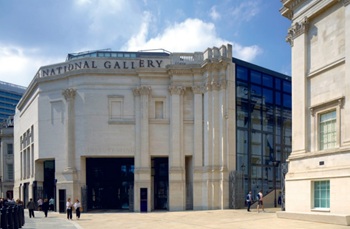
A landmark moment for postmodern heritage.
A safe energy transition – ECA launches a new Charter

Practical policy actions to speed up low carbon adoption while maintaining installation safety and competency.
Frank Duffy: Researcher and Practitioner

Reflections on achievements and relevance to the wider research and practice communities.
The 2026 Compliance Landscape: Fire doors
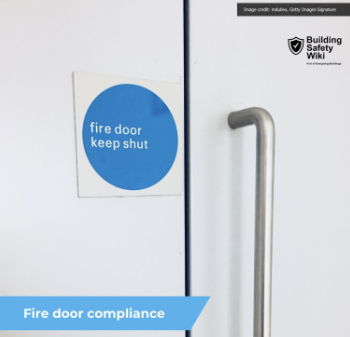
Why 'Business as Usual' is a Liability.
Cutting construction carbon footprint by caring for soil

Is construction neglecting one of the planet’s most powerful carbon stores and one of our greatest natural climate allies.
ARCHITECTURE: How's it progressing?
Archiblogger posing questions of a historical and contextual nature.
The roofscape of Hampstead Garden Suburb
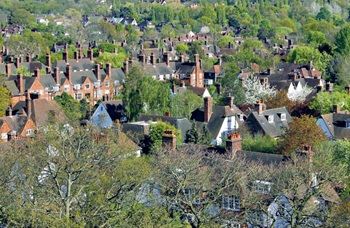
Residents, architects and roofers need to understand detailing.
Homes, landlords. tenants and the new housing standards

What will it all mean?
The Architectural Technology podcast: Where it's AT

Catch-up on the latest episodes.
Edmundson Apprentice of the Year award 2026

Entries now open for this Electrical Contractors' Association award.

Traditional blue-grey slate from one of the oldest and largest UK slate quarries down in Cornwall.
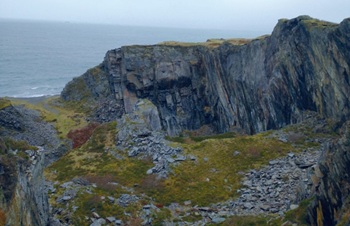
There are plenty of sources with the potential to be redeveloped.
Change of use legislation breaths new life into buildings

A run down on Class MA of the General Permitted Development Order.
Solar generation in the historic environment
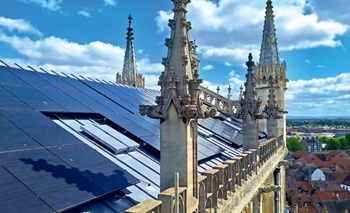
Success requires understanding each site in detail.