





UNEP report on building materials and the climate

Contents |
[edit] Building Materials and the Climate: Constructing a New Future
This report from the United Nations Environment Programme highlights the urgent need to develop new models for cooperation on the decarbonisation of building materials if the world is to reach its goals for net zero emissions from the sector by the mid-century.
It focuses on three urgent pathways that must be facilitated by supporting stakeholders across the whole lifecycle of the built environment.
[edit] Avoid waste
Avoid waste by adopting a circular approach. Build less; through the repurposing of existing buildings, which can generate 50-75 per cent fewer emissions than new construction. At planning stage; use computer-aided design to optimise the use, re-use and recycling of materials as well as using materials with lower carbon footprints.
[edit] Shift
Shift designs towards ethically, sustainably sourced and properly managed renewable bio-based building materials, including for example timber, bamboo, and biomass. This shift could lead to compounded emission savings of up to 40 per cent in the sector by 2050 in many regions. Policy and financing need to support this approach to ensure widespread adoption of renewable bio-based building materials shifts further towards properly managed bio-based materials.
[edit] Improve
Improve decarbonisation of conventional materials that cannot be replaced, primarily relating to the processing of concrete, steel, and aluminium. Priorities need to be placed on electrifying production with renewables, increased use of reused and recycled materials via innovative technologies at scale. These three sectors are responsible for 23 per cent of overall global emissions along with glass and bricks, so regional markets and building cultures need to be transformed. These improvements are critical, and need to be supported via certification, labelling, building codes, and re-education of architects, engineers, and builders on circular principles and practices.
[edit] Reasons for the report
The buildings and construction sector is by far the largest emitter of greenhouse gases, accounting for a staggering 37% of global emissions. The production and use of materials such as cement, steel, and aluminium have a significant carbon footprint. Historically, much of the sector's progress has centred around reducing the "operational” carbon emissions of buildings – those emissions stemming from heating, cooling, and lighting. Projections suggest that these operational emissions will decrease from 75% to 50% of the sector's total emissions in the coming decades.
However, solutions to mitigate the buildings "embodied" carbon emissions – originating from the design, production, and deployment of materials such as cement, steel, and aluminium – have lagged. To effectively address this challenge, international action and collaboration must bring together all stakeholders from across the entire lifecycle of the buildings sector, both within informal and formal settings.
[edit] Collaboration for the report
Building Materials and the Climate: Constructing a New Future, was developed by UNEP, Yale Center for Ecosystems and Architecture in the framework of the Global Alliance for Buildings and Construction (GlobalABC), it highlights the pressing need to establish innovative cooperation models to de-carbonise building materials. These models are critical if we are to achieve the world's ambitious target of net zero emissions from the built environment sector by mid-century. By implementing these strategies jointly, we can pave the way for a greener, more sustainable built environment, aligning with our global climate objectives.
Further information and the full report can be downloaded here https://wedocs.unep.org/handle/20.500.11822/43293
[edit] Related articles on Designing Buildings
- Biotechnology.
- Circular Construction in Regenerative Cities (CIRCuIT).
- Circular economy.
- Climate change science.
- Composites.
- Deleterious materials in construction.
- Ecological impact assessment.
- Energy Act.
- Energy Related Products Regulations.
- Energy targets.
- Green building.
- Intergovernmental Panel on Climate Change.
- Low carbon.
- Materials.
- Metal in construction.
- Mean lean green.
- Passivhaus.
- Phase change materials.
- Reduce, reuse, recycle.
- Regenerative design.
- The sustainability of construction works
- Sustainable development.
- Sustainable materials.
- Sustainable materials for construction.
- Sustainable procurement.
- Sustainable urban drainage systems.
- Sustainability appraisal.
- Sustainability aspirations.
- Sustainability in facility management.
- Types of biobased materials.
- Types of materials.
- Upcycling.
- Use of ceramics in construction.
- Zero carbon homes.
- Zero carbon non-domestic buildings.
Featured articles and news

We're expanding our collaborative mission by launching DB Intelligence, an exclusive market research advisory panel. Built environment professionals can now get paid to share their expertise on industry trends, products and services.
Panel members receive direct financial incentives for participating in research projects like short surveys, 1-2-1 interviews and focus groups. Register today to shape the future of the construction sector.
Building Safety Wiki Interviews

Chief executive of the British Woodworking Federation.
Planning condition discharge in England and Wales

A brief exoplanation from a building compliance expert, with further links.
Overheating guidance and tools for building designers

Guidance for dealing with element of building fabric control that have increasing importance.
Shading for housing, a design guide

From the Good Homes Alliance and British Blind and Shutter Association.
UK Standard Skills Classification (SSC)

A shared framework for describing skills needs.
Social media ban consultation comes to close

CIOB urges UK Government to consider social media’s role in careers guidance in ban debate.
The latest of eight Skills England apprenticeship units

The addition of battery manufacturing welcomed by ECA with a warning about the risks of fast-tracked apprenticeship units.
Building Control Independent Panel final report
A precis of a key report led by Dame Hackitt with full recommendations and link to the government response.
Building Safety recap April, 2026

A short and longer run-through of the month, with links to further information and sources.
CIAT May 2026 briefing.

From medieval scribes to modern word art.
ECA welcomes crackdown on late payment and push for clean energy, whilst CIOB seek fixed cladding removal timeframes.
Cyber Security in the Built Environment
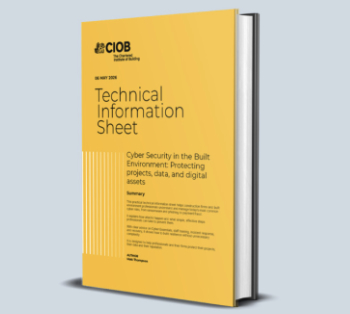
Protecting projects, data, and digital assets: A CIOB Academy TIS.
Managing competence in the built environment
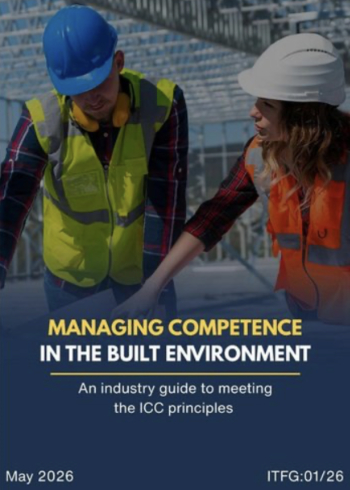
ITFG publishes new industry guide on how to meet the ICC principles.