






The thermal behaviour of spaces enclosed by fabric membranes
A thesis submitted to the University of Wales for the degree of Philosophiae Doctor by GREGOR HARVIE. Welsh School of Architecture, University of Wales College of Cardiff, March 1996.
The findings in brief:
- Boundary models and CFD models need to be dynamically linked to properly represent the impact of thin boundaries whose temperatures can change very rapidly and very significantly (up to 15°c in a minute simply as a result of the sun coming out).
- Analysis of comfort must include radiant temperatures as well as air temperatures, particularly in spaces where there is a significant difference in temperature between the air in the space and the surfaces enclosing it, or where solar radiation penetrates the space.
- The difference in temperature between thin boundaries and the air they enclose, combined with smooth surface geometry results in a higher surface air velocity than is found in conventional spaces. This is similar to the downdraft generated by a cold window.
- Where there is likely to be a significant difference in temperature between a boundary and the air adjacent to it, a very small cell size (40 mm or less) is required to properly simulate the increased surface air velocity at that surface and so the increased surface heat transfer. Failure to properly simulate this will result in an underestimation of the contribution the boundary makes to internal conditions.
- In non-cartesian spaces (i.e. where surfaces are not all vertical or horizontal, but may be inclined or curved) it is necessary to use a body-fitted cell grid (i.e. one in which the grid is distorted to follow the contours of the surface) to allow a small enough cell size adjacent to boundaries to properly simulate the flow of air across those boundaries. If a cartesian grid is used, a refined grid is required throughout the space just to simulate the flow of air across the non-cartesian boundaries and this is computationally impractical.
 This thesis describes a programme of research the aim of which was to investigate the thermal behaviour of spaces enclosed by fabric membrane envelopes.
Initial analysis suggested that a fabric membrane can affect conditions within a space enclosed by it as a result of its internal surface temperature and the amount of radiation it directs into that space. In order to investigate these parameters, a test cell was constructed which allowed the thermal behaviour of a range of fabric membranes to be monitored.
The monitored data revealed that the thermal behaviour of fabric membranes is entirely dictated by their angular thermal optical properties. These properties were measured and a dynamic spread sheet model was developed which was able to simulate the monitored behaviour fairly accurately.
In order to investigate the thermal behaviour of spaces enclosed by such membranes, conditions within four existing fabric roofed buildings were monitored. The monitored data revealed that comfort temperatures could vary significantly from place to place within such spaces. These variations were produced by both the stratification of internal air temperatures and differences in internal radiant temperatures.
An attempt was made to simulate the behaviour of the buildings monitored, using a general applications CFD code in conjunction with information generated by the spread sheet model. Whilst some behaviour patterns could be simulated accurately using this approach, it was apparent that the simplification of boundary conditions in the CFD code meant it was unable to accurately predict strong internal stratification.
It was proposed that improving the reliability of this process would require the development of a specialist CFD model able to dynamically simulate both the behaviour of the fabric enclosure and the internal space.
- File:Contents.pdf. Contents.
- File:Chapter 1.pdf. Introduction.
- File:Chapter 2.pdf. Subject Background.
- File:Chapter 3.pdf. The Existing Body of Knowledge.
- File:Chapter 4.pdf. Methodology.
- File:Chapter 5.pdf. Monitoring the Thermal Behaviour of Fabric Membranes.
- File:Chapter 6.pdf. Measuring the Thermal Properties of Fabric Membranes.
- File:Chapter 7.pdf. Modelling the Thermal Behaviour of Fabric Membranes.
- File:Chapter 8.pdf. Monitoring the Thermal Behaviour of Spaces Enclosed by Fabric Membranes.
- File:Chapter 9.pdf. Modelling the Thermal Behaviour of Spaces Enclosed by Fabric Membranes.
- File:Chapter 10.pdf. Discussion.
- File:Chapter 11.pdf. Conclusions.
- File:Appendices.pdf. Appendices.

--Gregor Harvie 05:36, 22 May 2014 (BST)
[edit] Related articles on Designing Buildings Wiki
- Architectural fabrics.
- Computational Fluid Dynamics.
- Computational fluid dynamics in building design: An introduction FB 69.
- Dynamic façade.
- ETFE.
- Fabric structures.
- Frei Otto.
- Integrating CFD into the design process.
- Khan Shatyr Entertainment Centre.
- Millennium Dome.
- Sustainability.
- The building as climate modifier.
- The history of fabric structures.
- The structural behaviour of architectural fabric structures.
- Thermal behaviour of architectural fabric structures (updated version of this research).
- Thermal comfort.
- Transparent insulation materials.
- U values.
Featured articles and news
Costs and insolvencies mount for SMEs, despite growth

Construction sector under insolvency and wage bill pressure in part linked to National Insurance, says report.
The place for vitrified clay pipes in modern infrastructure
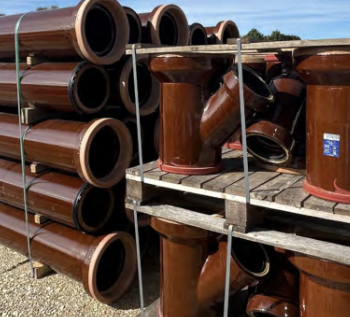
Why vitrified clay pipes are reclaiming their role in built projects.

Research by construction PR consultancy LMC published.
Roles and responsibilities of domestic clients

ACA Safety in Construction guide for domestic clients.
Fire door compliance in UK commercial buildings

Architect and manufacturer gives their low down.
Plumbing and heating for sustainability in new properties
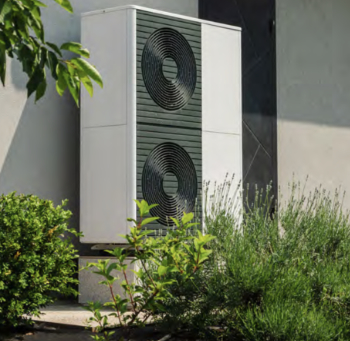
Technical Engineer runs through changes in regulations, innovations in materials, and product systems.
Awareness of the Carbon Border Adjustment Mechanism
What CBAM is and what to do about it.
The new towns and strategic environmental assessments
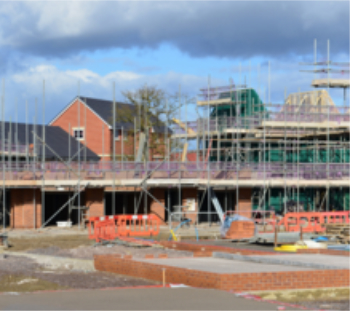
12 locations of the New Towns Taskforce reduced to 7 within the new towns draft programme and open consultation.

Buildings that changed the future of architecture. Book review.
The Sustainability Pathfinder© Handbook
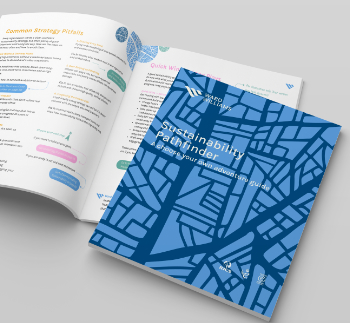
Built environment agency launches free Pathfinder© tool to help businesses progress sustainability strategies.

Government outcome to the late payment consultation, ECA reacts.
IHBC 2025 Gus Astley Student Award winners

Work on the role of hewing in UK historic conservation a win for Jack Parker of Oxford Brookes University.
Future Homes Building Standards and plug-in solar

Parts F and L amendments, the availability of solar panels and industry responses.
How later living housing can help solve the housing crisis
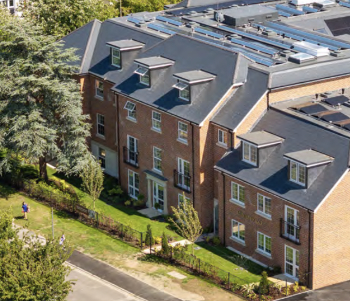
Unlocking homes, unlocking lives.
Preparing safety case reports for HRBs under the BSA

A new practical guide to preparing structural inputs for safety cases and safety case reports published by IStructE.
Male construction workers and prostate cancer

CIOB and Prostate Cancer UK encourage awareness of prostate cancer risks, and what to do about it.
Comments
To start a discussion about this article, click 'Add a comment' above and add your thoughts to this discussion page.