






The growing importance of an evidence-based National Infrastructure Strategy

|
| ICE’s latest policy paper sets out its priorities for the government’s forthcoming National Infrastructure Strategy (NIS). It appeals to the government to produce an NIS that's evidenced-based, takes a holistic approach to infrastructure planning and prioritises improvements in delivery |
[edit] Introduction
Infrastructure is the heartbeat of any high-performing economy and while the new prime minister, Boris Johnson, will have much to grapple with during his first few weeks in office, it is critical that the National Infrastructure Strategy (NIS) remains high on the agenda.
With its publication expected this autumn, there is only a limited amount of time for ensuring that it hits the mark and provides a fully comprehensive plan for the UK’s infrastructure networks for the years to come.
[edit] What should be included in the National Infrastructure Strategy?
Considering the evidence developed by the National Infrastructure Commission (NIC) and the range of policy work that the ICE has produced in parallel, the NIS should:
- Adopt the recommendations put forward by the National Infrastructure Assessment in full and demonstrate in detail how each will be delivered;
- Set out support for new approaches to funding and financing infrastructure, including:
- A pay-as-you-go model for England’s strategic road network by 2030;
- The need for a UK financial institution to provide infrastructure finance in the event that the UK loses access to the European Investment Bank as a consequence of Brexit;
- Mandate the development of regional infrastructure strategies across England to ensure effective integration of infrastructure planning at multiple geographic scales;
- Set out support for the principles of Project 13 as a new model to improve the delivery of major infrastructure projects and programmes, and
- Include a robust plan for driving up the use of digital technologies and innovative approaches to infrastructure delivery, including offsite construction, standardisation and design for manufacture and assembly (DfMA).
[edit] Why is an evidenced-based National Infrastructure Strategy required?
Both the economic and societal cases for infrastructure and the need to secure long-term investment for future provision have been well voiced by the ICE, the NIC and many of the other key built environment organisations.
The public also understands the importance of infrastructure, as polls carried out by YouGov on behalf of the ICE demonstrate. Indeed, 75% of GB adults believe that more money should be spent on improving the UK’s core infrastructure networks, while the same proportion recognises the need for a new national strategy for infrastructure.
The case for good infrastructure has been well voiced and, in many respects, well accepted. The bit that is missing is to improve the way in which infrastructure is ‘done’, so as to ensure that it delivers the very best outcomes for the economy and society more widely.
The UK needs an NIS that is focused on joined-up thinking between infrastructure sectors, as opposed to a list of disconnected projects. It must be based on the best available evidence – including ICE’s National Needs Assessment and the NIC’s National Infrastructure Assessment (NIA) - that spells out clearly what infrastructure networks the UK requires.
Finally, the NIS should set out a credible pathway for improving the delivery and operation of infrastructure networks.
[edit] Why is there such a big opportunity now?
For infrastructure to deliver the very best outcomes, it is necessary that the drivers of demand – demographic, environmental, technological – are properly taken into consideration by policymakers responsible for identifying and delivering infrastructure projects.
At present, this is not happening on a consistent basis and, as a result national infrastructure planning is not being conducted in a strategic way.
The NIA and key ICE policy reports provide the government, and opposition parties, with the impartial and expert evidence base that can help to put this right. The NIS is a unique opportunity for the government to harness this work and help deliver more widely the long-term benefits for businesses, the environment and British society .
In this current period of political instability, which is being driven by Brexit and an associated lack of parliamentary consensus, government officials and politicians are increasingly time-poor. An expert evidence base can provide a coherent and rapid point of reference, cutting through the current public policy impasse and keeping infrastructure high on the agenda.
[edit] Support ICE’s recommendations for the National Infrastructure Strategy
ICE will be making the case for its NIS recommendations all the way through to its publication. Readers can offer their support to help ICE do this by getting in touch at ice.org.uk policy@ice.org.uk.
[edit] Get involved
Members with an interest or expertise in this area who are interested in getting involved, through industry conversations or by writing on ICE's Infrastructure Blog are kindly invited to ice.org.uk get in touch.
[edit] About this article
This article was written by ice.org.uk Ben Goodwin, ICE Lead Policy Manager. It was previously published on the website of the Institution of Civil Engineers (ICE) in July 2019 and can be accessed here.
[edit] Related articles on Designing Buildings Wiki
- Breaking Barriers in Infrastructure - perspectives from the profession
- Brexit - The case for infrastructure.
- Development consent order.
- Devolution and development.
- Engineering smart cities.
- Government Construction Strategy.
- Government publishes UK infrastructure strategy.
- Highways Infrastructure Asset Management Plans.
- Inclusive cities and transport investment.
- Infrastructure and Projects Authority.
- Infrastructure Exports: UK (IE:UK).
- Infrastructure Transformation.
- Infrastructure UK.
- National Infrastructure Commission.
- National Infrastructure Plan for Skills.
- National Infrastructure Strategy.
- National Needs Assessment NNA.
- Nationally Significant Infrastructure Projects.
- Overcoming the challenges of Brexit.
- Planning Act 2008.
- Government construction and infrastructure pipelines.
- Smart cities.
Featured articles and news
Costs and insolvencies mount for SMEs, despite growth

Construction sector under insolvency and wage bill pressure in part linked to National Insurance, says report.
The place for vitrified clay pipes in modern infrastructure
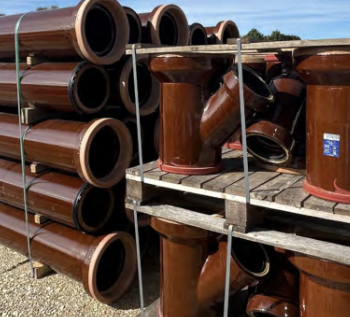
Why vitrified clay pipes are reclaiming their role in built projects.

Research by construction PR consultancy LMC published.
Roles and responsibilities of domestic clients

ACA Safety in Construction guide for domestic clients.
Fire door compliance in UK commercial buildings

Architect and manufacturer gives their low down.
Plumbing and heating for sustainability in new properties

Technical Engineer runs through changes in regulations, innovations in materials, and product systems.
Awareness of the Carbon Border Adjustment Mechanism
What CBAM is and what to do about it.
The new towns and strategic environmental assessments

12 locations of the New Towns Taskforce reduced to 7 within the new towns draft programme and open consultation.

Buildings that changed the future of architecture. Book review.
The Sustainability Pathfinder© Handbook
Built environment agency launches free Pathfinder© tool to help businesses progress sustainability strategies.
Government outcome to the late payment consultation, ECA reacts.
IHBC 2025 Gus Astley Student Award winners

Work on the role of hewing in UK historic conservation a win for Jack Parker of Oxford Brookes University.
Future Homes Building Standards and plug-in solar
Parts F and L amendments, the availability of solar panels and industry responses.
How later living housing can help solve the housing crisis

Unlocking homes, unlocking lives.
Preparing safety case reports for HRBs under the BSA

A new practical guide to preparing structural inputs for safety cases and safety case reports published by IStructE.
Male construction workers and prostate cancer

CIOB and Prostate Cancer UK encourage awareness of prostate cancer risks, and what to do about it.