





Seasonal Efficiency of Domestic Boilers UK SEDBUK
Seasonal Efficiency of Domestic Boilers (SEDBUK) is a rating system that is used to measure and compare the energy efficiency of boiler systems in the UK. It was effectively superseded as the accepted efficiency labelling system by Energy-related Product (ErP) assessments when the EU Ecodesign Directive was introduced. ErP assessments cover similar issues but across a broader EU range of products, setting minimum performance standards, and establishing the ErP compliant labelling system. SEDBUK may still be given on some products, along with an ErP rating because it has a higher level of granularity giving percentage performance as opposed to letter grading under the EU Ecodesign Directive. .
The initial SEDBUK rating system was introduced in 1999 and had two iterations, SEDBUK 2005 which used a letter rating system from A (most efficient) to G (least efficient), similar to the EU ErP system, then 2009 this was changed to give a higher percentage score for better performance (SEDBUK 2009) which was deemed to be more accurate than the first version. SEDBUK assessments measured the efficiency of a specific boiler system when performing over an entire heating season, as opposed to under ideal conditions by measuring energy losses during standby mode, boiler cycling losses, as well as heat losses through the flue.
The ErP (Energy-related Products) directive, which was introduced in 2015 under the EU Ecodesign Directive uses a letter rating (A+++ to G) for a broader range of energy-related products across the whole of Europe. Whist the requirement for products to adhere to the ErP and EU Ecodesign Directive applied to all UK products, SEDBUK ratings were often still used because of their percentage outcomes and continued use for the UK Standard Assessment Procedure (SAP). Many of the EU Ecodesign measures were transposed into UK law before the end of the Brexit transition period, because market ties with the EU remained close even after Brexit. SEDBUK ratings are still used in specific contexts, such as for SAP (Standard Assessment Procedure) calculations for new build homes.
The Product Characteristics Database (PCDB) is a support tool which used for the Standard Assessment Procedure (SAP) along with SAP Appendix Q database, both are provide by the BRE. Both list the performance data for a wide range of different products which includes boilers, aswell as heat pumps, mechanical ventilation, micro CHPs, Flue gas recovery systems, waste water recovery systems, compensating boiler controls and Time and Temperature Zone Control, high heat retention storage units, community heat networks and heat interface units.
[edit] Related articles on Designing Buildings
- Accredited energy assessor.
- Air tightness.
- Are Energy Performance Certificates accurate?
- BS EN 15232 Energy performance of buildings: impact of building automation, controls and building management.
- Building heating systems.
- Building performance metrics.
- Carbon ratings for buildings.
- Display energy certificate.
- Emission rates.
- Building energy models.
- Energy certificates for buildings.
- Energy performance certificate EPC.
- Energy Performance of Buildings Directive.
- Energy related products regulations.
- Heating plant emission rate.
- Heating system glandless circulator.
- Low carbon heating and cooling.
- Minimum energy efficiency standard (MEES).
- National Calculation Method.
- National Retrofit Strategy NRS.
- Non-domestic private rented property minimum standard.
- Passivhaus vs SAP.
- Performance gap.
- Retrofit.
- Simplified Building Energy Model.
- The EPC consultation in the context of changes to the NCM.
- The Home Energy Model and Future Homes Standard assessment wrapper.
- U-value conventions in practice: Worked examples using BR 443.
Featured articles and news

We're expanding our collaborative mission by launching DB Intelligence, an exclusive market research advisory panel. Built environment professionals can now get paid to share their expertise on industry trends, products and services.
Panel members receive direct financial incentives for participating in research projects like short surveys, 1-2-1 interviews and focus groups. Register today to shape the future of the construction sector.
Building Safety Wiki Interviews

Chief executive of the British Woodworking Federation.
Planning condition discharge in England and Wales

A brief exoplanation from a building compliance expert, with further links.
Overheating guidance and tools for building designers

Guidance for dealing with element of building fabric control that have increasing importance.
Shading for housing, a design guide

From the Good Homes Alliance and British Blind and Shutter Association.
UK Standard Skills Classification (SSC)
A shared framework for describing skills needs.
Social media ban consultation comes to close

CIOB urges UK Government to consider social media’s role in careers guidance in ban debate.
The latest of eight Skills England apprenticeship units

The addition of battery manufacturing welcomed by ECA with a warning about the risks of fast-tracked apprenticeship units.
Building Control Independent Panel final report
A precis of a key report led by Dame Hackitt with full recommendations and link to the government response.
Building Safety recap April, 2026
A short and longer run-through of the month, with links to further information and sources.
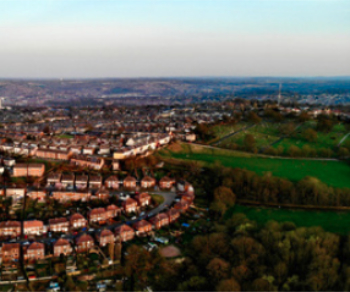
CIAT May 2026 briefing.

From medieval scribes to modern word art.

ECA welcomes crackdown on late payment and push for clean energy, whilst CIOB seek fixed cladding removal timeframes.
Cyber Security in the Built Environment
Protecting projects, data, and digital assets: A CIOB Academy TIS.
Managing competence in the built environment

ITFG publishes new industry guide on how to meet the ICC principles.