






Retrofitting of Buildings
[edit] Retrofitting of Buildings: Complete Guide to Strengthening Existing Structures
Retrofitting of buildings is a modern engineering solution designed to enhance the strength, durability, and safety of existing structures. With ageing infrastructure and increasing environmental challenges, retrofitting has become essential for both residential and commercial properties.
This process ensures that buildings comply with current safety standards, especially in regions prone to earthquakes, heavy loads, or structural deterioration.
[edit] What is Retrofitting of Buildings?
Retrofitting refers to the process of modifying an existing building to improve its structural performance, load-bearing capacity, and resistance to external forces such as seismic activity, corrosion, or wear and tear.
Unlike reconstruction, retrofitting is cost-effective, faster, and sustainable, as it utilises the existing structure while enhancing its performance.
[edit] Why Retrofitting is Important?
Retrofitting plays a crucial role in extending the life of buildings. Key benefits include:
- Improved Structural Strength
- Enhanced Earthquake Resistance
- Increased Load-Bearing Capacity
- Prevention of Structural Failures
- Cost Savings Compared to Rebuilding
- Compliance with Updated Building Codes
[edit] Types of Retrofitting Techniques
[edit] 1. Structural Retrofitting
This involves strengthening core structural elements like beams, columns, and slabs.
[edit] 2. Seismic Retrofitting
Specially designed to improve a building’s resistance to earthquakes using advanced engineering techniques.
[edit] 3. Foundation Retrofitting
Strengthens the base of the structure to prevent settlement or collapse.
[edit] 4. Masonry Retrofitting
Used for brick and stone structures to improve stability and load distribution.
[edit] Popular Retrofitting Methods
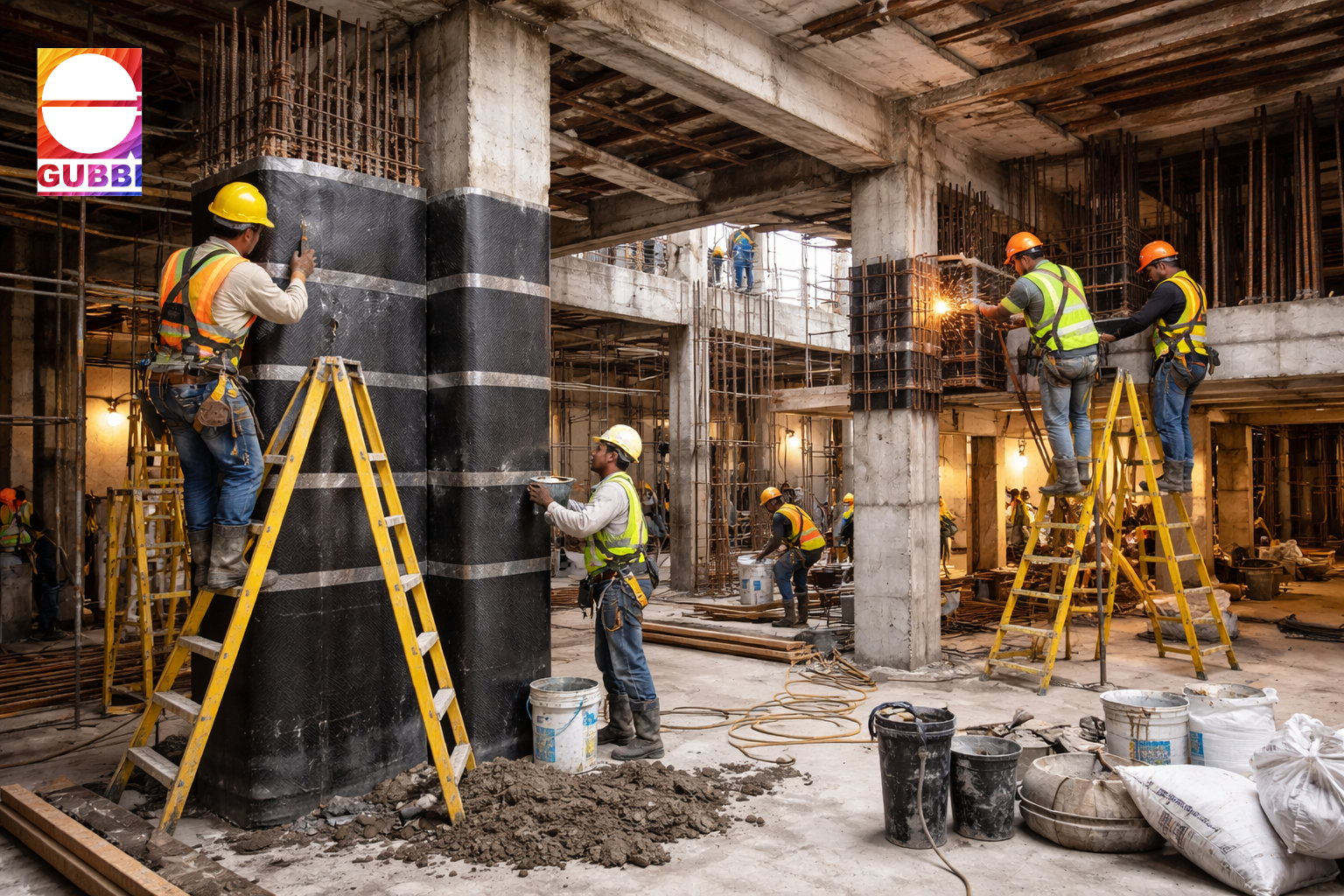
[edit] 1. Carbon Fibre Wrapping
A highly effective method using carbon fibre reinforced polymer (CFRP) to strengthen columns and beams.
[edit] 2. RCC Jacketing
Involves adding reinforced concrete layers to existing structural members.
[edit] 3. Steel Plate Bonding
Steel plates are attached to structural components to enhance strength.
[edit] 4. Guniting / Shotcreting
Concrete is sprayed onto surfaces to repair and strengthen damaged areas.
[edit] Step-by-Step Retrofitting Process
- Structural Assessment and Inspection
- Load Analysis and Design Planning
- Selection of Retrofitting Technique
- Surface Preparation and Repair Work
- Application of Strengthening Materials
- Quality Testing and Final Inspection
[edit] Applications of Building Retrofitting
- Residential Buildings
- Commercial Complexes
- Industrial Structures
- Bridges & Infrastructure
- Heritage Buildings
[edit] Cost of Retrofitting in India
The cost of retrofitting depends on:
- Extent of structural damage
- Type of retrofitting method used
- Building size and complexity
- Material and labour costs
On average, retrofitting is 30-60% more economical than complete reconstruction.
[edit] Latest Trends in Building Retrofitting (2026)
- Use of advanced composite materials (CFRP and GFRP)
- Integration of AI-based structural analysis
- Sustainable and eco-friendly repair techniques
- Smart monitoring systems for structural health
[edit] Why Choose Professional Retrofitting Services
Hiring experienced structural engineers ensures:
- Accurate structural assessment
- Compliance with IS codes and safety standards
- Use of high-quality materials
- Long-term durability and performance
[edit] Conclusion
Retrofitting of buildings is a smart, sustainable, and cost-effective solution for strengthening existing structures. Whether it’s improving earthquake resistance or restoring structural integrity, retrofitting ensures safety, longevity, and compliance with modern engineering standards.
Investing in professional retrofitting services today can prevent costly structural repairs and structural failures in the future.
Upgrade your structure with expert retrofitting solutions. Ensure safety, strength, and long-term durability with professional engineering services.