





Public sewer

|
| The Thames tideway tunnel comprises a 24km long 7.2m diameter sewer running from Acton in the west to Abbey Mills in the east. It will have a holding storage capacity of 1.6 million cubic metres. |
A pipe that serves only one property is referred to as a drain. Drains are privately owned and maintained as far as the boundary of the property. Beyond the boundary of the property a drain is referred to as a public lateral drain.
A pipe that serves more than one property is referred to as a sewer. Sewers that connect to the public sewer network are referred to as public sewers.
The sewer system, that is, the underground network of pipes that carries sewage (waste water and excrement), other waste water and surface water run-off, from properties to treatment facilities or other disposal points is referred to as sewerage.
Under the Public Health Act 1936 all sewers (as defined by the Public Health Act 1875) which were in existence on 1 October 1937 became public sewers. After 1937 new sewers were only public if they were laid or adopted by the sewerage undertaker.
However, on 1 October 2011 in England and Wales, private sewers and lateral drains that were connected to the public sewer before 1 July 2011 were transferred to the ownership of the regulated sewerage companies (generally water companies).
It is possible to apply for new or existing sewers or lateral drains to be adopted by a sewerage company. For more information see:
Public sewers usually run under roads or public open spaces, but they may also run through private property such as gardens. The sewerage company has a right of access to these public sewers in order to maintain them.
Permission is required from the sewerage company to build over a public sewer. Failure to obtain permission may result in the withholding of a building regulations completion certificate.
It is also possible to have public sewers diverted under Section 185 of the Water Industry Act.
The route of existing mapped public sewers can be determined by inspecting local authority records or by contacting the local sewerage company. There may also be details in property deeds. However, many public sewers are not mapped. In this case, it may be necessary to carry out inspections from manholes, to undertake an electronic sewer trace or to dig trial holes.
- A surface water drain or sewer is a pipe that carries only surface water, not foul water.
- A foul water drain or sewer is a pipe that carries waste water from a property such as from a toilet, bath, washing machine and so on. Surface water should not discharge into a foul water drain or sewer, as this can cause flooding of foul water.
- A rising main is a pressurised sewer that can be used to pump foul or surface water.
[edit] Related articles on Designing Buildings
- Cesspool.
- Clarified water.
- Difference between drains and sewers.
- Drainage.
- Drains.
- Grease management.
- Manhole.
- Private sewer.
- Public Health Act 1875.
- Safe working in drains and sewers.
- Sanitary pipework.
- Section 102 existing sewer adoption.
- Section 104 new sewer adoption.
- Septic tank.
- Sewer construction.
- Sewerage.
- Sewerage company.
- Sustainable urban drainage systems SUDS.
- Thames Tideway Tunnel.
- The redevelopment of Leicester's sewerage system by Joseph Gordon.
- Waste water.
Featured articles
Check out some of the best features and news from Designing Buildings as well as key stories from around the web.

Your views needed - a strategy for the professions, trades and occupations.

Confronting competency, codes, capacity and costs.
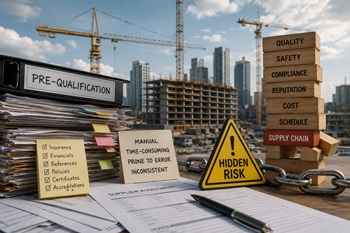
The hidden risk in modern construction supply chains.
Construction Management, 10 June

24 months to 14: CITB launches accelerated apprenticeships.
Bridging the gap between clients and contractors

Concerns remain around contractor quality, capability, and delivery.
Construction Management, 10 June.

Heat pumps beat boilers in new home tests.
Building Safety Act implementation in Wales

CIAT to host industry panel on 26 June.

New and updated CLC building safety guidance.
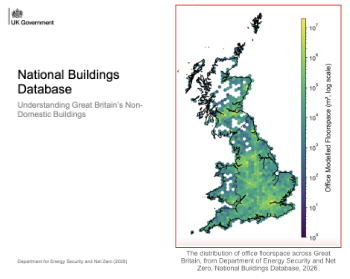
New UK National Buildings Database.
Building Safety Wiki Interviews

Chief executive of the British Woodworking Federation.
Planning condition discharge in England and Wales

A brief explanation from a building compliance expert, with further links.