





Portable buildings
Offsite residential construction, Glossary of terms, published by Buildoffsite in 2018, defines portable buildings and portable accommodation as: ‘volumetric prefabricated buildings that are designed so that they can be moved and relocated. They are frequently semi-permanent and have a relatively short life span of 20 to 30 years. Many are rented out.’
Portable buildings are factory-manufactured structures designed so that they can be moved, relocated and reused. They are typically produced as complete three-dimensional modules, or volumes, which are transported to site and assembled to form a complete building.
Unlike traditional permanent structures, portable buildings are often intended to be semi-permanent. They provide a practical, flexible solution where accommodation is needed quickly or for a limited period. Their lifespan is generally shorter than conventional construction, typically around 20 to 30 years, but they can often be refurbished, relocated or reconfigured several times during that period.
Because they are prefabricated in controlled factory conditions, portable buildings can be manufactured and installed much faster than site-built alternatives. This makes them popular for uses such as classrooms, offices, healthcare facilities, site accommodation, and temporary housing. They can also be fitted out to a high standard, with full services and finishes comparable to permanent buildings.
Many portable buildings in the UK are rented or leased rather than purchased outright. Specialist companies supply modular units that can be delivered and installed at short notice, then removed or relocated when no longer required. This rental model allows organisations to expand or contract their accommodation efficiently, without committing to long-term construction or ownership costs.
While their temporary nature can limit the materials and finishes used, advances in design and manufacturing have improved the appearance, comfort and energy performance of modern portable buildings. Increasingly, they are designed with sustainability in mind, allowing components and modules to be reused, reducing waste, and minimising the environmental impact associated with demolition.
Types of portable building used in the UK include:
- Portable offices. Often used on construction sites, business parks, or as temporary workspace, these modular units provide offices, meeting rooms, and welfare facilities. They can be stacked or linked to create multi-room complexes.
- Classrooms and educational buildings. Schools and colleges frequently use portable classrooms to accommodate short-term increases in pupil numbers or to provide temporary teaching space during refurbishments. They can include full heating, lighting, and accessibility features.
- Healthcare units. Portable healthcare buildings are used by the NHS and private providers for clinics, testing centres, vaccination hubs, and temporary surgeries. They can be fitted with specialist medical equipment and designed to meet hygiene and accessibility standards.
- Site accommodation. These are commonly used on construction and infrastructure projects. They include welfare units, canteens, drying rooms, toilets, and storage areas for workers. They are typically designed for rapid installation and removal.
- Marketing suites and sales offices. Developers often use portable buildings as showrooms or sales centres on new housing developments. They can be customised with branded interiors, reception areas, and display spaces.
- Temporary housing and accommodation blocks. Used for student housing, key worker accommodation, or emergency shelter, these units can be configured into living quarters complete with kitchens and bathrooms.
- Portable toilets and sanitation units. Standalone portable units provide temporary sanitation for events, festivals, and construction sites. They range from simple chemical toilets to fully plumbed facilities.
- Storage and plant rooms. Portable containers and modular units are used for secure on-site storage of materials, tools, or mechanical plant. Some are adapted with power and insulation for use as workshops.
- Security cabins and gatehouses. Small portable units used for security personnel, site access control, or ticketing points. These are often placed at entrances to sites or car parks.
- Event and exhibition buildings. Portable buildings are used at festivals, trade fairs, and sporting events for ticket offices, hospitality lounges, media centres, or temporary pavilions.
Portable buildings play an important role in the UK construction landscape. They offer speed, flexibility and adaptability, meeting the changing needs of users while supporting more efficient and circular approaches to building use.
[edit] Related articles on Designing Buildings
Featured articles
Check out some of the best features and news from Designing Buildings as well as key stories from around the web.

Your views needed - a strategy for the professions, trades and occupations.

Confronting competency, codes, capacity and costs.
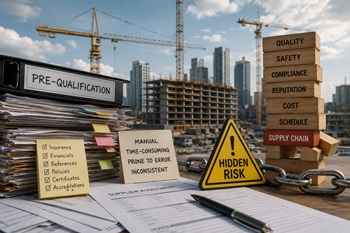
The hidden risk in modern construction supply chains.
Construction Management, 10 June

24 months to 14: CITB launches accelerated apprenticeships.
Bridging the gap between clients and contractors
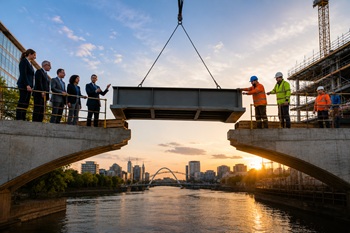
Concerns remain around contractor quality, capability, and delivery.
Construction Management, 10 June.
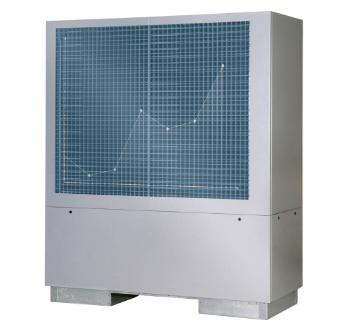
Heat pumps beat boilers in new home tests.
Building Safety Act implementation in Wales
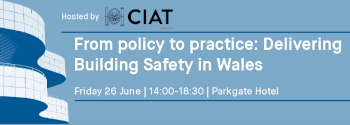
CIAT to host industry panel on 26 June.
New and updated CLC building safety guidance.
New UK National Buildings Database.
Building Safety Wiki Interviews

Chief executive of the British Woodworking Federation.
Planning condition discharge in England and Wales

A brief explanation from a building compliance expert, with further links.