






London's Blue Ribbon Network

London’s strategic water network, described as the “Blue Ribbon Network” covers the River Thames, canals, tributary rivers, lakes, reservoirs, docks and other waterbodies. This water network is an invaluable resource which has connected the capital since the Industrial Revolution. The Blue Ribbon Network extends to every London borough, and it is this connection with water that gives the capital its picturesque character.
Once the primary means of transportation, the water network has been a big contributor to the successful development of the capital in the past; and yet today the waterways in London are experiencing constant degradation.
With the expansion of roadways, waterways started to lose economic significance and they are now no longer used in the same way as before. Nevertheless, as road congestion continues to rise and inner-city air quality deteriorates, London is revisiting water transportation opportunities.
Water transportation can have multiple environmental and social benefits over road transportation. Environmental benefits can be achieved owing to significantly lower carbon emissions[1]; and social benefits are achieved due to reduced congestion on London’s road network, reduced accidents and road maintenance, reduced noise pollution and so on[2]. A modal shift in transportation, where feasible, is a good opportunity to make the capital a healthier and better city for all that live here.
With London’s ever-changing skyline, construction transportation has been identified as a significant contributor to transportation emissions and road congestion. Exploiting the waterways can provide the construction sector with a good opportunity to reduce emissions and social impact. With that in view, many new developments are being encouraged to maximise the use of waterways for the transportation of building materials and construction waste.
KLH undertook a detailed study to evaluate the feasibility of water transportation for a mixed-use development project on the River Lee Navigation. The project, in theory, is ideally located with direct access to the waterway. However, the study found several limitations to exploitation of the waterways due to the lack of efficient infrastructure along the network.
The main logistical issues emerged from the lack of public wharves with cargo handling capabilities and the extensive network of publicly-accessible towpaths that restrict safe, direct access to the waterways. Furthermore, longer travel durations[3] and double handling significantly increase the cost of waterway logistics.
Based on the Department for Transport’s modal shift benefit figures, the higher logistics cost was found to largely outweigh the overall social benefit value, apart from bulk disposal of excavation waste. These findings are supported by several other studies. Consequently, the only major project currently under construction in the capital using barge transportation is the Thames Tideway Tunnel; with its Thames-side mass excavations, it is a perfect candidate for water logistics.
The social benefits of water logistics are significant, and the City of London would do well to protect existing wharves and continue to support the waste and materials handling facilities that have historically made their home in these key locations. While housing provision is an issue, and waterside locations carry an obvious premium, some of the intrinsic value of our waterways is the sight of a working vessel transporting goods and materials into the heart of the City. Hopefully, with the New London Plan’s recognition of this important resource, the capacity of the city’s waterways to support a sustainable future will be better exploited.
____________________________________________________________
[1] Figures published by DECC and DEFRA indicate that the emissions associated with water transport are significantly lower, at almost a fifth compared to road transport. (kgCO2e/tonne-km)
[2] Department for Transport’s (DfT) Mode Shift Benefit Values: Technical Report
[3] Barges used for transportation of construction materials can usually move at a speed of 3-4miles per hour, thus requiring considerably longer duration for transportation. Travel duration can be further affected because of tidal impacts and number of locks along the navigation path.
[edit] Find out more
[edit] Related articles on Designing Buildings Wiki
Featured articles and news
Costs and insolvencies mount for SMEs, despite growth

Construction sector under insolvency and wage bill pressure in part linked to National Insurance, says report.
The place for vitrified clay pipes in modern infrastructure
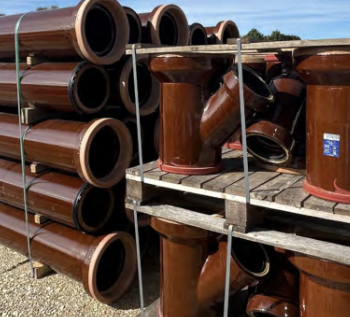
Why vitrified clay pipes are reclaiming their role in built projects.

Research by construction PR consultancy LMC published.
Roles and responsibilities of domestic clients

ACA Safety in Construction guide for domestic clients.
Fire door compliance in UK commercial buildings

Architect and manufacturer gives their low down.
Plumbing and heating for sustainability in new properties

Technical Engineer runs through changes in regulations, innovations in materials, and product systems.
Awareness of the Carbon Border Adjustment Mechanism
What CBAM is and what to do about it.
The new towns and strategic environmental assessments
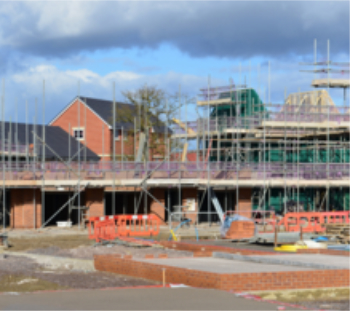
12 locations of the New Towns Taskforce reduced to 7 within the new towns draft programme and open consultation.

Buildings that changed the future of architecture. Book review.
The Sustainability Pathfinder© Handbook
Built environment agency launches free Pathfinder© tool to help businesses progress sustainability strategies.

Government outcome to the late payment consultation, ECA reacts.
IHBC 2025 Gus Astley Student Award winners

Work on the role of hewing in UK historic conservation a win for Jack Parker of Oxford Brookes University.
Future Homes Building Standards and plug-in solar
Parts F and L amendments, the availability of solar panels and industry responses.
How later living housing can help solve the housing crisis

Unlocking homes, unlocking lives.
Preparing safety case reports for HRBs under the BSA

A new practical guide to preparing structural inputs for safety cases and safety case reports published by IStructE.
Male construction workers and prostate cancer

CIOB and Prostate Cancer UK encourage awareness of prostate cancer risks, and what to do about it.