





Landscape Institute
The Landscape Institute (LI) is the Royal Chartered Institute for Landscape professionals and an educational charity. It was founded in 1929 (when it was known as the Institute of Landscape Architects), and the first President, Thomas Mawson, was one of the first professionals to use the title 'landscape architect'. The Landscape Institute was granted a Royal Charter in 1997. It is located on Gray’s Inn Road in London.
The Landscape Institute works to protect, conserve and enhance the natural and built environment for the public benefit.
It describes its role as:
- Championing landscape and the landscape profession, through advocacy and support to its members, to inspire great places where people want to live, work and visit.
- Working with government to improve the planning, design and management of urban and rural landscape.
- Accrediting university courses and promoting professional development to ensure that landscape architects deliver the highest standards of practice.
The Institute is governed by its Royal Charter, By-laws and Regulations. It is run by a board with 12 members that meets 6 times a year. Institute members are represented and the strategic vision defined by a council with 30 members that meets 3 times a year. In addition, there are 3 standing committees:
- Education and membership.
- Technical and policy.
- Communications.
The Institute suggests that, "Landscape architecture is rooted in an understanding of how the environment works and what makes each place unique. It is a blend of science and art, vision and thought. It is a creative profession skilled in strategic planning, delivery and management. Landscape architects bring knowledge of natural sciences, environmental law and planning policy. They lead teams, engage stakeholders and manage conflicting demands. And they create delight with beautiful designs, protecting and enhancing our most cherished landscapes and townscapes". Ref Landscape architecture: a guide for clients, 2012.
There are many academic institutes that offer landscape architecture courses and in order to become a qualified, professional Landscape Architect. A number of schools are accredited by the Landscape Institute.
Typically following graduation from a landscape architecture course, an individual will go into a role as an Assistant or Graduate Landscape Architect. Within a few years of employment and with the correct experience, it is possible to become a Chartered professional through the Landscape Institute.
Members of the Landscape Institute are required to comply with a Code of Conduct. As part of this, they must maintain their professional competence by completing a minimum of 25 hours of continued professional development (CPD) per year. They are also expected to have adequate and appropriate insurance.
Chartered Landscape Architects can use the letters CMLI (Chartered Member of the Landscape Institute) after their name.
NB Whilst use of the title ‘architect’ is protected under the Architect's Act 1997, the Act specifically does not prevent use of the designation ‘naval architect’, ‘landscape architect’ or ‘golf-course architect’. However, only qualified members of the Landscape Institute may use the title 'Chartered Member of the Landscape Institute' and the designation 'CMLI'.
[edit] Find out more
[edit] Related articles on Designing Buildings Wiki.
Featured articles
Check out some of the best features and news from Designing Buildings as well as key stories from around the web.
Building Safety Act implementation in Wales

CIAT to host industry panel on 26 June.
New and updated CLC building safety guidance.
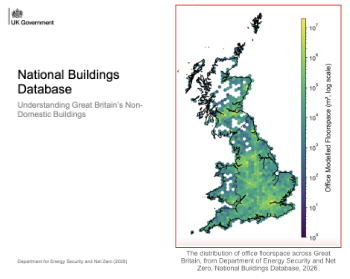
New UK National Buildings Database.
Building Safety Wiki Interviews

Chief executive of the British Woodworking Federation.
Planning condition discharge in England and Wales

A brief explanation from a building compliance expert, with further links.
Overheating guidance and tools for building designers

Guidance for dealing with element of building fabric control that have increasing importance.
Shading for housing, a design guide

From the Good Homes Alliance and British Blind and Shutter Association.
UK Standard Skills Classification (SSC)

A shared framework for describing skills needs.
Social media ban consultation comes to close

CIOB urges UK Government to consider social media’s role in careers guidance in ban debate.
The latest of eight Skills England apprenticeship units

The addition of battery manufacturing welcomed by ECA with a warning about the risks of fast-tracked apprenticeship units.
Building Control Independent Panel final report
A precis of a key report led by Dame Hackitt with full recommendations and link to the government response.