





Glass block flooring

Glass block flooring is used in many different situations, from bridge walkways and mezzanine floors to balconies, corridors and public highways. They are most commonly used as pavement lights - glass lenses set into precast concrete as part of pavement construction to allow natural light into the space below.
They were developed in the 1880s as cast iron frames glazed with cut squares of glass, intended to provide a natural light source for basements and cellars beneath the pavement. Gradually these were superseded by reinforced concrete panels with plain glass fenestration, but these were then superseded themselves by pressed glass prism lenses, designed to transmit the maximum amount of light.
They can be constructed in situ, although in the UK they are predominantly precast in factory-controlled conditions to individual project specifications.
There are currently no British or European standards that apply to pavement lights or other precast concrete panels with glass block or paver inserts. Manufacturers must test their pavement light products to determine loading, thermal, acoustic and fire performance, as well as compliance with any local authority or building regulations requirements.
Design considerations include:
- Type and percentage of light transmittance required.
- Type of likely traffic (i.e. pedestrian, vehicular, etc.).
- Loading requirements of the panel.
- Fire integrity and thermal isolation rating of the panel.
- Thermal performance.
- Slip resistance.
- Expansion joints.
Glass lenses are typically 20-22 mm thick, have a flat, smooth finish, and are available in 100 x 100 mm and 200 x 200 mm squares.
Pavement lights for heavy duty applications (such as loading bays, roadways, and so on), must be capable of sustaining significant loads. The required loading determines the spanning ability, but spans of up to 4.4 m can be achieved with distributed loadings of up to 20 kN/m2.
Slip resistance is measured on the overall surface of the panel, not just the glass or concrete. Improved slip resistance can be provided by sandblasted pavers which add chromite or carborundum grains in the concrete wearing surface.
Glass paver lenses can also be used for vertical precast reinforced concrete panels. These are sometimes used for windows and rooflights in spaces such as prisons and detention rooms.
Another variation is the precast concrete stair tread, which incorporate glass pavers or blocks, sometimes in combination with glazed floor panels.
[edit] Related articles on Designing Buildings Wiki
- Coal holes, pavement lights, kerbs and utilities and wood-block paving.
- Floor definition.
- Glass block wall.
- Glass bottle floor foundation.
- Glass for buildings.
- Glazing.
- Kerbs.
- Pavegen.
- Pavement.
- Security glazing.
- Solar Squared.
- Types of flooring.
- Types of road and street.
[edit] External resources
- The NBS - Pavement lights
Featured articles
Check out some of the best features and news from Designing Buildings as well as key stories from around the web.
New and updated CLC building safety guidance.
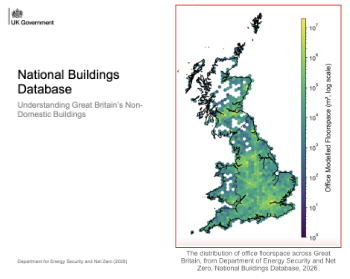
New UK National Buildings Database.
Building Safety Wiki Interviews

Chief executive of the British Woodworking Federation.
Planning condition discharge in England and Wales

A brief explanation from a building compliance expert, with further links.
Overheating guidance and tools for building designers

Guidance for dealing with element of building fabric control that have increasing importance.
Shading for housing, a design guide

From the Good Homes Alliance and British Blind and Shutter Association.
UK Standard Skills Classification (SSC)

A shared framework for describing skills needs.
Social media ban consultation comes to close

CIOB urges UK Government to consider social media’s role in careers guidance in ban debate.
The latest of eight Skills England apprenticeship units

The addition of battery manufacturing welcomed by ECA with a warning about the risks of fast-tracked apprenticeship units.
Building Control Independent Panel final report
A precis of a key report led by Dame Hackitt with full recommendations and link to the government response.
Building Safety recap April, 2026
A short and longer run-through of the month, with links to further information and sources.
Comments
walkways, mezzanine floors, balconies, corridors and public highways outside buildings, allowing natural daylight to flood below.
Glass floor blocks and lenses used in horizontal applications are specially manufactured and differ from glass blocks used in vertical walling.