





Forbidden City

Contents |
[edit] Introduction
The Forbidden City in the centre of Beijing, was the Chinese imperial palace between 1420 and 1912. As the ceremonial and political centre of Chinese government it served as the home of 24 emperors.
Construction began in 1406, when Zhu Di became the Yongle Emperor and moved the capital from Nanjing to Beijing. By the time it was completed in 1420, the complex covered more than 180 acres and included 980 buildings.
The Forbidden City, as its name suggests, was not generally open to the masses. The Outer Court (the southern part of the complex), with its expansive courtyards and monumental pavilions, was used for public audiences and ceremonies; while the Inner Court (northern part) contained residences for the royal family, servants, and so on.
The complex has influenced cultural and architectural styles across East Asia and beyond. In 1987, it was declared a World Heritage Site, and listed by UNESCO as the world’s largest collection of preserved wooden structures.
[edit] Architecture

The Forbidden City was designed and built in a way that typifies traditional Chinese palatial architecture, with the emphasis on articulation and bilateral symmetry to signify balance.
Classical Chinese buildings typical emphasise breadth rather than height, particularly those of the wealthy. They often feature an enclosed, heavy platform, covered with a large roof that appears to 'float' because of the lack of emphasis on the supporting vertical walls.
The Forbidden City has a great deal of red because this is a color that is seen as lucky.
The halls and palaces have relatively low ceilings compared with similar western architecture.
The Forbidden City is laid out in a rectangle, measuring 961 m (3,153 ft) from north to south, and 753 m (2,470 ft) from east to west. It is surrounded by a wall measuring 7.9 m (26 ft) high, and a moat measuring 6 m (20 ft) deep by 52 m (171 ft) wide. The corners of the walls are expressed by four towers with intricate roofs formed by 72 ridges.

One of the most famous features is the Wu (Meridian Gate), the imposing 38 m (125 ft) high southern entrance. This opens onto a large courtyard through which the Golden River runs, crossed by five white marble bridges.
Towering above the Outer Court is the most iconic structure of the complex, the Hall of Supreme Harmony, which contains the throne of the emperor. This is the largest building of the complex, and is the largest surviving wooden structure in China.
Adjacent to the three halls of the Inner Court, the 3 acre Imperial Garden offers a place of relaxation.
The structures are largely made from timber logs from the jungles of south-western China, and large blocks of marble. Baked ‘golden’ bricks were used to pave the floors of several of the more important halls. The roofs include yellow glazed tiles, the colour of the Emperor.
[edit] Post-construction
Since completion in 1420, 14 Ming emperors and 10 Qing emperors used the complex as their imperial palace. However, with the abdication of Puyi in 1912, its role as the political centre of China came to an end.
Despite having abdicated power, Puyi remained in the Inner Court until 1924 when he was evicted following a coup. In 1925, a Palace Museum was established, and took control of the Forbidden City.
With the revolutionary action that established the People’s Republic of China in 1949, the complex incurred some damage, although further destruction was prevented during the Cultural Revolution as an army battalion was charged with keeping it safe.
Today, the Palace Museum contains an extensive collection of artwork and artifacts, including the imperial collections of the Ming and Qing dynasties. As such, it is the most visited art museum in the world, with 14.6 million visitors a year.
[edit] Find out more
[edit] Related articles on Designing Buildings Wiki
Featured articles
Check out some of the best features and news from Designing Buildings as well as key stories from around the web.
Bridging the gap between clients and contractors
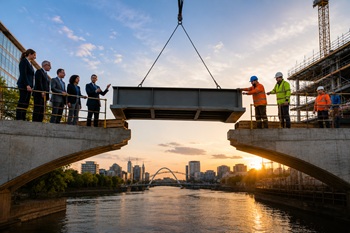
Concerns remain around contractor quality, capability, and delivery.
Construction Management, 10 June.
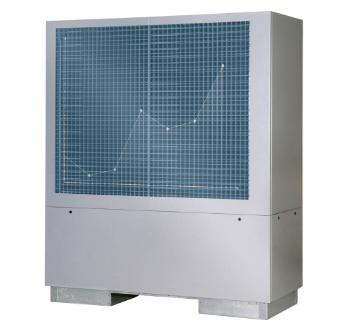
Heat pumps beat boilers in new home tests.
Building Safety Act implementation in Wales
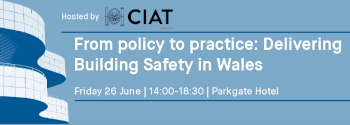
CIAT to host industry panel on 26 June.
New and updated CLC building safety guidance.
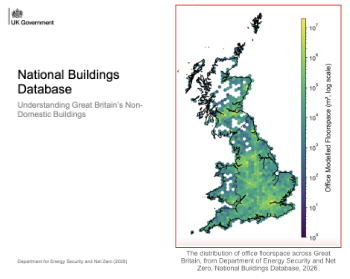
New UK National Buildings Database.
Building Safety Wiki Interviews

Chief executive of the British Woodworking Federation.
Planning condition discharge in England and Wales

A brief explanation from a building compliance expert, with further links.
Overheating guidance and tools for building designers

Guidance for dealing with element of building fabric control that have increasing importance.
Shading for housing, a design guide

From the Good Homes Alliance and British Blind and Shutter Association.
UK Standard Skills Classification (SSC)

A shared framework for describing skills needs.
Social media ban consultation comes to close

CIOB urges UK Government to consider social media’s role in careers guidance in ban debate.
Comments