






Efficiency through systems integration
The security industry continues to see incredible technological improvements. Advances in facial recognition, analytics and detection capabilities provide significant benefits to clients, installers, maintainers and monitoring centres alike, by reducing false alarms and improving response times resulting in a better customer experience and business efficiencies. However, what is evident across the industry is that business IT systems have often been left behind.
Security providers do not put the same emphasis on their internal IT systems development as they do in providing new technologies to clients. What this often leads to is costly inefficiencies within business processes that outweigh the benefits provided by the technologies they are implementing within their client base.
Furthermore, the increasing number of manufacturer specific software on the market, offering specific benefits to the installer, maintainer and client adding more standalone software adds more strain on business processes and efficiency where they do not integrate effectively with existing systems.
For example, take CheckMyCCTV – a fantastic, innovative and proactive maintenance software for Closed Circuit Television (CCTV) systems that can be a cloud or on-premises based solution – requires a provider to enter client information directly into it, where they have most likely also entered the information into their Customer Relationship Management (CRM) system, their Enterprise Resource Planning (ERP) System (the system they use to manage installs and servicing scheduling) and perhaps even their invoicing system. These potentially add significant and frustrating ‘double-handling’ to a process.
Not only do providers have more software packages being utilised independently to each other, they tend to have older CRM and ERP systems with out-of-date data, few upgrades being carried out or worse still, operating from Excel spreadsheets.
There is a large range of systems on the market. Some are relatively new, others are stalwarts. All of them can improve business efficiencies and offer a level of integration between different software packages, through Application Programming Interface (API) or by using a cloud-based system such as Zapier to create workflows and transfer data between systems without development experience. These allow multiple systems, such as a CRM, ERP and other third party software packages to “talk” to each other and share information.
Often, software integration is not considered in existing systems or indeed in new implementations and met with resistance due to perceived high costs of development, misunderstanding of how systems can integrate and the benefits that it brings.
Benefits of integration, however, can be quite easily quantified when considering simple tasks such as data entry. Take, for example, processing a sale from a independent CRM into an ERP and into an accountancy system. Each system most likely requires customer details, site details, cost and price details. If it takes 2 minutes to enter the information into each system, that’s 6 minutes across the process. Multiply that by the number of orders won per week and quickly the cost of the process adds up. Integration of these systems could reduce the process cost to 2 minutes.
Imagine that across all your business processes and the time you could save, to provide more focus on value added tasks that actually benefit your clients!
With clients expecting more communication, visibility and reporting made available to them, at the click of a button, harnessing technology to avoid excessive administration tasks is vital for security providers to keep up with latest technologies both in the field and in their internal systems.
For more information visit https://www.eca.co.uk/fsa to learn more about the Fire & Security Association and how it can help your Fire and Security systems business.
Article from ECA Blog, March 28, written by Pete Holland.
--ECA
[edit] Related articles on Designing Buildings
- Integrated systems
- Building systems.
- Collaborative practices for building design and construction.
- Fire.
- Fire detection and alarm system.
- Fire inspector.
- Fire protection engineering.
- Fire safety design.
- Fire safety engineer.
- Joint fire code.
- Responsible person.
- The Regulatory Reform (Fire Safety) Order 2005.
- Immersive Hybrid Reality IHR.
- Integrated modelling, simulation and visualisation (MSV) for sustainable built healing environments (BHEs).
Featured articles and news
Costs and insolvencies mount for SMEs, despite growth

Construction sector under insolvency and wage bill pressure in part linked to National Insurance, says report.
The place for vitrified clay pipes in modern infrastructure
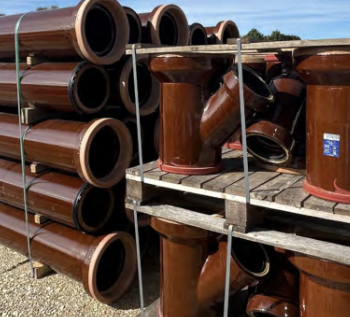
Why vitrified clay pipes are reclaiming their role in built projects.

Research by construction PR consultancy LMC published.
Roles and responsibilities of domestic clients

ACA Safety in Construction guide for domestic clients.
Fire door compliance in UK commercial buildings

Architect and manufacturer gives their low down.
Plumbing and heating for sustainability in new properties

Technical Engineer runs through changes in regulations, innovations in materials, and product systems.
Awareness of the Carbon Border Adjustment Mechanism
What CBAM is and what to do about it.
The new towns and strategic environmental assessments

12 locations of the New Towns Taskforce reduced to 7 within the new towns draft programme and open consultation.

Buildings that changed the future of architecture. Book review.
The Sustainability Pathfinder© Handbook
Built environment agency launches free Pathfinder© tool to help businesses progress sustainability strategies.

Government outcome to the late payment consultation, ECA reacts.
IHBC 2025 Gus Astley Student Award winners

Work on the role of hewing in UK historic conservation a win for Jack Parker of Oxford Brookes University.
Future Homes Building Standards and plug-in solar
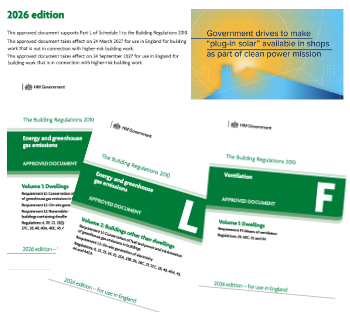
Parts F and L amendments, the availability of solar panels and industry responses.
How later living housing can help solve the housing crisis

Unlocking homes, unlocking lives.
Preparing safety case reports for HRBs under the BSA
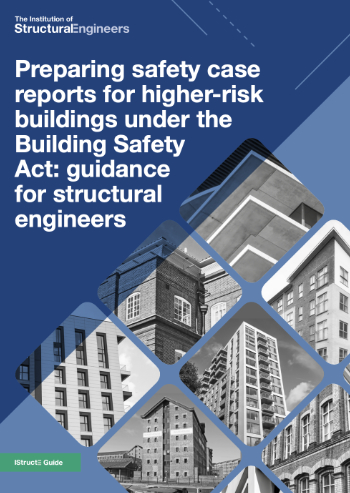
A new practical guide to preparing structural inputs for safety cases and safety case reports published by IStructE.
Male construction workers and prostate cancer

CIOB and Prostate Cancer UK encourage awareness of prostate cancer risks, and what to do about it.