






Consumer unit

This term 'consumer unit' is now officially defined within the 2018 edition of BS 7671 (IET Wiring Regulations) as:
| A particular type of distribution board comprising a type-tested co-ordinated assembly for the control and distribution of electrical energy, principally in domestic premises, incorporating manual means of double pole isolation on the incoming circuit(s) and an assembly of one or more fuses, circuit breakers, residual current operated devices or signalling and another control devices proven during the type-test of the assembly as suitable for such use. |
To many, the consumer unit is the modern-day equivalent of a ‘fuse box’ or ‘fuse board’ and provides the origin of all outgoing final circuits.
Successive evolutions of BS 7671 over the last few decades have seen the requirements for consumer units grow substantially – not only in what they may house, but also their construction – particularly in recent years with regards to increased fire safety.
The most recent version of BS 7671 in 2018 (the 18th Edition) now imposes much greater emphasis on ensuring that all such equipment that may be housed in such a consumer unit, often to fulfil specific individual purposes, is properly considered with respect to how it performs alongside other equipment in its vicinity. This will include attributes such as thermal performance, magnetic effects, fixing details and terminations, ability to withstand fault levels as well as current carrying capacity.
--ECA
NB Housing statistics and English Housing Survey, glossary, published by the Department for Levelling Up, Housing and Communities in 2019, states: ‘…in older systems, each individual electrical circuit was fed through an individual switch and fuse box. From 1960s through to the 1980s, fuses were collected together into a small number of smaller boxes, normally with a switch on the front which controlled all the circuits leading to the box. These boxes were normally fitted with a cover, the removal of which gave access to the fuses hidden inside. From the early 1980s, the newly named consumer unit (some dwellings have 2) catered for the whole dwelling and was also designed to accommodate modern safety measures namely circuit breakers and residual current devices.’
Related articles on Designing Buildings
- Articles about electricity.
- Circuit breaker.
- Consumer electronics.
- Domestic micro-generation.
- ECA articles.
- Electric motor.
- Electrical appliance.
- Electrical component.
- Electrical consumption.
- Electrical energy.
- Electrical installation.
- Electrical power.
- Electrician.
- Electrical safety.
- Electricity bill.
- Electricity supply.
- Flexible electrical networks for a low carbon future.
- Fuse.
- Glossary of electrical terms.
- Miniature circuit breaker.
- Panelboard.
- Radial circuit.
- Residual current device.
- The Future of Electricity in Domestic Buildings.
Featured articles
Check out some of the best features and news from Designing Buildings as well as key stories from around the web.
Building Safety Act implementation in Wales

CIAT to host industry panel on 26 June.
New and updated CLC building safety guidance.
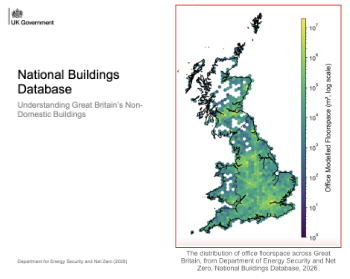
New UK National Buildings Database.
Building Safety Wiki Interviews
Chief executive of the British Woodworking Federation.
Planning condition discharge in England and Wales

A brief explanation from a building compliance expert, with further links.
Overheating guidance and tools for building designers

Guidance for dealing with element of building fabric control that have increasing importance.
Shading for housing, a design guide

From the Good Homes Alliance and British Blind and Shutter Association.
UK Standard Skills Classification (SSC)

A shared framework for describing skills needs.
Social media ban consultation comes to close

CIOB urges UK Government to consider social media’s role in careers guidance in ban debate.
The latest of eight Skills England apprenticeship units

The addition of battery manufacturing welcomed by ECA with a warning about the risks of fast-tracked apprenticeship units.
Building Control Independent Panel final report
A precis of a key report led by Dame Hackitt with full recommendations and link to the government response.
Comments
[edit] To make a comment about this article, click 'Add a comment' above. Separate your comments from any existing comments by inserting a horizontal line.