




CREATIVE Conservation Fund

Since our formal constitution in 1997, the IHBC has had two corporate objectives: to serve as a charity, focusing on delivering public benefit, and as a professional body, supporting built and historic environment conservation practice and practitioners. When we secured charitable status in tandem with our professional duties, details of precisely how that duality of duties might be managed were left fairly loose.
Perhaps that was inevitable given the more immediate challenges. In 1997 we also went from being an ‘association’ of like-minded colleagues in, mostly, public service roles, to become a regulated company and servant of the public good supporting practitioners from all sectors engaged in what was to become the IHBC’s own specification of a new discipline: ‘interdisciplinary’ conservation practice.
With our first modern Corporate Plan in 2007 – adopted after long and often lingering consultation – we pinned down the essence of our collective strategy. Members endorsed the principle that our charitable duties could work best alongside our professional support provided we observed three simple, tiered and tied objectives: to ‘help people’, to ‘help conservation’ and, underpinning these, to ‘help conservation professionals’.
That corporate model has stood us in good stead since then. We have refined our support for members’ conservation practice and the diverse public benefits it, and we, can bring. We have opened new access to and routes for career progress in the discipline we regulate and, as highlighted below, we have extended our built and historic environment conservation advocacy, including its celebration, far beyond the confines of a small, skilled and select membership.
Indeed, celebrating the practice of conservation was the most straightforward way to deliver on our holistic suite of corporate objectives to provide ‘help’. As early as my first meetings as IHBC director, in the mid-2000s the collective benefits of ‘celebrating’ became clear in discussions around the application of funds gathered in memory of our late membership secretary Gus Astley. Eventually this took the form of the IHBC Gus Astley Annual Student Award, our now celebrated celebration of heritage-related submissions by students to taught courses in the UK.
It took time to get details agreed and systems going – not as long as it took to agree our first membership flier, but long enough – and the first Gus Astley Student Award winner was congratulated at our 2007 School in Liverpool: David Hills, for his ‘Barbican: MODern CONServation?’, a submission on the Architectural Association’s conservation course.
Building on that initial success, and the associated challenges it raised, we streamlined procedure to focus on digital submissions, with their benefits of low cost and easy access; we chose high profile, practice-focused ‘guest’ judges, and offered free School places to the award winner, as well as others commended and cited, alongside the chance for guidance on opportunities for publication. Perhaps most critical, given our need to engage across sectors and disciplines, we developed a distinctly ‘low-effort’ submissions process for participants, so formal administrative checks happen only after submission. You can read more on the fascinating history – including the key role of Gus and other colleagues in our evolution, alongside the impressive list of topics, winners and judges – on our dedicated awards website.
With our annual Gus Astley Student Award ticking over successfully by 2010, we extended our mission to celebrate. First this was through new partnerships, as we built on an approach by what is now the Marsh Charitable Trust – the brainchild of Brian Marsh OBE, chairman of the trust. After the trust sought our guidance on a new award, we took the opportunity to extend our reach and ‘help conservation’ in its broadest sense.
A new IHBC Marsh Award for ‘successful learners’ encompassed the full breadth of those starting out on a conservation-related role or career, including craft and trade: not just students, but apprentices, interns and career changers too. A parallel award, devised for ‘retired IHBC’ members, could highlight the mountain of capacity, skills, knowledge and advice contributed to their communities by IHBC members who no longer undertook paid service and practice. Balancing the trust’s £500 cash award to winners, the IHBC charity offered free places at our Annual Schools, and the rest became a history best explored on the Marsh Trust’s website.
But all is never rosy for the IHBC, or rosy enough, anyway. On our student awards website you can find signposts to initiatives that, as our own capacity has been stretched by other priorities, sadly have gone no further than the proof-of concept stage.
Most obvious, first, was the huge learning demonstrated by early-stage students on conservation courses as they tackled one of the most fundamental exercises of the conservation profession: the conservation management plan (CMP) and its equivalent exercises. ‘Management’ is of course central to the IHBC’s assessment and accreditation of conservation practice: from the IHBC’s origins in heritage management under the ‘planning’ system, to the pivotal place ‘management’ holds in the IHBC’s Conservation Cycle and our linked accreditation of competence in practice. Yet the products of that essential exercise were subsumed in the original student award programme, competing as they were with the high-end drama of postgraduate research.
In response, the IHBC added a new award thread within the main Student Award process, to pull out the most exemplary management plans for formal recognition under a new prize, the Booth-Bird award. This simple strategy allowed the administration of the newly focused award to stay affordable to us but obviously it suffers through reduced profile and prominence. Similarly underexploited is a long-standing plan to make some student submissions more accessible online, a plan no more than ‘tested’ on the Student Award website, as users can see. These partial trials represent just some of the IHBC’s initiatives that demanded new resources to move forward and radical new plans.
From around 2015, those plans included early thoughts on an updated, Charter-compliant constitution and other big-thinking ideas, as we started to address historic constraints of limited resources and paltry sector investment, as well as limited impact outside core networks. The Charter and associated governance explorations under the IHBC+ programme represented one facet, while for the awards plans we looked to develop a more substantial funding programme.
After a wide-ranging investigation of our options, we concluded that a focus on existing expenditures on charitable works was the best starting point. These budget lines, from education and Schools to research and innovation, could be gathered together under an internal ‘restricted fund’ that consolidated all the ‘help’ the IHBC offers people, conservation and conservation specialists. Those budget lines and their targets became the foundation of what we titled our CREATIVE Conservation Fund, branded and formally launched in 2020 in tandem with our members’ adoption of new Charter-compliant Articles.
Today the IHBC’s CREATIVE Conservation Fund lets us allocate, manage and distribute funding exclusively to deserving causes in conservation areas most relevant to the IHBC’s duality of roles and duties, both people and conservation. It can receive donations from any entity, and in any form, while specific personal or professional interests can be targeted too, across specific activities in our CREATIVE conservation acronym: celebration, research, education, apprenticeship, training, innovation, visioning and experimentation.
If that is primarily a recast of how the IHBC allocates its own charity funds, where does that ‘help’ the wider world? Not far, at least until we take it to the next stage, with a sound development strategy that includes raising awareness and securing wider contributions, as well as planning and investment. With that, it could even mark an entirely new stage in our corporate evolution.
This is an especially important time for the IHBC, as our Charter discussions help focus on those same dual charitable and professional obligations that we articulated in 1997. Now, Charter or not, we need to advance our still-burgeoning profession and our new fund can play a central role here.
So, if you or someone you know might have an interest in volunteering skills, knowledge and experience to help us develop our CREATIVE Fund, and help our members, discipline and wider communities, please let me know, as I would be delighted to explore all and any options and roles.
Seán O’Reilly, director@ihbc.org.uk
This article originally appeared as ‘IHBC’s CREATIVE Conservation Fund’ in the Institute of Historic Building Conservation’s (IHBC’s) Context 181, published in December 2024. It was written by Seán O’Reilly, IHBC Director.
--Institute of Historic Building Conservation
Related articles on Designing Buildings Conservation.
IHBC NewsBlog
IHBC sponsors Gardens Trust event 23-4 Sept 2026
.jpeg)
'Learning from the Past, Shaping the Future’ takes place in Milton Keynes
Renovations to Frank Lloyd Wright's Fallingwater complete
.jpg)
World Heritage Preserved project opens house for tours again
Shakespeare Birthplace Trust places Hall's Croft on HAR Register
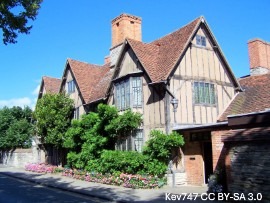
Stratford-upon-Avon home of Shakespeare's daughter is 'At Risk'
Lady Grange’s House repaired on St Kilda
.jpg)
National Trust for Scotland repairs stone cleit with link to famous island resident
Griff Rhys Jones on BBC Radio 4 Today programme
,_Green_Lane,_Derby.jpg)
The Victorian Society’s President unveiled its latest Top Ten Endangered Buildings 2026.
Need a MATE? Book your place now.
IHBC offers free webinars on applying for IHBC accreditation (Full & Associate).
UK Stained Glass Repository finds windows new homes
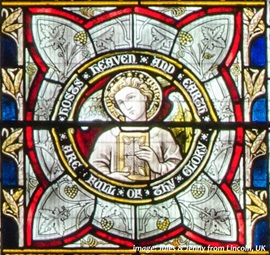
How are stained glass windows are rescued, stored and repurposed?
APPGEBE report sets high aims for quality
'Government must not sacrifice quality in drive to build 1.5m homes'
New measures protect Historic Shipwrecks from heritage crime

Underwater cultural heritage benefits from new HE guidance
How could the City of London skyline look in 6 years' time?

Visualisation shows approved planning applications as completed buildings
National Trust for Scotland calls for VAT cuts
Heritage neglect is encouraged by current policies
IHBC's 'Context' Issue 186 features Industrial Heritage
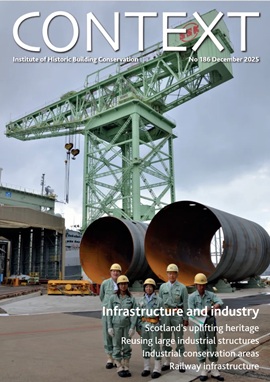
IHBC's members' journal reports on the challenges of conserving infrastructure
Book now for IHBC Annual School 2026
IHBC Annual School is taking place 18-20 June 2026 in Newcastle
RICHeS Research Infrastructure offers ‘Full Access Fund Call’
RICHeS offers a ‘Help’ webinar on 11 March
Latest IHBC Issue of Context features Roofing
Articles range from slate to pitched roofs, and carbon impact to solar generation to roofscapes
Three reasons not to demolish Edinburgh’s Argyle House

Should 'Edinburgh's ugliest building' be saved?
IHBC’s 2025 Parliamentary Briefing...from Crafts in Crisis to Rubbish Retrofit
IHBC launches research-led ‘5 Commitments to Help Heritage Skills in Conservation’
How RDSAP 10.2 impacts EPC assessments in traditional buildings

Energy performance certificates (EPCs) tell us how energy efficient our buildings are, but the way these certificates are generated has changed.