





Bill of quantities breakdown structures BQBS
Contents |
[edit] Introduction
A bill of quantities (sometimes referred to as a 'BoQ' or 'BQ') is a document, typically prepared by a cost consultant (often a quantity surveyor) that provides measured quantities of the items of work identified by the drawings and specifications in the tender documentation for a project. It is issued to tenderers for them to prepare a price for carrying out the works.
According to NRM2, RICS new rules of measurement, Detailed measurement for building work, there are three main breakdown structures for bill of quantities (BQBS), each with advantages and disadvantages. If preparation of the bill of quantities is digitised according to a standard codification, it may be possible to re-order it from one structure to another.
[edit] Elemental
Measurement and description is undertaken by group elements, with each group element forming a separate section of the bill of quantities, irrespective of the order of work sections in NRM 2. Group elements are sub-divided through the use of elements, which are further sub-divided by sub-elements, as defined by NRM 1: Order of cost estimating and cost planning for capital building works.
This structure can make it easier for the cost consultant to analyse contractors' tender prices and collect real-time cost data.
For more information see: Elemental bill of quantities.
[edit] Work section
Measurement and description is divided into the work sections listed in NRM 2.
This structure may be preferred by contractors, as similar products and components are grouped together, rather than being spread across a number of different elements as they are in an elemental breakdown. This can make pricing easier for contractors.
For more information see: Work section bill of quantities.
[edit] Work package
Measurement and description is divided into employer, quantity surveyor or contractor defined work packages (based either on a specific-trade, or a single package comprising a number of different trades). This structure may be preferred by contractors for procuring from their supply chain.
For more information see: Work package bill of quantities.
[edit] Related articles on Designing Buildings Wiki
- Advantages of a bill of quantities.
- Approximate bill of quantities.
- Bill of quantities.
- Bill of quantities software.
- Common Arrangement of Work Sections (CAWS).
- Common mistakes in bill of quantities.
- Comparison of SMM7 with NRM2.
- Elemental bill of quantities.
- Firm bill of quantities.
- How to take off construction works.
- Measurement.
- New Rules of Measurement.
- NRM1.
- NRM2.
- NRM3.
- Product breakdown structure.
- Standard Method of Measurement (SMM7).
- Taking off.
- Tender documentation.
- Tender pricing document.
- Types of bill of quantities.
- Uniclass.
- Work breakdown structure.
- Work package bill of quantities.
- Work section bill of quantities.
Featured articles
Check out some of the best features and news from Designing Buildings as well as key stories from around the web.

New and updated CLC building safety guidance.
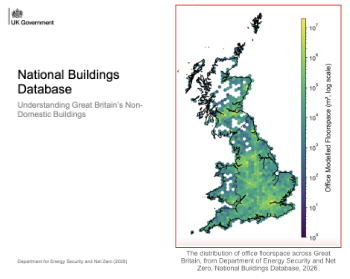
New UK National Buildings Database.
Building Safety Wiki Interviews

Chief executive of the British Woodworking Federation.
Planning condition discharge in England and Wales

A brief explanation from a building compliance expert, with further links.
Overheating guidance and tools for building designers

Guidance for dealing with element of building fabric control that have increasing importance.
Shading for housing, a design guide

From the Good Homes Alliance and British Blind and Shutter Association.
UK Standard Skills Classification (SSC)

A shared framework for describing skills needs.
Social media ban consultation comes to close

CIOB urges UK Government to consider social media’s role in careers guidance in ban debate.
The latest of eight Skills England apprenticeship units

The addition of battery manufacturing welcomed by ECA with a warning about the risks of fast-tracked apprenticeship units.
Building Control Independent Panel final report
A precis of a key report led by Dame Hackitt with full recommendations and link to the government response.
Building Safety recap April, 2026
A short and longer run-through of the month, with links to further information and sources.