





Balloon framing
Balloon framing is a form of timber construction that was commonly used to build houses in the United States and Canada from the late-19th century to the mid-20th century. It was often incorporated in the Queen Anne style and Shingle style architecture of the period.
This technique was popular at a time when long timbers were readily available, but it was gradually replaced by platform timber framing, in which each storey is formed by floor-to-ceiling timber panels and a floor deck which then becomes the platform for constructing the next storey. The central difference between balloon and platform framing is that the studs in a balloon frame extend from the foundation to the rafters, whereas in a platform frame, the studs are independent on each storey.
One of the primary problems with balloon framing, aside from the availability of long timbers, was that, by creating continuous spans free of any separation, fire could spread easily. Indeed, fires were common in balloon framed houses. Platform framing enabled a fire break to be included between each floor.
In terms of existing balloon frame houses, fire safety can be improved by adding fire-stopping to the walls, particularly in the breaks at each storey. However, this can be a difficult and time-consuming process, as the interior walls or exterior siding need to be removed to allow access to the stud top plates to add the fire-separating element.
[edit] Related articles on Designing Buildings
- Advantages and disadvantages of timber frame buildings.
- Delivering sustainable low energy housing with softwood timber frame.
- Fire-stopping in buildings.
- In-situ reinforcement of timber beams.
- Queen Anne style.
- Shingle style architecture.
- Stud.
- The use of timber in construction.
- Timber frame.
- Timber framed buildings and fire.
- Types of frame.
- Types of timber.
Featured articles
Check out some of the best features and news from Designing Buildings as well as key stories from around the web.

Confronting competency, codes, capacity and costs.

The hidden risk in modern construction supply chains.
Construction Management, 10 June

24 months to 14: CITB launches accelerated apprenticeships.
Bridging the gap between clients and contractors

Concerns remain around contractor quality, capability, and delivery.
Construction Management, 10 June.
Heat pumps beat boilers in new home tests.
Building Safety Act implementation in Wales

CIAT to host industry panel on 26 June.
New and updated CLC building safety guidance.
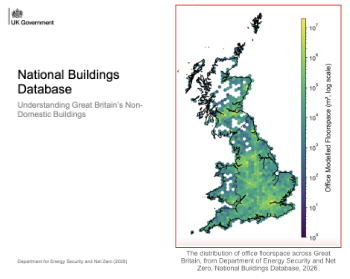
New UK National Buildings Database.
Building Safety Wiki Interviews

Chief executive of the British Woodworking Federation.
Planning condition discharge in England and Wales

A brief explanation from a building compliance expert, with further links.
Overheating guidance and tools for building designers

Guidance for dealing with element of building fabric control that have increasing importance.