





BREEAM assessor

|
Contents |
[edit] Introduction
BREEAM is the Building Research Establishment (BRE) Environmental Assessment Method, first launched in the UK in 1990. It sets best practice standards for the environmental performance of buildings through design, specification, construction and operation.
BREEAM sets benchmarks for standard categories of development (such as offices, retail developments, education buildings and healthcare buildings) and offers a bespoke scheme for non-standard buildings. It can be applied to new developments or refurbishment projects, and international schemes exist for projects outside of the UK.
The different stages of a scheme’s application and assessment process will typically require the services of a number of recognised BREEAM professionals:
- Associate
- Advisory professional
- Assessor
[edit] Assessor
A qualified BREEAM assessor is an individual with the training, experience, authority and independence to:
- Register and competently undertake assessments of projects/assets.
- Determine ratings.
- Apply for certification from an accredited scheme operator.
[edit] Role of an assessor
Assessors are responsible for managing the assessment process and validating a project’s compliance against relevant BREEAM criteria. They co-ordinate the collection of information (or evidence), which will be used to evaluate the project/asset. This will involve attending meetings and undertaking site visits to gather information. However, assessors are not required to take part in regular design/project team meetings (unlike BREEAM advisory professionals).
Once the assessor has completed their assessment, they submit an assessment report with reference to an auditable trail of evidence, to BRE Global for a certification decision.
In most BREEAM schemes, it is the assessor’s responsibility to register the project with BRE Global at the beginning of the assessment. However, this is not the case for the BREEAM In-Use scheme. This covers the ongoing certification of a property asset and so, for this scheme, the client is responsible for registering the asset(s) with BRE Global (but a BREEAM In-Use Assessor can be appointed to conduct this on their behalf if requested). In all BREEAM schemes, the licensed assessor issues the final certificate to the client after receiving it from BRE Global.
[edit] Qualities required
An effective assessor is one who:
- Uses their experience and detailed scheme knowledge to confidently engage with and inform the project or asset management team of scheme requirements.
- Works closely with, but is independent from, the project or asset management team.
- Is involved in key stages of the project, ensuring efficient assessment and timely submission for a certification decision.
- Impartially identifies, communicates and reports areas of compliance and non-compliance.
- Gathers and references a robust and auditable trail of information as evidence of compliance or non-compliance.
- Applies and upholds the credibility of the scheme to ensure the certification outcome is robust and consistent.
- Complies with all the requirements in the Licence Agreement.
[edit] Who can be an assessor?
Typically, the assessor qualification and role are sought/held by building and real estate service providers and professionals, designers (including architects, engineers), and energy and environmental consultants. Many assessors also hold an advisory professional qualification and may perform both roles as long as they can identify and manage potential conflicts of interest.
[edit] Becoming an assessor
To achieve qualified assessor status, an individual must attend the appropriate scheme assessor training course and pass the associated exams. To be able to register, undertake and apply for certification of an assessment, the qualified assessor’s organisation must enter into an agreement with BRE Global for an assessment licence to be issued to the assessor. Once the agreement is in place the assessor is:
- Licensed to offer and undertake scheme assessments.
- Publicly listed by BRE Global as a licensed assessor.
Further information on BREEAM Assessor courses HERE.
[edit] Remaining competent
Ensuring a qualified assessor remains competent involves:
- Maintaining the assessment licence.
- Maintaining professional indemnity insurance for the relevant scope of works (in accordance with the terms of the licence agreement).
- Regular demonstration of competency, typically via quality assurance audits of assessments submitted for certification, or re-training.
[edit] International assessor
Construction professionals globally can become qualified assessors by completing the BREEAM International New Construction Assessor online training course created by BRE Academy. More information is available HERE.
[edit] Related articles on Designing Buildings Wiki
- Assessing health and wellbeing in buildings.
- Building Research Establishment.
- BRE Trust.
- BREEAM and CEEQUAL.
- BREEAM associate online training.
- BREEAM Awards 2019.
- BREEAM In-Use International.
- BREEAM USA.
- BREEAM: Value multiplies while costs plummet.
- Closing the gap between design and as-built performance.
- Green rating systems.
- Iran - market potential for BREEAM.
- Leadership in Energy and Environmental Design.
- Third party certification.
- Tips for a new BREEAM assessor
- WELL and BREEAM align.
Featured articles
Check out some of the best features and news from Designing Buildings as well as key stories from around the web.
New and updated CLC building safety guidance.
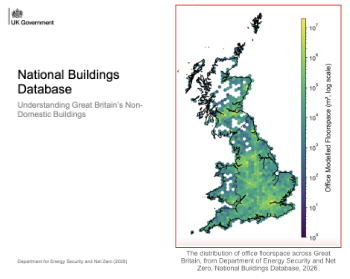
New UK National Buildings Database.
Building Safety Wiki Interviews

Chief executive of the British Woodworking Federation.
Planning condition discharge in England and Wales

A brief explanation from a building compliance expert, with further links.
Overheating guidance and tools for building designers

Guidance for dealing with element of building fabric control that have increasing importance.
Shading for housing, a design guide

From the Good Homes Alliance and British Blind and Shutter Association.
UK Standard Skills Classification (SSC)

A shared framework for describing skills needs.
Social media ban consultation comes to close

CIOB urges UK Government to consider social media’s role in careers guidance in ban debate.
The latest of eight Skills England apprenticeship units

The addition of battery manufacturing welcomed by ECA with a warning about the risks of fast-tracked apprenticeship units.
Building Control Independent Panel final report
A precis of a key report led by Dame Hackitt with full recommendations and link to the government response.
Building Safety recap April, 2026
A short and longer run-through of the month, with links to further information and sources.