





Lightning protection system

Contents |
[edit] Introduction
A lightning strike can exceed 100 million Volt Amps. Any grounded object that provides a path to earth will emit upwards ‘positive streamers’ or fingers of electrical charge. These create a channel of plasma air for the huge downward currents of a lightning strike.
The high voltage currents from a lightning strike will always take the path of least resistance to ground. A lightning protection system (LPS) can protect a structure from damage caused by being struck by lightning by providing a low-resistance path to ground for the lightning to follow and disperse.
An LPS does not attract lightning, and cannot dissipate lightning, it simply provides fire and structural damage protection by preventing lightning from passing through building materials themselves.
Buildings most at risk are those at high altitudes, on hilltops or hillsides, in isolated positions and tall towers and chimneys.
[edit] Hazards of a lightning strike
In the absence of an LPS, a lightning strike may use any conductor as a path to reach ground, which could include phone cables, power cables, utilities such as water or gas pipes, or the structure itself if it is a steel frame.
Some of the main hazards presented by a lightning strike to a building include:
- Fire caused by lightning igniting flammable materials or overheating electrical wiring.
- Side flashes, when lightning jumps through the air to reach a better-grounded conductor.
- Building components can be damaged by explosive shock waves, glass shattered, concrete and plaster fragmented, and so on.
- Any electrical appliance plugged into a circuit may be badly damaged.
- The air inside porous materials such as masonry may expand rapidly.
- Materials containing moisture from humidity or rain may flash to steam.
- Other materials can reach their plastic limit and melt or ignite.
[edit] Types of LPS
[edit] Rods or ‘air terminals’
A lightning rod is a tall metallic tip, or pointed needle, placed at the top of a building. One or more conductors, often copper strips, are used to earth the rod. Rods are designed to act as the ‘terminal’ for a lightning discharge.
[edit] Conductor cables
Numerous heavy cables placed around the building in a symmetrical arrangement. This is sometimes referred to as a ‘Faraday cage’. These cables are run along the tops and around the edges of roofs, and down one or more corners of the building to the ground rod(s) which carry the current to the ground. This type of LPS may be used for buildings which are highly exposed or house sensitive installations such as computer rooms.
[edit] Ground rods
These are long, thick rods buried deep into the earth around a protected structure. They are normally made of copper or aluminium and are designed to emit positive streamers.
[edit] Designing an LPS
Inclusion of an LPS should taken into consideration during the design stage. The design should ensure that even if lightning strikes the structure first, the large voltage currents will be drawn into the LPS before serious damage can be done.
An LPS can be designed so as to utilise parts of the building that can safely carry large current loads, and draw energy away from the parts of the building that are not able to.
An LPS should be designed and installed to prevent side flashes between objects. By maintaining the electrical continuity of objects to a bonding conductor, any differences in electric potential can be zeroed, allowing any voltage changes to occur simultaneously.
Failure to design proper grounding will render an LPS ineffective as safe dispersal of the energy from the strike will not be possible. Additional earthing from that provided by a utility supplier is often required.
[edit] Related articles on Designing Buildings Wiki
Featured articles
Check out some of the best features and news from Designing Buildings as well as key stories from around the web.

ECA welcomes plans to strengthen subcontractor quality control.

Combining mid-career qualifications with experience broadens career opportunities.

Why being a mentor can help your career.

Channel 4 broadcaster to host 125th anniversary ceremony.
Listed structures on the rail network
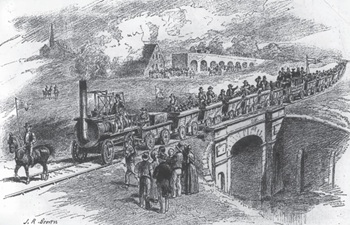
Heritage interests and operational requirements must be balanced.
Historic England publishes research into embodied carbon when retrofitting traditional buildings.
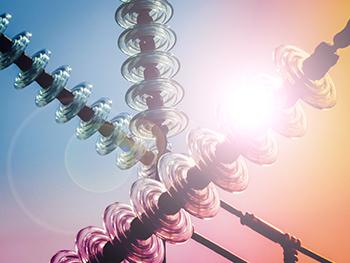
New Prime Minister delivers on ECA call for cut in electricity costs.

CIOB reacts to the announcement of Andy Burnham as Prime Minister.

Heritage and conservation science workforce survey - Have your say.
England's Suburbs 1820-2020. Book review.

New, more proportionate and targeted approach for higher-risk building assessments.
Government brings British Steel into public ownership.