





Underground obstructions
A number of different underground obstructions can be encountered during construction works that can cause significant delays and create safety hazards:
- Underground utility lines, including water, gas, electricity, sewage and telecommunication lines, are often located beneath construction sites. These lines can sometimes be identified using utility maps and records, but their locations may not always be accurately marked or recorded.
- Large rocks and boulders can be present in the soil and can create difficulties for excavation and construction work. They can also pose a hazard if not properly removed, as they can destabilise foundations.
- Underground structures, such as old foundations, vaults, and storage tanks, can be encountered during construction work. These structures may not be visible from the surface and can pose a significant risk to workers and equipment if not identified and managed correctly.
- Construction sites are often located in areas that have historical significance, and excavation work can uncover archaeological finds. These discoveries need to be managed carefully and properly documented, and may need to be reported, which can cause delays.
- Contaminated soil from previous industrial or agricultural activities can be present in the ground and may pose a risk to workers and the environment. This contamination can be difficult and expensive to remediate and can cause delays.
- Large trees can have extensive root systems that can be difficult to remove. These roots can also cause damage to underground pipes and cables and create instability in the soil.
- In areas with a history of mining, abandoned mine shafts and tunnels can be present in the ground. These can be difficult to locate and can pose a significant risk to construction workers if not identified and managed properly.
- Abandoned wells can be deep and difficult to locate, and if not properly filled and sealed, they can pose a risk of injury or contamination.
- In areas that have experienced military activity, unexploded ordnance (UXO) can be present in the ground. UXO can be extremely dangerous if accidentally detonated during construction work and must be identified and disposed of by trained professionals.
- In some areas, bedrock can be found close to the surface, making excavation and construction work more difficult and expensive.
- In areas that have been used for industrial activities, hazardous waste may have been disposed of in the ground. This can be difficult and expensive to remediate and can also pose health and environmental risks.
It is important that the necessary precautions are taken to identify and manage these underground obstructions before beginning excavation and construction work. This includes using appropriate surveying and ground investigation techniques to identify underground obstructions, and consulting with experts such as geologists, archaeologists and environmental consultants to assess and mitigate potential risks.
[edit] Related articles on Designing Buildings
- Archaeology.
- Brownfield site.
- Contaminated land.
- Earthworks.
- Excavation.
- Geophysical survey.
- Geotechnical engineering.
- Ground conditions.
- Ground investigation.
- Insitu testing of soils.
- Pre construction information.
- Site appraisal.
- Site information.
- Site investigation.
- Site surveys.
- Soil report.
- Soil survey.
- Walkover survey.
Featured articles and news

We're expanding our collaborative mission by launching DB Intelligence, an exclusive market research advisory panel. Built environment professionals can now get paid to share their expertise on industry trends, products and services.
Panel members receive direct financial incentives for participating in research projects like short surveys, 1-2-1 interviews and focus groups. Register today to shape the future of the construction sector.
Overheating guidance and tools for building designers

Guidance for dealing with element of building fabric control that have increasing importance.
Shading for housing, a design guide

From the Good Homes Alliance and British Blind and Shutter Association.
UK Standard Skills Classification (SSC)

A shared framework for describing skills needs.
Social media ban consultation comes to close

CIOB urges UK Government to consider social media’s role in careers guidance in ban debate.
The latest of eight Skills England apprenticeship units

The addition of battery manufacturing welcomed by ECA with a warning about the risks of fast-tracked apprenticeship units.
Building Control Independent Panel final report
A precis of a key report led by Dame Hackitt with full recommendations and link to the government response.
Guide to ISO 19650 for Architecture Firms (2026)
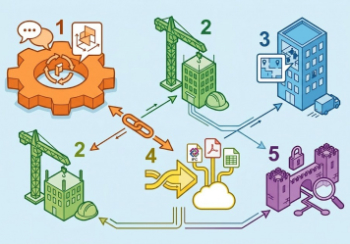
A user gives their low down.

A UK training and membership provider for mould remediation professionals.
Building Safety recap April, 2026
A short and longer run-through of the month, with links to further information and sources.
CIAT May 2026 briefing.

Independent NSI and BAFE study exploring how organisations are changing the way they buy fire safety services.
From medieval scribes to modern word art.

ECA welcomes crackdown on late payment and push for clean energy, whilst CIOB seek fixed cladding removal timeframes.
Cyber Security in the Built Environment
Protecting projects, data, and digital assets: A CIOB Academy TIS.
Managing competence in the built environment
ITFG publishes new industry guide on how to meet the ICC principles.
The UK's campaign to reduce noise pollution: Mythbusting, articles and topic guides.
Comments
[edit] To make a comment about this article, or to suggest changes, click 'Add a comment' above. Separate your comments from any existing comments by inserting a horizontal line.