






Why the lowest price isn't sustainable

Contents |
[edit] Introduction
The Institute of Chartered Accountants in England and Wales (ICAEW) warned in its Audit Insight report into construction earlier this year that the ‘race to the bottom’ in construction contracting could lead to more major firms collapsing. It will also damage their supply chains, forcing more smaller firms out of business.
In preparing its report, ICAEW collaborated with auditors with many years' experience of independently examining and auditing construction firms. These included KPMG, PwC, EY, Deloitte and The Orange Partnership.
The construction sector is a key driver of growth for the UK economy, but it is a fragile one with low margins and high risks.
When construction companies and clients get it right − through project selection based on their ability to deliver, responsible tendering, diligent monitoring, and a proactive attitude to deal with issues such as cost and timetable overruns – they create contracts that are more profitable and provide more enduring value.
The report examines four key areas that need to be addressed by construction firms if they are to run sound, well-managed businesses.
[edit] Bidding for lasting value
If construction businesses want to generate sustainable profits, they need to get the price right at the tendering stage.
Some companies have become better at pricing their services realistically to reflect their true cost. But we are also seeing businesses bidding at too low a price for large complex contracts in the expectation that they will improve their profit margins because some aspect of the project will change. This is a risky strategy as unforeseen changes can quickly turn small profits into losses, and make it difficult to return to profitability.
[edit] Delivering for success
In construction, it is especially important that financial rigour is applied to key estimates and judgements throughout a project’s lifecycle. Competition is so fierce and margins so thin that reliable financial information and analysis can determine a project’s success. One way to achieve this objective is to form strong delivery teams where project managers work closely with finance and commercial teams. We do not see enough evidence of this in practice and urge firms to remedy any lack of collaboration.
[edit] Increasing transparency
The UK construction sector continues to suffer from a reputation that it lacks enough transparency, particularly on cost and performance. In many cases, poor or unexpected results are caused by a lack of internal transparency.
Executive management and boards need to ensure the tone from the top encourages and supports employees early reporting when problems occur. Without early reporting, projects are less likely to remain on track and management may be unaware of a problem until it becomes significant.
[edit] Getting fit for the future
The highly fragmented nature of the sector and lack of training and innovation have been contributing to low productivity. Government can help to build confidence in the construction sector by showing more ambition and urgency in facilitating a commitment to a reliable pipeline of major infrastructure projects with guaranteed timings.
Businesses need to form partnerships with their local schools, colleges and universities to educate young men and women about the wide range of career opportunities available, creating a pipeline of future young talent.The stereotype of the hard hat-wearing construction worker needs to be retired and replaced with the image of the planner, architect, surveyor, engineer and skilled trades person.
[edit] About this article
This article was written by ice.org.uk Phil Joyce, The Orange Partnership and is based on the author's briefing article in the 172 CE4 issue of the ICE Civil Engineering Journal. The article previously appeared on the ICE website in October 2019 and can be accessed HERE.
More articles by ICA on Designing Buildings Wiki can be accessed HERE.
[edit] Related articles on Designing Buildings Wiki
- Auction theory.
- Best value.
- Bid writer.
- Competitive tender.
- E-tendering.
- Estimator.
- Form of tender.
- Game theory.
- Initial cost appraisal.
- Invitation to tender.
- Pre-tender estimate.
- Procurement route.
- Relationship management.
- Tender documentation.
- Tender evaluation.
- Tender process.
- Winning work in the construction industry.
- Zone of possible agreement.
Featured articles
Check out some of the best features and news from Designing Buildings as well as key stories from around the web.

The real barrier to getting more value from digital technology.

Your guide to The Construction Reset at UKCW Birmingham.

Accommodating the Victorian and Edwardian working woman. Book review.
Rethinking passive fire protection in design

PFP demands the same level of design rigour as structure or services.

38% of Gen Zs feel safe when a fire door is wedged open.
Stunning images from around the world

Shortlist for CIOB’s Art of Building photography competition.

Guidance for conversion of traditional pre-1919 stone buildings.
Industrial heritage in the Ruhr
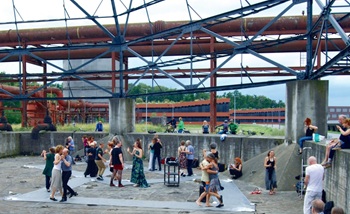
A marked difference to the fate of industrial landscapes in the UK.

Communities will be able to build their own clean energy.
Why diversity and inclusion matters for SMEs

CIOB’s D&I Charter shows how practical changes can support long-term growth.
Cut electricity bills to power growth

Coalition sends joint letter to the Chancellor.

Gasholders: a history in pictures. Book review.
Comments
Specifying sustainable requirements.
Designers determine quality and sustainability initially through their specifications. The most efficient contractor at fulfilling those specifications exactly delivers the best value and is also the most sustainable. So, least cost equates to best value if the designers specify correctly.